What is ShibaSwap and how does it work?

ShibaSwap is a DeFi platform featuring decentralized exchange (DEX) and passive income-generating services like staking, liquidity pools, and yield farming in its ecosystem.
Launched in July 2021, ShibaSwap is a fork of SushiSwap, a popular DEX tweaked from Uniswap (UNI $5.76), the world's leading DEX by volume. But unlike its rivals, ShibaSwap's core purpose has been mostly about boosting the utility of Shiba Inu tokens.
What are Shiba Inu tokens?
ShibaSwap uses three main tokens, namel Shiba Inu (SHIB $0.000009), Doge Killer (LEASH), and Bone (BONE). Let's discuss them in detail as follows.
Shiba Inu (SHIB)
Shiba Inu (SHIB) is a Dogecoin-inspired meme-coin created in August 2020 by the pseudonymous "Ryoshi."
During its ICO, the founder(s) distributed one quadrillion SHIB, with half allocated to Ethereum co-founder Vitalik Buterin. Later, Buterin donated 50 trillion SHIB to an Indian Covid-19 relief fund while sending the rest 450 trillion tokens to a dead wallet.
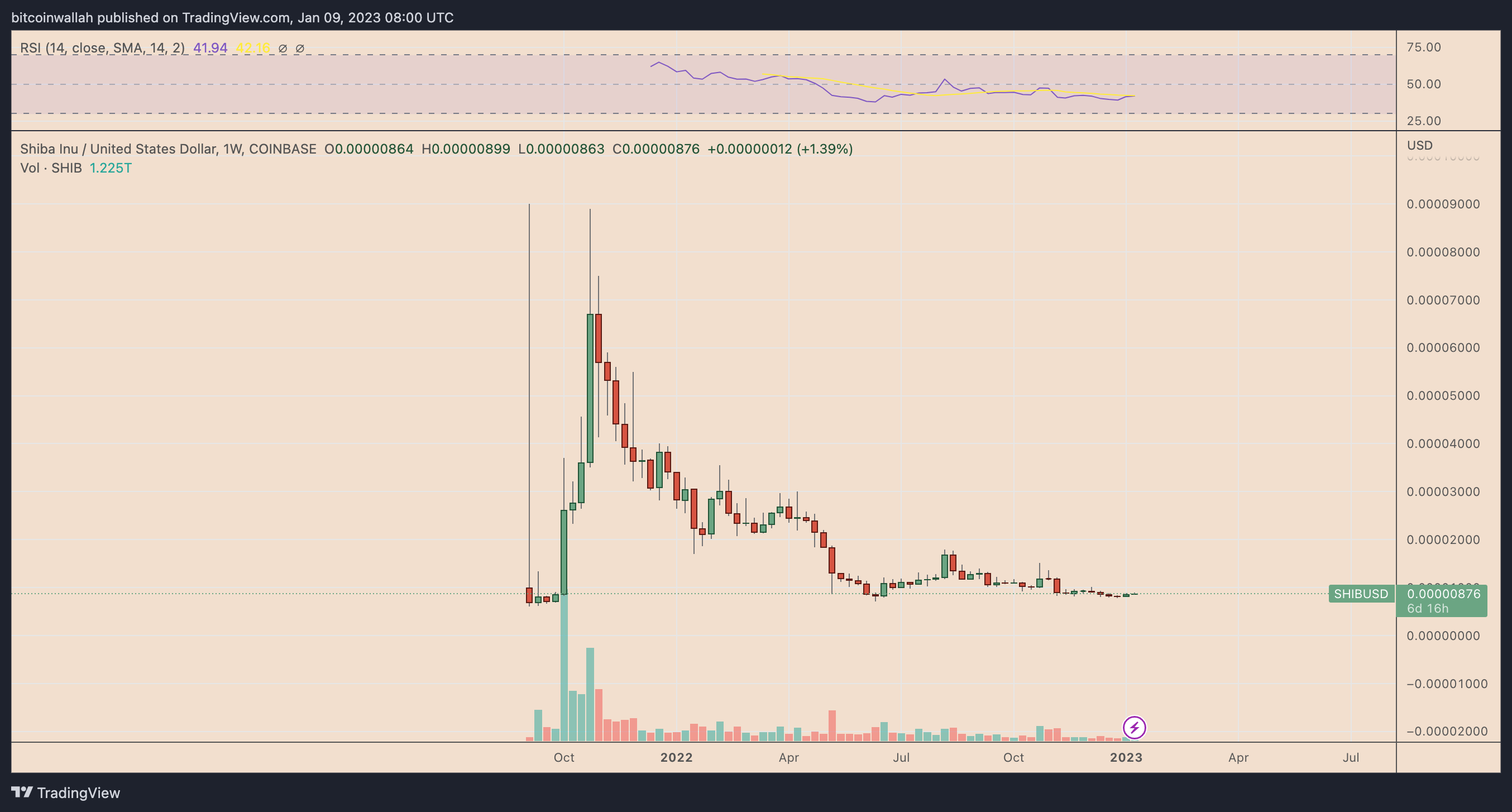
SHIB/USD weekly price chart. Source: TradingView
Meanwhile, the remaining 500 trillion SHIB were locked in Uniswap; the authors discarded the private keys.
Doge Killer (LEASH)
As the name suggests, Doge Killer (LEASH) came out as a part of Shiba Inu's effort to take over Dogecoin (DOGE $0.08), the top meme-coin by market capitalization. In its earlier days, the token saw a failed 1:1000 peg to the price of DOGE.
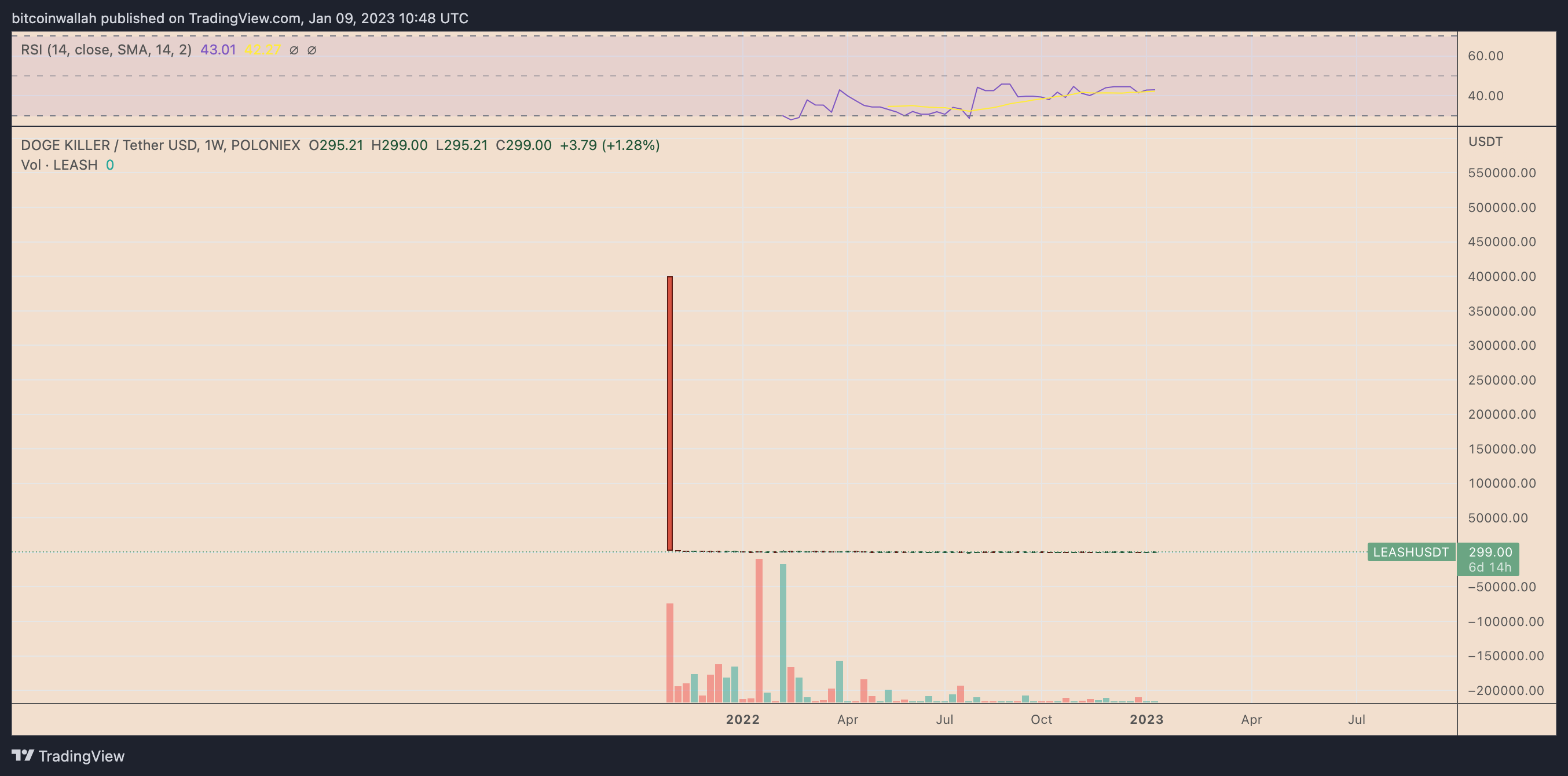
LEASH/USD weekly price chart. Source: TradingView
LEASH functions as an ERC-20 token with a fixed supply of 107,647 tokens.
Bone (BONE)
Bone (BONE) serves as a governance token within the ShibaSwap ecosystem. In other words, holding BONE enables users to propose and vote on changes to the ShibaSwap protocol through the Shiba Inu Doggy DAO.
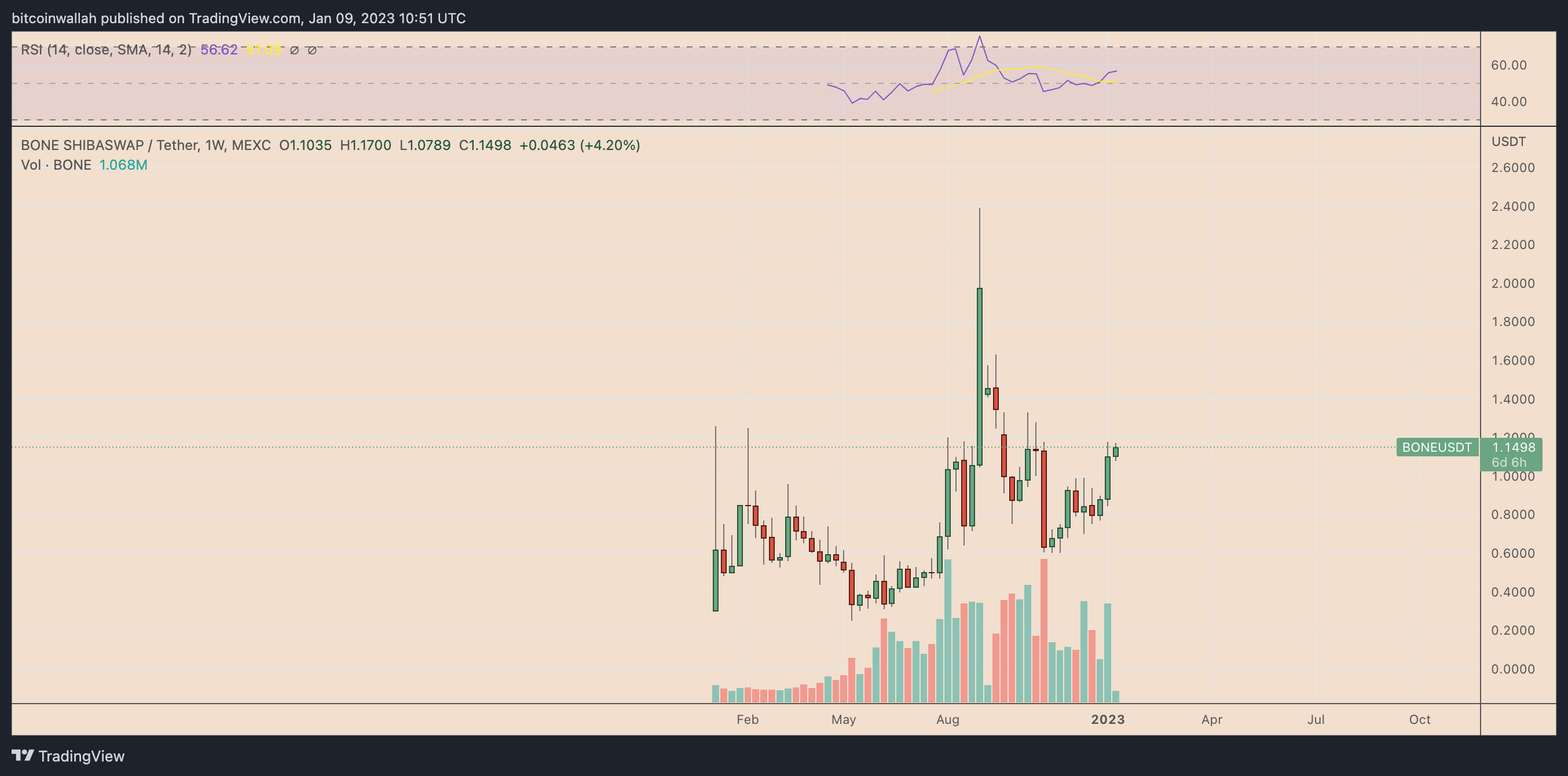
BONE/USD weekly price chart. Source: TradingView
BONE's maximum supply is 250 million coins.
How does ShibaSwap work?
ShibaSwap enables users to trade supported ERC-20 tokens directly with one another. The DEX's most liquid tokens are Shiba Inu ecosystem coins with data showing that BONE and LEASH have the highest trading volumes and order book depths.
Staking (BURY)
Owners of SHIB, LEASH and BONE can stake or BURY their coins into ShibaSwap pools for a specific timeframe to earn pre-determined annual percentage yields (APY). These yields get paid in the wrapped version of the staked tokens. For instance, staking 1 LEASH yields users 1 LEASH.
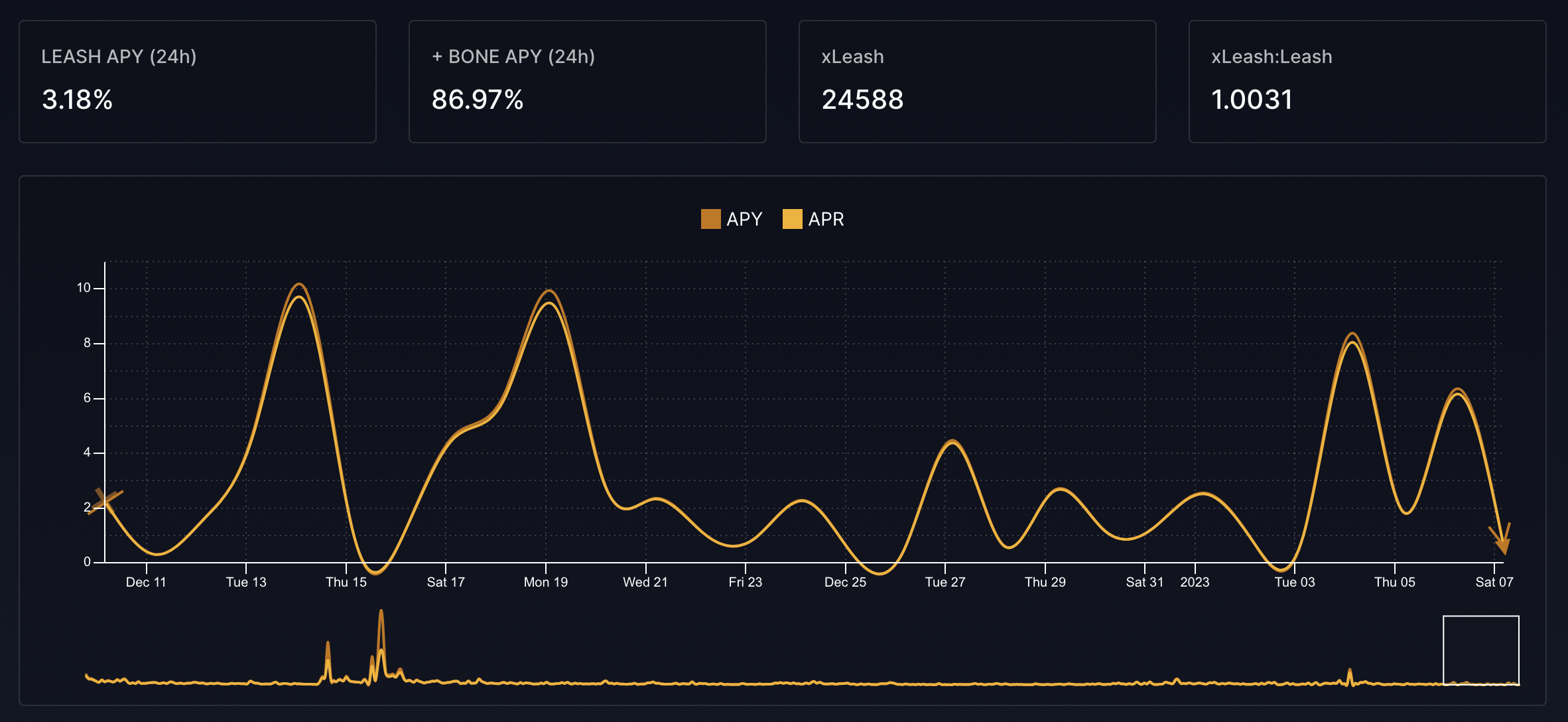
ShibaSwap BURY (staking) APY. Source: Official Website
The pools distribute rewards every week, albeit users can claim one-third of the amount. The rest of the staked capital gets vested for six months.
Liquidity Pools (DIG)
ShibaSwap grants users trading fee rewards (0.3% per trade) proportional to the liquidity they provide to its coin pairs. The rewards are handed out as Shiba Swap Liquidity Provider (SSLP) tokens; they are redeemable for BONE tokens whenever the liquidity provider wants.
Yield Farms (WOOF)
SSLP holders can deposit these tokens to ShibaSwap's yield farm pools to earn BONE rewards. This reward mechanism is similar to BURY, where users redeem one-third of the rewards instantly but need to lock the rest for six months.
Some ShibaSwap yield farming pools grant rewards directly in Ether (ETH), Wrapped Bitcoin (WBTC), DAI, Tether (USDT), and USD Coin (USDC), according to the DEX's documentation.
Burn portal
ShibaSwap allows users to voluntarily burn their SHIB holdings, i.e., sending the tokens to a dead address. In return, the platform rewards the users in RYOSHI, an ERC-20 token created specifically as a burn reward.
NFTs
ShibaSwap also enables the minting, customization, and trading of native nonfungible tokens (NFTs) called Shiboshis. These 10,000 digital collectibles of the Shiba Inu mascot cartoons will likely be a part of the gaming project called the Shiboshi Game.
Author

Cointelegraph Team
Cointelegraph
We are privileged enough to work with the best and brightest in Bitcoin.