Pi Network Price Forecast: Consolidation persists as DeFi launch fails to spark investor interest
- Pi Network consolidates above the $0.2565 support level for the eleventh consecutive day.
- Centralized Exchanges record outflows of nearly 13 million PI in the last 24 hours.
- The launch of DEX and other DeFi features on Pi Network’s testnet goes muted.

Pi Network (PI) price holds steady in a consolidation phase for the eleventh consecutive day, above the $0.2565 support level. Despite the recent net outflows of nearly 13 million PI tokens from Centralized Exchanges (CEXs) in the last 24 hours and the announcement of Decentralized Finance (DeFi) features on Pi Testnet after the Token2049 event, Pi Network struggles to gain traction.
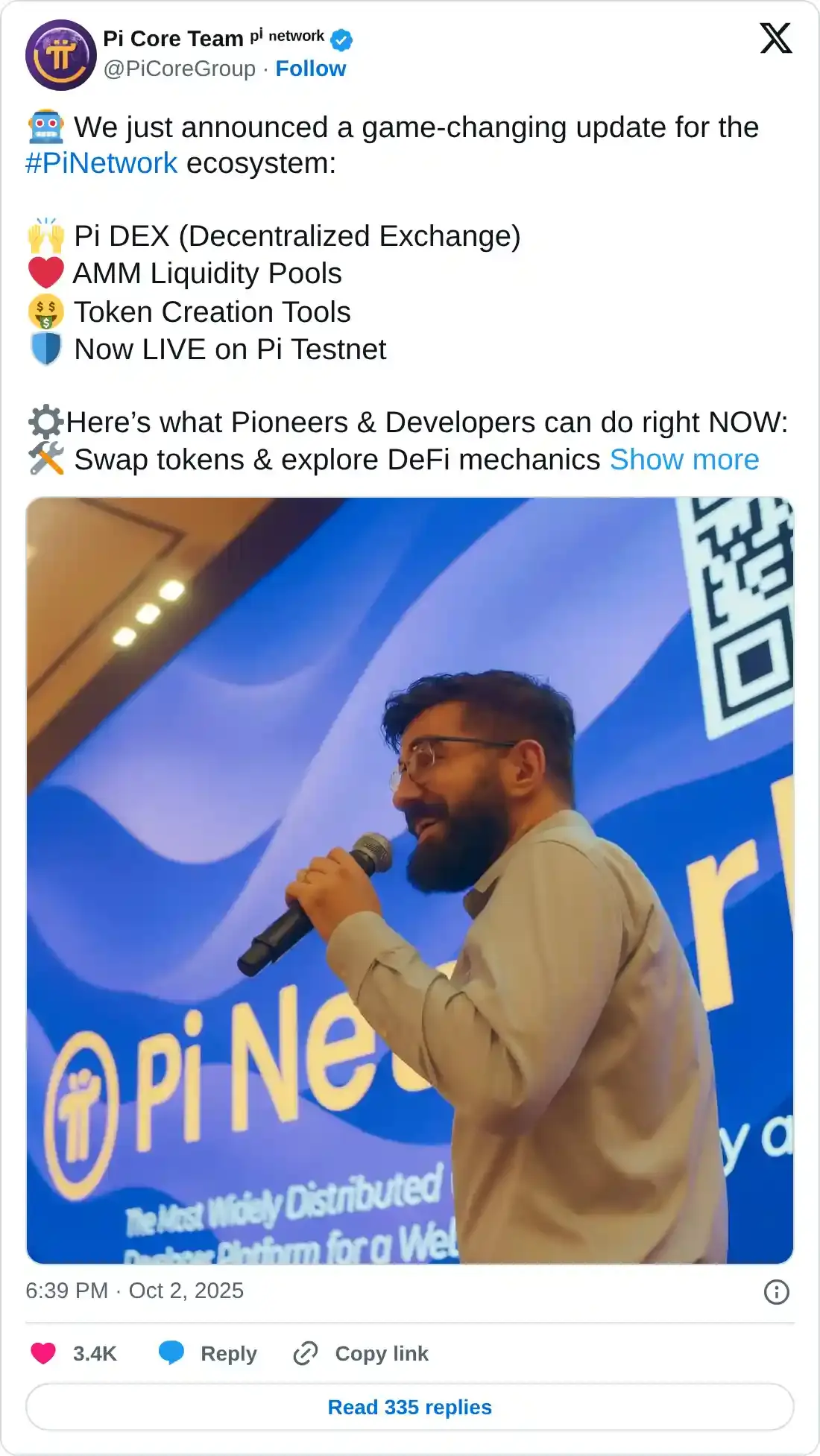
Pi Network’s DeFi expansion goes under the radar
Pi Network’s co-founder, Nicolas Kokkalis, reactivated his X account on Friday, posting the launch of Pi Decentralized Exchange (DEX), AMM Liquidity Pools, and Token Creation Tools, which are coming live on Pi Testnet. This marks the next step in smart contract development on the Pi Network, aligning with the ongoing update to its foundation blockchain, Stellar, to its latest version, protocol 23.
The launch of such DeFi features expands the Pi Network’s utility to real-world use cases, from just a mobile mining cryptocurrency. However, its testnet launch failed to uplift the investors' sentiment, while PI price expands its consolidation.
Declining CEXs' reserves struggle to limit selling pressure
A decline in CEX wallet balance signals a potential decrease in selling pressure, which could foster consolidation or the next potential price surge. PiScan data shows a net outflow of 12.90 million PI tokens in the last 24 hours, which accounts for nearly 3% of the 432.63 million PI supply available on CEXs.
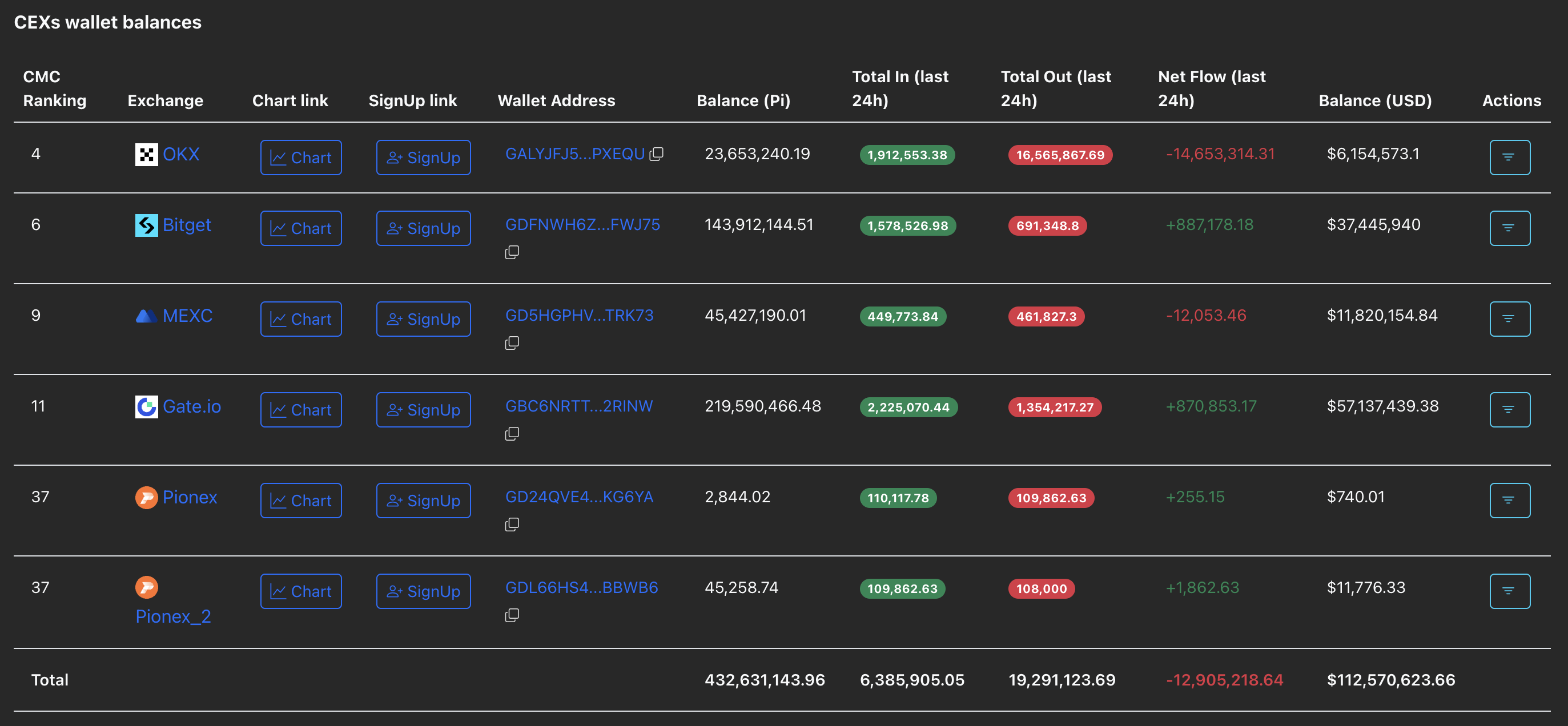
CEXs' wallet balances. Source: PiScan
Still, the majority of the tokens held off-exchanges, the risk of a supply dump persists. Based on the PiScan data, the CEXs' wallet balances account for only 5.24% of the PI circulating supply, which is 8.24 billion tokens.
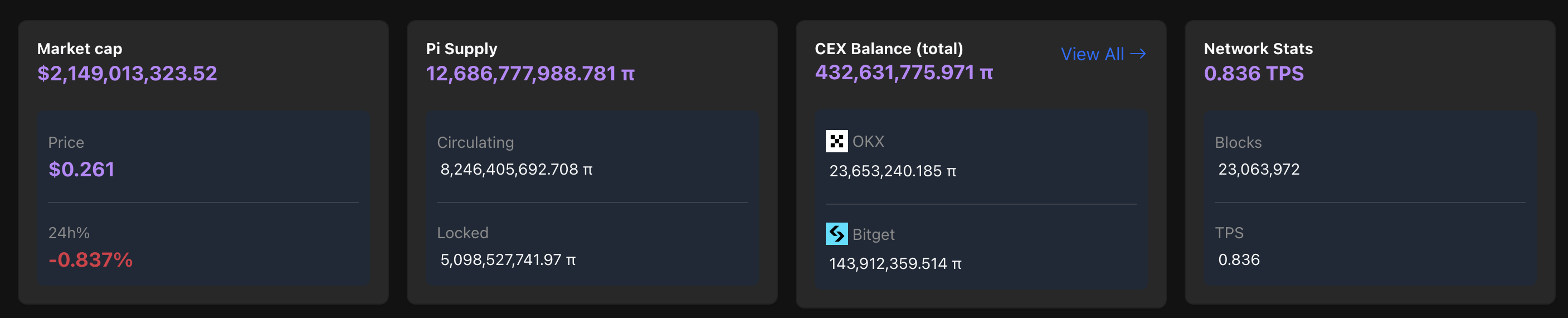
Pi Network data. Source: PiScan
Downside risk looms over the PI consolidation phase
Pi Network holds above the $0.2600 level at the time of writing on Monday, extending the sideways shift following a 6% decline on September 26. The consolidation phase is at risk of a downside release as the trend momentum and retail interest decline.
The technical indicators on the daily chart suggest a slowdown as the Relative Strength Index (RSI) at 29 moves flat at the oversold boundary line. Still, the Moving Average Convergence Divergence (MACD) converges with its signal line, offering a bullish perspective if a crossover occurs, which would indicate a rise in trend momentum.
A potential bounce back in PI from the $0.2565 support could test the previous week’s high at $0.2796, followed by the $0.3000 round figure.
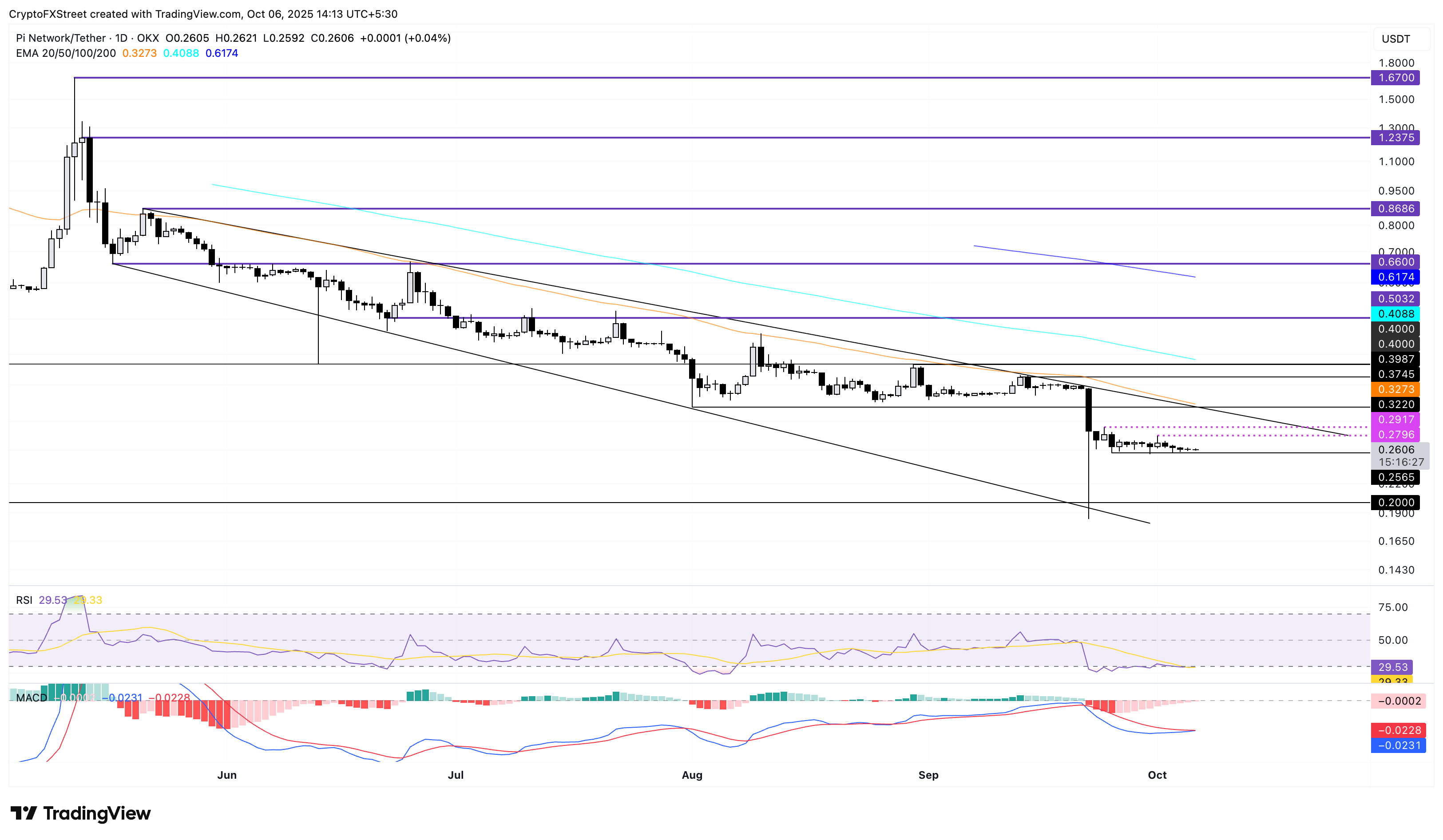
PI/USDT daily price chart.
Looking down, if PI slips below the $0.2565 level, it could extend the decline to the $0.2000 round figure.
Cryptocurrency prices FAQs
Token launches influence demand and adoption among market participants. Listings on crypto exchanges deepen the liquidity for an asset and add new participants to an asset’s network. This is typically bullish for a digital asset.
A hack is an event in which an attacker captures a large volume of the asset from a DeFi bridge or hot wallet of an exchange or any other crypto platform via exploits, bugs or other methods. The exploiter then transfers these tokens out of the exchange platforms to ultimately sell or swap the assets for other cryptocurrencies or stablecoins. Such events often involve an en masse panic triggering a sell-off in the affected assets.
Macroeconomic events like the US Federal Reserve’s decision on interest rates influence crypto assets mainly through the direct impact they have on the US Dollar. An increase in interest rate typically negatively influences Bitcoin and altcoin prices, and vice versa. If the US Dollar index declines, risk assets and associated leverage for trading gets cheaper, in turn driving crypto prices higher.
Halvings are typically considered bullish events as they slash the block reward in half for miners, constricting the supply of the asset. At consistent demand if the supply reduces, the asset’s price climbs.
Author

Vishal Dixit
FXStreet
Vishal Dixit holds a B.Sc. in Chemistry from Wilson College but found his true calling in the world of crypto.