Osmosis DEX carries the Cosmos DeFi with a deflation and fee-sharing mechanism
- Cosmos DEX Osmosis has reduced token inflation by 50% with plans for fee sharing in OSMO 2.0 update.
- The move comes after a community governance vote, indicating a transition from its early token distribution phase.
- The move demonstrates Osmosis’ commitment to ensuring the long-term sustainability of the native OSMO tokens.

Osmosis, Cosmos ecosystem’s largest decentralized exchange (DEX), is drawing toward deflation and fee sharing after a community governance vote. Based on a recent announcement, the DEX is cutting token inflation by 50%, with plans for fee sharing in OSMO 2.0 update.
Also Read: Cosmos price could fall 15% before ATOM bulls have a chance at pre-lawsuit levels
Osmosis slashes token inflation by 50% amid plans for fee sharing
Osmosis, Cosmos ecosystem’s decentralized exchange, is readying for OSMO 2.0, an important update to its tokenomics model. The development will enable its deflation endeavors with a 50% slash of the OSMO token price.
BREAKING NEWS:
— The Highlight (@thehighlight0) June 19, 2023
Cosmos DEX Osmosis cuts token inflation by 50%, plans fee sharing in OSMO 2.0 update#CosmosEcosystem $ATOM #DEX #Osmosis #OSMO2 $OSMO pic.twitter.com/k5BN4mHvDI
Cosmos ecosystem challenges
According to lead llama and marketing at Osmosis Labs, Emperor Osmo, three key challenges constrain the Cosmo ecosystem- scalability, interoperability, and user experience.
Despite the Cosmos ecosystem’s build to support scalability via inter-blockchain communication (IBC) protocol, increasing chains and transactions pose the threat of congestion while straining the IBC infrastructure.
Secondly, the network has faced challenges expanding its interoperability to ecosystems such as Ethereum other than the current chains built on the Cosmos Software Development Kit (SDK).
Thirdly, user experience (UX) is a concern, particularly when managing different tokens and interacting with various sovereign chains.
The scheduled OSMO 2.0 upgrade is expected to introduce changes, including a reduction in inflation and an extended emission timeline, thereby solving these concerns.
Cosmos DEXes OSMO 2.0 upgrade
Cosmos DEX Osmosis introducing the OSMO 2.0 tokenomics upgrade coincides with the platform’s second year of operation, commemorating the network’s annual anniversary. The updated tokenomics is part of a greater plan to strengthen the Osmosis ecosystem, promote sustainability, and reinforce its position as the leading hub for Cosmos DeFi applications.
Fee Sharing
On fee sharing, Osmosis governance is planning to implement a fee switch for liquidity pools. Reportedly, this feature will enable OSMO stakers to participate in the swap fees generated by activity in Osmosis liquidity. It would also allow OSMO stakers to share the swap fees directly, as acquired through Osmosis liquidity pool activities.
Deflation
The OSMO 2.0 update is part of a protocol revenue burn mechanism that could further offset the remaining inflation on the Osmosis DEX. This would lead to a net deflationary model. For ease of understanding, deflation refers to the overall price decrease of an asset, often because of a contraction in the asset’s supply.
The plans sprout from a community governance vote that approved a 50% reduction in the inflation rate. After the adjustment, the OSMO inflation rate will drop to around 11%, a change expected to help the Osmosis network address its growth and sustainability goals. In turn, this will deliver seamless token distribution over time.
The move will see the Osmosis network shift from its early token distribution phase while bolstering its commitment to delivering long-term sustainability of the OSMO tokens. More intricately, it will ensure a sustainable emission model and position the Osmosis network as one of the Cosmos ecosystem’s chains with the lowest emissions.
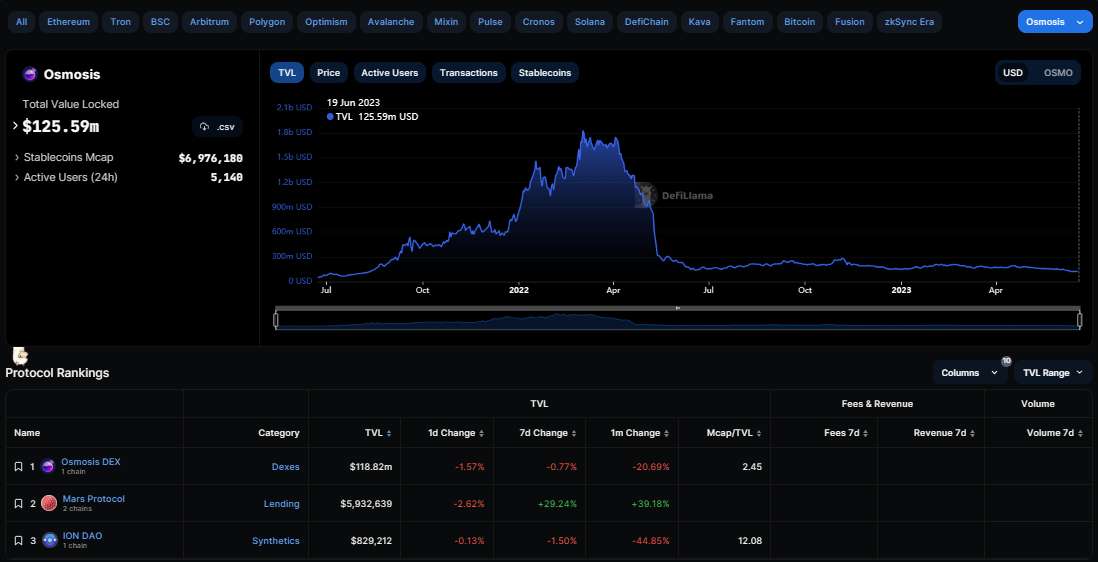
DeFiLlama, a decentralized finance total value locked (TVL) aggregator, shows that the Osmosis DEX holds over $125 million in crypto assets, with a TVL nearing $120 million.
Moreover, the upgrade will transfer emissions and incentives toward Stakers, rewarding users for actively participating in the network’s security and governance.
About Osmosis
Osmosis is the primary decentralized exchange of the Cosmos ecosystem. The native asset of the Cosmos DeFi is ATOM, which operates alongside bridged tokens like Axelar wrapped BTC, ETH, and USD Coin (USDC) stablecoin.
Author

Lockridge Okoth
FXStreet
Lockridge is a believer in the transformative power of crypto and the blockchain industry.