Is DeFi still the golden investment opportunity it once was?

After its explosion onto the cryptocurrency marketplace in the summer of 2020, DeFi tokens have experienced a volatile end to the year. With some signs of recovery emerging in the decentralized finance marketplace, can we still look to DeFi as the golden investment opportunity that it once was?
The rise of decentralized finance was nothing short of meteoric, assets were emerging out of nowhere in the crypto landscape to skyrocket in value over remarkably short timeframes.
(Image: CoinGecko)
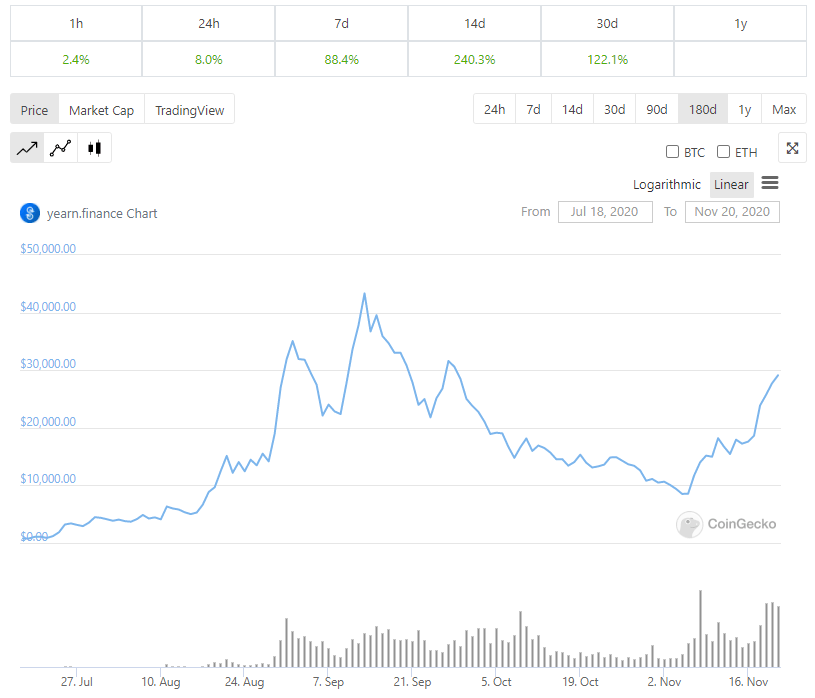
One of the most notable tokens to enter the scene was yearn.finance, which was catapulted from an early value of $31 on July 18th all the way to almost $44,000 less than two months later on September 12th.
But the chart above also shows the extreme fluctuations that have followed yearn.finance in its short lifespan. With other DeFi assets like Sushi and Uniswap rocketing to significant highs before dropping heavily in value, some market commentators dismissed the decentralized finance tokens as a Ponzi scheme. However, many of the embattled assets have shown encouraging signs of recovery in recent weeks.
(Image: DeFi Pulse)
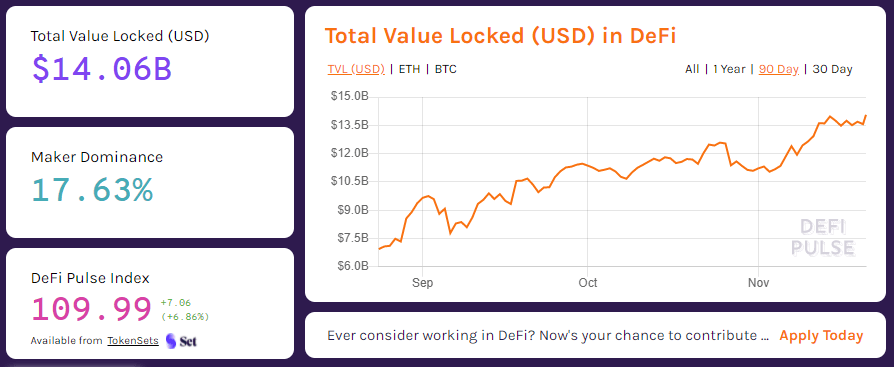
Despite the various tokens pegged to DeFi experiencing mixed fortunes, the total value of money locked into decentralized finance has been increasing at a rapid rate to over $14 billion. So, is DeFi’s erratic autumn just a blip? Or are the tokens that caused such excitement in summer simply living in a bubble?
Why DeFi is Different
Before we explore the future of decentralized finance, let’s take a look at why DeFi is different to other cryptocurrencies.
Decentralized finance is an ecosystem that aims to supply access to traditional financial systems for everybody. This is done by the implementation of borderless, permissionless and uncensored systems that are built using Ethereum’s blockchain framework.
This means that traditional financial services like trading, lending, borrowing, payments and insurance can be coded into intuitive smart contracts that can instantly broker deals, execute agreements and freely transfer money all without the need for middlemen or paperwork - thanks to a global peer-to-peer financial network.
The implications of DeFi on the wider world of finance are huge. Decentralized finance has the potential to democratise access to financial services to individuals who wouldn’t otherwise meet the criteria needed for such services today - such as the financial status, location, currency used, income level, age or profession. This means that DeFi can become a driving force for economic growth and actively level the playing field between disadvantaged communities and the developed world.
Decentralized finance can also save businesses fortunes in enabling parties to formulate binding and secure smart contracts that can be actioned in a frictionless manner, with little-to-no associated fees, and without any mediation.
Life After The Bubble
Changpeng Zhao, CEO of the world’s largest cryptocurrency exchange in Binance believes that many decentralized finance protocols are currently operating in a bubble, but that doesn’t mean that they’re going anywhere fast.
“A lot of DeFi projects are already in a bubble, and I also believe that there are some signs of a bubble in the DeFi industry, but this does not mean that DeFi will eventually disappear entirely. Even now, with Bitcoin’s popularity rising again, DeFi is still popular. We think there is a lot of growth potential in DeFi,” Zhao explained.
However, Zhao also warned that the current bubble that many DeFi tokens are wrapped in means that many early projects could quickly disappear, despite offering up relatively strong financial incentives for users.
Many of the world’s leading cryptocurrency exchanges have become faster to verify and list emerging DeFi tokens, which may prove highly profitable for investors who choose to buy into the right project at the right time.
With the arrival of some much talked about DeFi tokens like RSR and OCEAN freshly arriving on more exchanges over the coming weeks and months, there can certainly be some short-term profits to be made if traders time their movements strategically, but it won’t be until the decentralized finance bubble bursts that we’ll be able to see the true scaling of the revolutionary reformation of modern financial services.
Could DeFi Tokens Topple Bitcoin?
One of the advantages of DeFi over established cryptocurrencies like Bitcoin is that it’s technologically advanced enough and adaptable enough to supply potentially revolutionary services for users across the world.
(Image: CoinMarketCap)
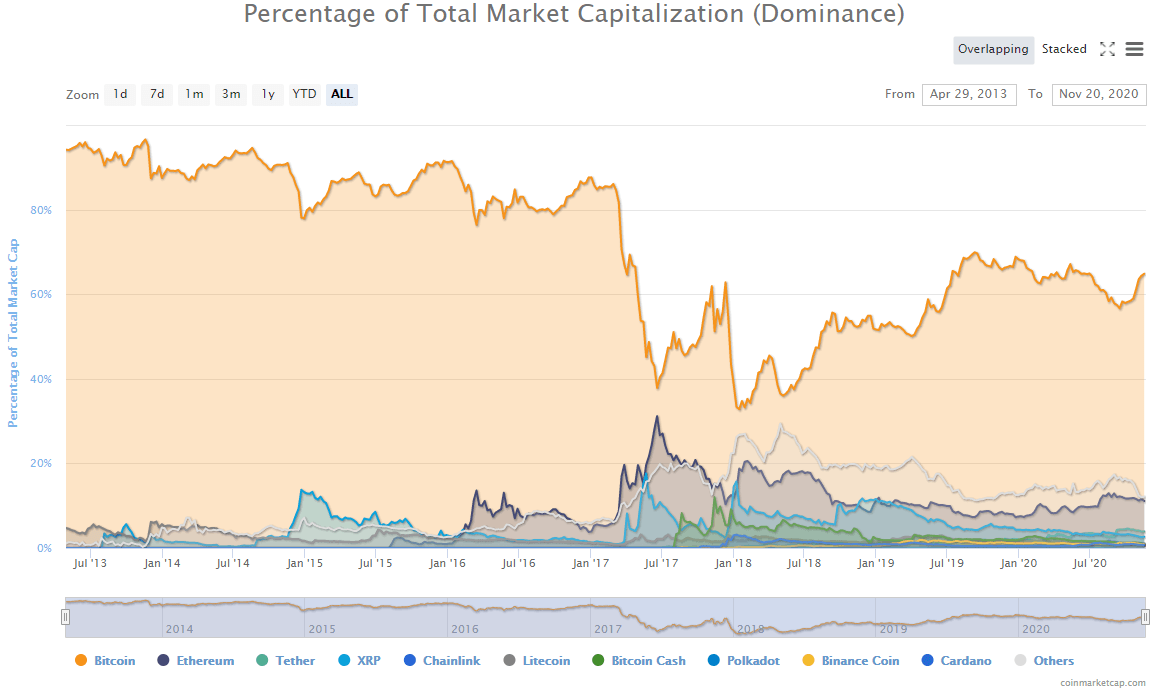
Bitcoin fundamentally exists as a store of finance, and it’s extremely good at this job. In fact, the market dominance of BTC alone still stands at almost two-thirds of the entire crypto market - an astounding figure considering the countless altcoins emerging each day.
While DeFi tokens can be more practical than Bitcoin, DeFi would face a significant battle in toppling longer service cryptocurrencies. However, this doesn’t mean that investors can’t enjoy taking advantage of the many opportunities that will present themselves in the DeFi ecosystem.
In a burgeoning new market, the more brave cryptocurrency traders among us may look to make fortunes from the relatively unknown future of DeFi tokens. The market is facing more volatility in the future before there are signs of settling, but that’s just how many short-term investors like it.
Author

Dmytro Spilka
Solvid
Dmytro is a tech, blockchain and crypto writer based in London. Founder and CEO at Solvid. Founder of Pridicto, an AI-powered web analytics SaaS.