Here is why Zelenskyy visiting Brussels triggers a risk premium for MASK Network price
- Ukrainian President Zelenskyy is visiting Brussels onThursday with a plea for fighter jets.
- As another Russian push is set to happen at the end of February, the clock is ticking for the West to provide more support.
- The ramp-up in tensions means more risk for risk assets such as cryptos.

Mask Network (MASK) price is trading 2% lower on the day as headwinds are piling up again for the bullish believers. Not only is the return of higher oil prices a risk for inflation soon spiking again, but gas storage is slinking quite rapidly to lower levels in Europe, with the bloc’s reserve at 68%. Meanwhile, all eyes are on Brussels as Zelenskyy is set to ask for fighter jets, which could trigger another level of escalation between Russia and Ukraine.
The Mask Network price is still under pressure from topside bearish forces
The Mask Network is a perfect image of what is currently happening on the world stage in this nearly one-year anniversary of the Russian invasion of Ukraine. With Zelenskyy in Brussels to ask for fighter jets, another chapter in escalation is set to happen should the EU give the green light, while the clock is ticking as Russia prepares for a second attack to gain control of the country. Meanwhile, EU heads of state need to address their issues as energy prices are soaring again as gas tank reserves have seen accelerated declines in the past two weeks.
From a purely technical point of view, MASK is making sense as well. The red descending trend line has been a clear guide for nearly nine months. With a clear rejection in November of 2022 and January of 2023, the decline toward $4 makes sense. Worrying some onlookers is that should the green belt of green ascending trend lines break, a nosedive move could be seen toward $2.50. This could trigger a 44% decline in case geopolitics further deteriorate with inflation peaking again.
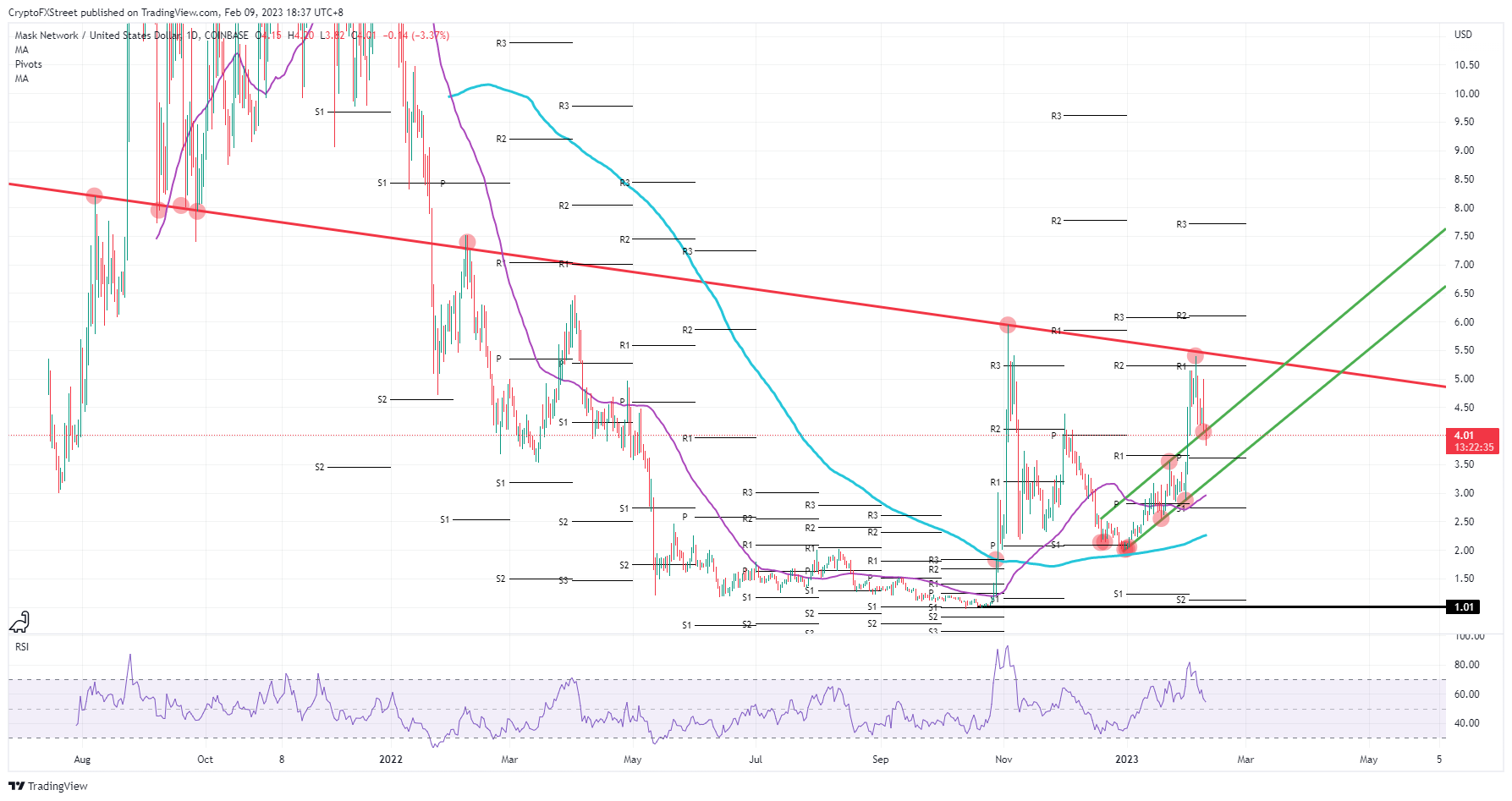
MASK/USD daily chart
The lower bound of that trend channel looks quite interesting for firm support, and the 55-day Simple Moving Average is forming a double layer of support. Bulls who are looking for an entry in the form of a bounce, or a fade-in, will have the area marked up. The red descending trend line should not form an issue, as only testing it already means a nice 48% gain could be booked.
Author

Filip Lagaart
FXStreet
Filip Lagaart is a former sales/trader with over 15 years of financial markets expertise under its belt.