Ethereum fees briefly jumped to $100 after BlackRock’s ETH ETF filing

Heightened demand for block space on the Ethereum network has made transactional activity significantly more expensive for ether (ETH) users in the past 24 hours, data from Dune Analytics show.
Fees, as measured by median gas prices, spiked to as high as 270 gwei late on Thursday, temporarily touching a level last seen in June 2022. That pushed up costs of trading swaps to anywhere from $60 to $100 for a few hours. Gwei is a small unit of ether (ETH) equal to one-billionth of an ETH and is used to denominate gas prices. Gas refers to the fees Ethereum users pay to ensure their transactions are included in the earliest block by network validators.
As of writing, gas fees, used to pay for any activity on Ethereum, were 33 gwei, the highest since May. Ether transfers between wallets cost an average of $30 as of Asian morning hours on Friday.
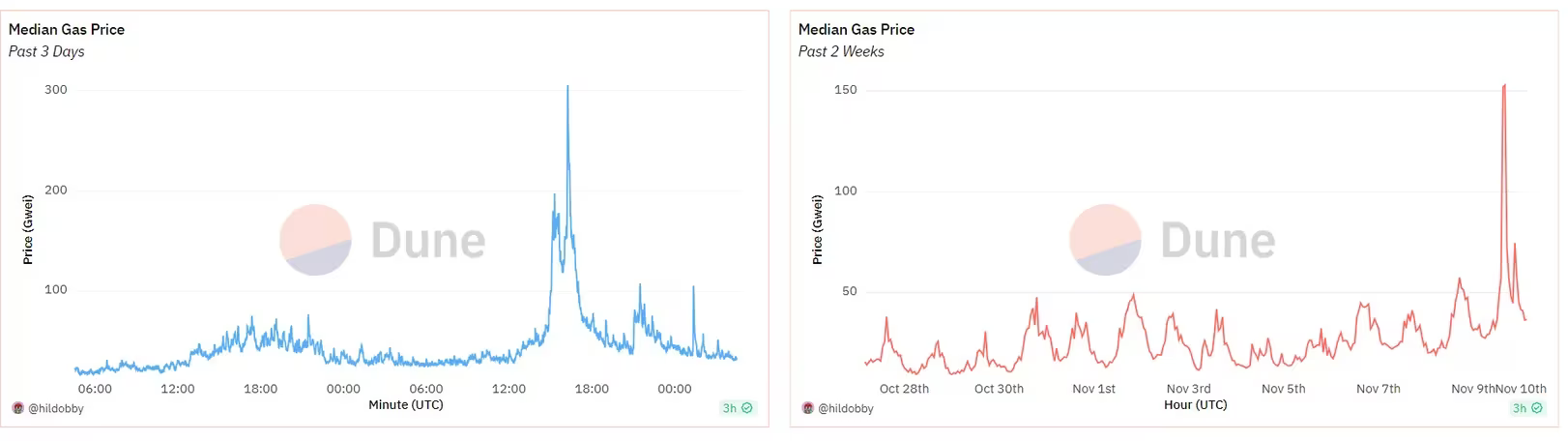
Ether fees spiked late on Thursday. (Dune)
The surge in fees came as investors discovered financial behemoth BlackRock had filed for an exchange-traded fund (ETF) that holds ether (ETH), months after its bitcoin ETF filing. This likely buoyed investor sentiment – as prices jumped as much as 10% to cross the $2,000 mark.
Ethereum validators are incentivized to include transactions that pay the highest fees instead of a first-come-first-serve basis – meaning fees on popular tokens can often run to thousands of dollars.
Nansen data suggests that on-chain activity has remained tepid relative to a more bullish period in 2022 – indicating retail audiences have been largely absent from on-chain trading.
“There is no inclination of on-chain activity increasing alongside it in terms of DAUs and newly funded addresses entering the Ethereum ecosystem,” Nansen analyst Jake Kennis shared in a Thursday message.
“This suggests that on-chain activity may be lagging price action here or that we are not seeing the on-chain follow-through that is normally seen with this type of increased market activity as of yet," Kennis added.
Author

CoinDesk Analysis Team
CoinDesk
CoinDesk is the media platform for the next generation of investors exploring how cryptocurrencies and digital assets are contributing to the evolution of the global financial system.



