Ethereum dApps deemed “not-decentralized” after WalletConnect blocks Russian users from the protocol
- Ethereum wallet and protocol communication protocol WalletConnect is facing heat for blocking users from Russia and Ukraine.
- The protocol was criticized for defeating the purpose of blockchain and decentralization by controlling access to services.
- WalletConnect CEO Pedro Gomes cited legal and OFAC guidance as the reason behind the move.

Ethereum is called the home of decentralized finance (DeFi), owing to the vast array of protocols running on the chain, which amount to nearly 950. Thus, it does not come as a surprise when users react negatively to the supposed “decentralized” applications and decide to alter who can and cannot access their protocols.
Ethereum dApps: Not so decentralized
Ethereum is the base chain that supports the operation of the open-source protocol that enables the communication and interaction between a wallet and dApps. The protocol recently became the target of crypto enthusiasts after WalletConnect decided to take some measures.
The protocol over the past 24 hours blocked all users from Russia and some parts of Ukraine. People using the service were given an “error 1009 access denied” message. As this came to light, crypto users, as well as influencers, took to X, formerly Twitter, to express their anger over the app.
Popular crypto researcher Chris Blec tweeted,
“WalletConnect, an app that is deeply baked into the Ethereum DeFi ecosystem, is now blocking normal users in Ukraine, Russia, North Korea, Iran, Cuba, and Syria. They are punishing these people for the sins of their tyrannical governments. This is the state of Ethereum in 2023.
These claims can be verified by accessing the source code of the protocol since it is open-source, wherein it is evident that not just Russia and Ukraine but users from North Korea, Syria, Cuba and Iran are also facing similar issues.
Users even suggested that the fact that such an option exists is proof that the protocol is not truly decentralized. The point of being decentralized is so that no one authority or entity can control the actions of other participants, which has been evidently flouted by WalletConnect. Another user stated,
“Seriously, I just lost my business forever. A custody interface platform ability to block usage by geo is not protection it is liability — this should not be engineered into their connect platform.
WalletConnect supports over 75 top wallets on the blockchain, which makes this move rather significant, given about 6.76% of the entire traffic they receive comes from Russia, making it their third largest target country.
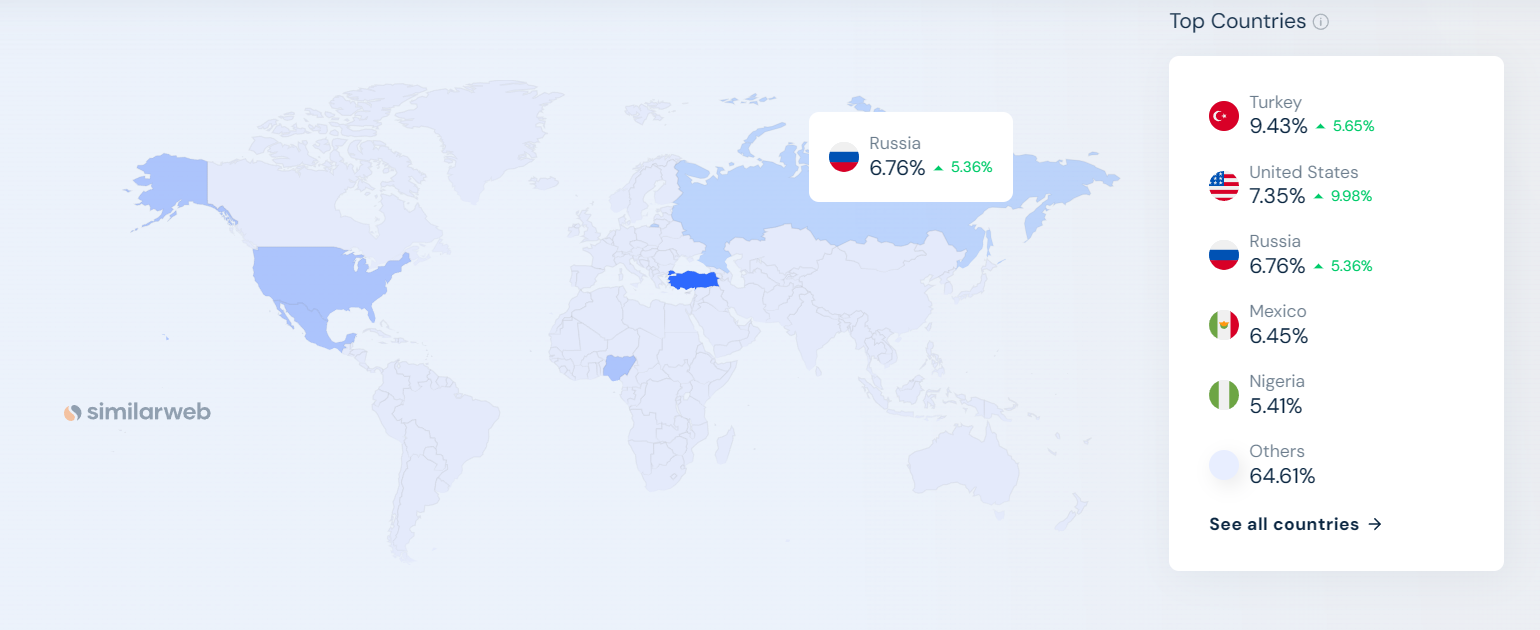
WalletConnect traffic source
WalletConnect blames regulation
WalletConnect, upon being criticized for their decision, issued a statement on Twitter where they cited the latest legal and OFAC (Office of Foreign Assets Control) guidance. The Delaware-based protocol is facing the same problems as other crypto companies in the United States: lack of clear regulations.
Back when Russia attacked Ukraine in February this year, the regulatory authorities in the US ensured sanctions on certain Russian oligarchs and blocked their access on Binance, Coinbase and other top exchanges to prevent them from selling their crypto holdings.
Thus, in the end, the blame goes back to the regulatory issue in the USA. WalletConnect CEO Pedro Gomes, in the statement, also said that while some Ukraine areas’ IP addresses were blocked initially, they have since been re-enabled. He also did not confirm the blocking of other countries mentioned in the GitHub source code, saying, “We can confirm that no other countries were blocked”.
Author

Aaryamann Shrivastava
FXStreet
Aaryamann Shrivastava is a Cryptocurrency journalist and market analyst with over 1,000 articles under his name. Graduated with an Honours in Journalism, he has been part of the crypto industry for more than a year now.