CEX trading volumes fell to 4-year lows even before Binance, Coinbase suits

Trading volumes on centralized exchanges have fallen to their lowest levels in more than four years amid mounting regulatory pressure from United States regulators and lawmakers.
According to a June 7 report from crypto analytics firm CCData, combined spot and derivatives trading volume in May fell 15.7% from the previous month, marking the second consecutive month of dwindling crypto trading activity.
As the data is only current to the end of May, it does not take into account any potential impact from the recent SEC lawsuits against Coinbase or Binance.
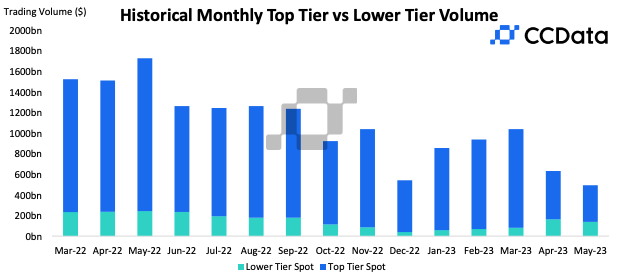
Total monthly spot trading volume on centralized exchanges since May 2022. Source: CCData
CCData shows that of all the major firms to suffer a decline in trading volumes, Binance was hit the hardest.
In May, Binance gave up even more of its total market share, falling to just 43% overall, down from its peak of 57% in February. This marked the third consecutive month that Binance’s total market share declined.
The report said this bulk of this decline can be attributed to Binance removing zero-fee trading for USDT pairs but noted the exchange was no doubt feeling the squeeze of increased scrutiny from regulators in the U.S.
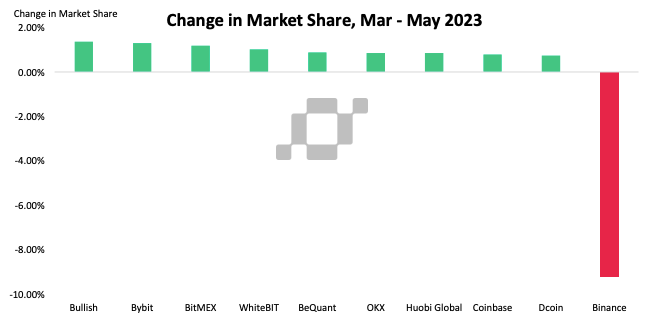
Top centralized exchange market share change March thru May. Source: CCData.
The largest beneficiaries of Binance’s market share slide were crypto exchanges Bullish, Bybit and BitMEX, which each gained a little more than 1% in market share between March and May.
On June 5, the SEC sued Binance and its CEO, Changpeng Zhao, for failing to register as a securities exchange and for offering unregistered securities. Within 24 hours, the net outflows from Binance topped $778 million, though the company has assured the public that their assets remain safe.
In the 48 hours following, the median trading volume across the top three decentralized exchanges (DEX) jumped 444%.
Related: Binance.US coins trade at premium amid litigation fears, fiat gateway issues
Despite overall trading volumes waning — mostly due to spot trading — the market share of derivatives trading across centralized exchanges increased, notching a new record in the process.
According to the report, the derivatives market on centralized exchanges now represents 79.5% of the entire crypto market, a 1.2% increase from 78.3% in April. Still, total derivatives volumes decreased by 14.4% in May.
Author

Cointelegraph Team
Cointelegraph
We are privileged enough to work with the best and brightest in Bitcoin.