|

Bitcoin's 'estimated leverage ratio' hits lowest since December 2021

A key metric gauging the use of leverage in the Bitcoin (BTC) market continues to slide, signaling low price volatility in the future.

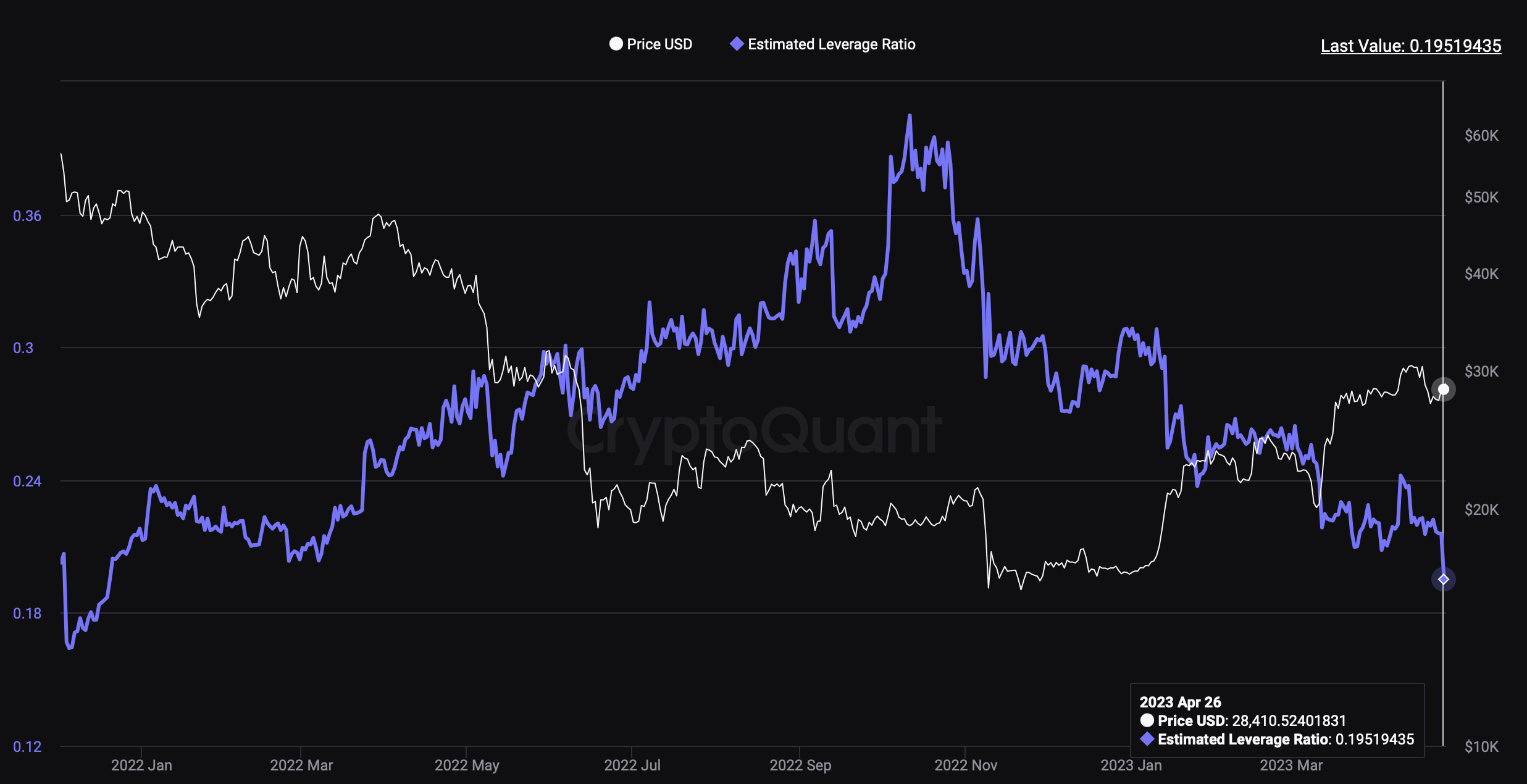
Bitcoin's estimated leverage ratio, calculated by dividing the dollar value locked in the active open perpetual futures contracts by the total number of coins held by derivatives exchanges, fell to 0.195 on Wednesday, reaching the lowest since Dec. 20, 2021, per data tracked by analytics firm CryptoQuant.

Since October, the ratio has halved indicating a sharp decline in the degree of leverage employed in the market to magnify returns.

Other things being equal, a dwindling ratio also means less sensitivity of the spot market to the derivatives market activity. In other words, episodes of liquidations-induced wild price swings, the likes of which was seen on Wednesday, may become rare going forward.

Perpetuals are futures contracts with no expiry that use the funding rate mechanism to keep prices tethered to the spot market price. Leverage allows users to open positions worth more than the money or coins deposited at the exchange. The use of leverage exposes traders to liquidations – forced unwinding of bullish long or bearish short positions due to margin shortage. Mass liquidations end up injecting volatility into the market.

A reduced Bitcoin price volatility may bring more mainstream participation in the crypto market.
Chart

The ratio has halved since October. (CryptoQuant) (CryptoQuant)

The estimated leverage ratio has been in free fall since Sam Bankman Fried's FTX went bust in early November. The exchange was known for its perpetual futures product, offering leverage up to 20 times the collateral traders posted.

Author

CoinDesk Analysis Team

CoinDesk is the media platform for the next generation of investors exploring how cryptocurrencies and digital assets are contributing to the evolution of the global financial system.


More from CoinDesk Analysis Team
Share:

Markets move fast. We move first.

Orange Juice Newsletter brings you expert driven insights - not headlines. Every day on your inbox.

By subscribing you agree to our Terms and conditions.

Editor's Picks

AAVE slips below $186 as bearish signals outweigh the SEC investigation closure

Aave (AAVE) price continues its decline, trading below $186 at the time of writing on Wednesday after a rejection at the key resistance zone. Derivatives positioning and momentum indicators suggest that bearish forces still dominate in the near term.

Hyperliquid stabilizes amid plans to burn assistance fund

Hyperliquid (HYPE) stabilizes above $26 at press time on Wednesday after three straight days of losses. Hyperliquid Foundation has started a validator vote to reduce supply by burning the assistance fund, which holds over 37 million HYPE tokens.

Top 3 Price Prediction: Bitcoin, Ethereum, Ripple extend correction as bearish momentum builds

Bitcoin, Ethereum, and Ripple remain under pressure as the broader market continues its corrective phase into midweek. The weak price action of these top three cryptocurrencies by market capitalization suggests a deeper correction.

Ethereum Price Forecast: Active addresses plunge to May levels amid resumption in US selling pressure

Ethereum (ETH) weekly active addresses have plunged sharply in December, declining from 440K to 324K, levels last visited in May. The decline in active addresses has also pushed down the number of transactions on the network to July lows.

Orange Juice Newsletter – Smart insights by real people. Every day.

A free newsletter highlighting key market trends to help traders stay a step ahead. Daily insights on the most relevant trading topics, compiled by our experts in an easy-to-read format so you never miss an important move.

Bitcoin: Fed delivers, yet fails to impress BTC traders

Bitcoin (BTC) continues de trade within the recent consolidation phase, hovering around $92,000 at the time of writing on Friday, as investors digest the Federal Reserve’s (Fed) cautious December rate cut and its implications for risk assets.