Bitcoin Taproot upgrade faces difficulties as less than 28% voted for support
- A new upgrade that would make the Bitcoin ecosystem more secure and user-friendly will be going live by the end of this year.
- The Taproot upgrade will require 90% of the processed blocks to signal support.
- 44% of blocks have not signaled support, putting the minimum required threshold far out of reach.

As part of Bitcoin’s evolutionary path, the Taproot upgrade is the latest step to enhance the network’s usability and security. The much-awaited upgrade is expected to go live at the end of this year.
45% of blocks did not signal support
Following the block size increase in 2017, Taproot is the most significant upgrade to the leading cryptocurrency network so far. Amendments to the Bitcoin network are relatively infrequent, as the process is difficult, having to achieve consensus among a diverse and dispersed group of participants.
In March, an agreement was set in place in favor of Taproot, in the form of a “Speedy Trial,” giving miners a series of two-week blocks to signal support for the upgrade. In the month that followed, the code for the Speedy Trial was merged into Bitcoin Core, setting the first step toward activation.
At the time, the Bitcoin community agreed that the upgrade would benefit the network, making complex transactions more scalable and private. Other advantages of the upgrade include lower fees, as the data size of large transactions will be reduced, and more flexibility – enhancing smart contract functionality on the blockchain.
The Speedy Trial kicked off last week, which allowed miners who wish to adopt the upgrade to signal their support by adding special data in the blocks they mine with a “signal bit.” There would also be a three-month activation period which would allow miners to signal for the upgrade.
90% of blocks mined before the next difficulty adjustment must include the signal bit for the upgrade to be ready for activation in November this year.
The current signaling round would appear to be unsuccessful as only under 28% of blocks have agreed to the Taproot activation, while 45% had not signaled support, putting the minimum required threshold of 90% out of reach.
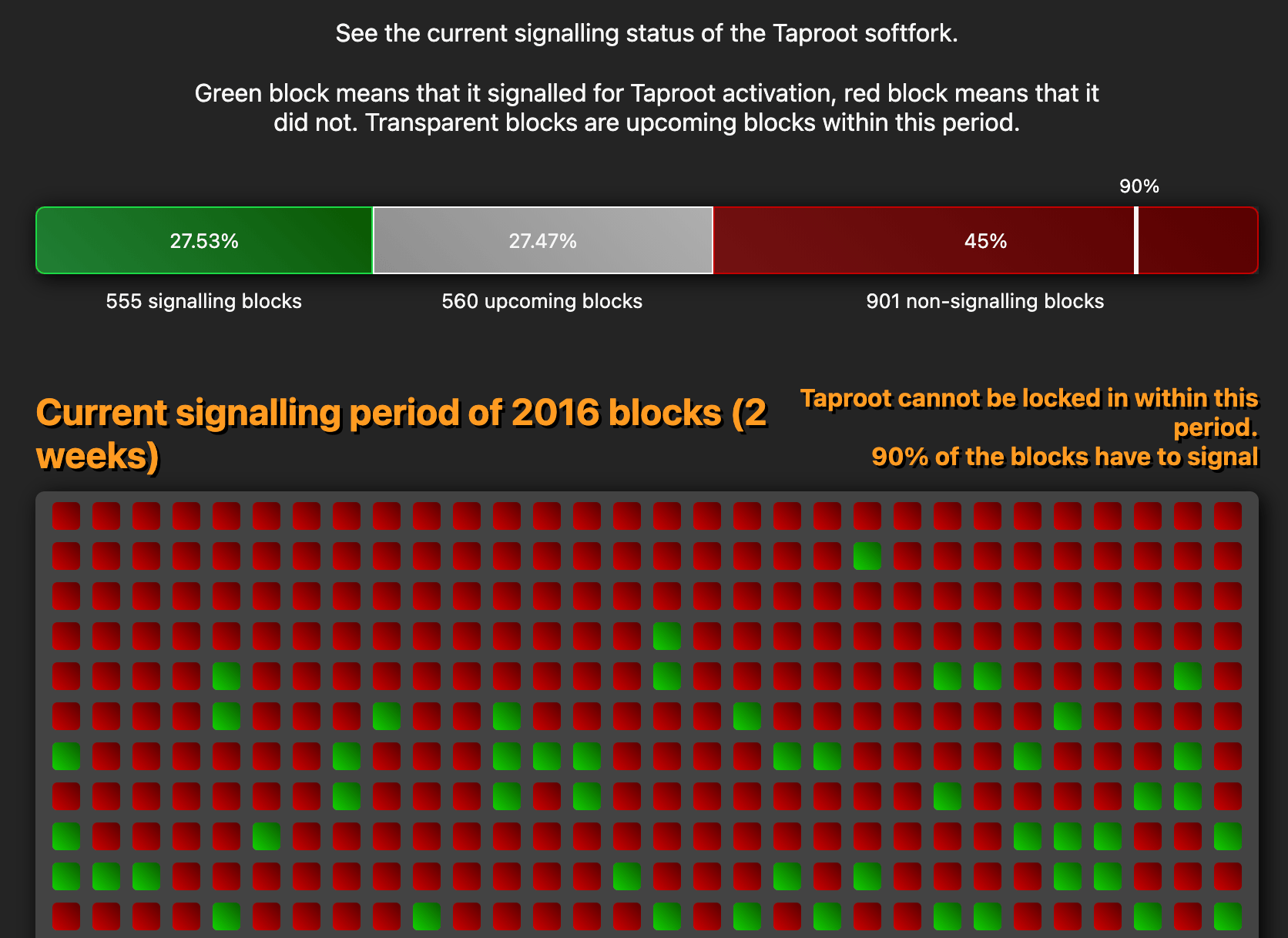
Bitcoin Taproot activation
Despite the difficulties in reaching a consensus this round, the next two-week window for miners to signal support would start again. The network would try over and over again every two weeks until August 11. If by that date the 90% threshold has not been reached, Taproot would not be activated.
Chinese cryptocurrency journalist Colin Wu revealed that most mining pools had not voted either because they are currently seeking advice from miners or due to technical issues. According to Wu, most miners stated that they would support the Taproot upgrade.
Author

Sarah Tran
Independent Analyst
Sarah has closely followed the growth of blockchain technology and its adoption since 2016.