Yen Flash Rally & Apple’s Warning

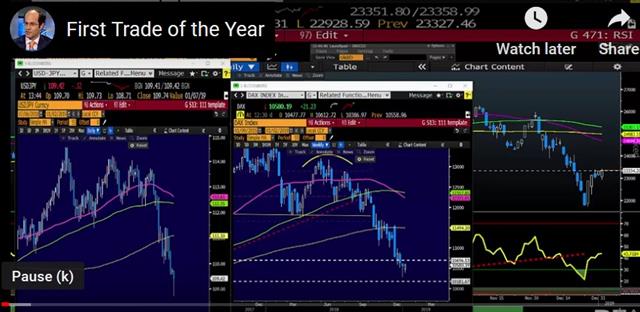
Yen pairs have soared at about 17:45 Eastern (22:45 GMT/London) in a similar on a combination of late reaction to plummeting equity futures following negative guidance from Apple. USDJPY collpased from 108.90 to 104.87 in under 5 minutes. Like the pound flash crash in October 2016, the JPY flash rally has occured in the sleepiest part of the trading dray, when Asian traders are not only not at their trading desks, but also because Japanese markets are officially still holiday. Japanese markets don't re-open til Friday (unofficially next week), which sets up a dangerous combination of ultra-light liquidity and automatically triggered algos to unleash lightening volatility. The market was already concerned about China and Apple thew gasoline on the fire late Wednesday by cutting its guidance and blaming an economic slowdown in China. Today's new trade has been covered in detail in the Premium video below.
The dip below 50 in the Caixin China PMI shouldn't have been a big surprise after the official measure broke that key level last week but it reinvigorated worries about a slowdown and sparked a run on risk trades.
Equity markets showed some resilience with the S&P 500 closing slightly higher after futures had fallen as much as 60 points. The FX market was less enthusiastic as the yen crosses and Aussie remained near the lows.
The big surprise came late in the day when Apple CEO Tim Cook cut guidance for the current quarter and blamed it almost entirely on an economic slowdown in China. “We did not foresee the magnitude of the economic deceleration, particularly in Greater China,” he wrote.
The note sent shares down 7% in the aftermarket but also sent AUD/USD to a fresh 22-month low of 0.6970. Companies often have especially good insight into real-time trends in the economy and a big-ticket item like an iPhone can be a particularly good gauge.
At the same time, China has been targeting Apple and that included an import ban in the quarter and a boycott in favor of Huawei may also be a factor. Yet this isn't an isolated factor and it will put an added emphasis on data.
Author

Adam Button
AshrafLaidi.com
Adam Button has been a currency analyst at Intermarket Strategy since 2012. He is also the CEO and a currency analyst at ForexLive.