World Markets Tumble After Huawei Executive Arrest

The price of crude oil dropped today after OPEC members agreed to a moderate supply reduction to enable them to balance the market. The statement tried to prevent a supply glut and at the same appease the US president. This is because the president has not moved to punish Saudi Arabia after murdering Jamal Khashoggi. In a statement after the meeting, Saudi oil minister said:
We in the kingdom are going to be advocating something adequate to balance the market. A cut of about 1 million barrels a day from the whole group should be adequate and “certainly we don’t want to shock the market.
As the cartel was meeting, Russia’s oil minister, Alexander Novak rushed to Russia to consult with Vladimir Putin about the supply cuts. Russia is not a member of OPEC but in recent years, it has worked closely with the organization.
World markets declined today after Canada arrested the CFO of Huawei at the request of the United States. The CFO, who is also the daughter of the company’s founder was arrested for allegedly violating Iranian sanctions. This led to European stocks to decline at the lowest level in two years. The Stoxx is having its worst month since October. In Asia stocks ended the day in the red and in the United States, the Dow and S&P pointed to a sharp decline of 400 and 40 points respectively. These declines are happening a few days after Trump met with his Chinese counterpart at the G20 meeting.
The USD declined today after ADP released the non-farm payroll numbers. The numbers showed that the economy created 179K jobs in November, which was lower than the consensus estimate of 196K. This data often differs by a large margin with the official government data from the Labor department. Shortly after the data was released, the jobless claims numbers also disappointed. The initial jobless claims increased to 231K, which was higher than the consensus estimate of 226K. The continuing jobless claims of 1,631K was better than the estimated 1,700K.
XTI/USD
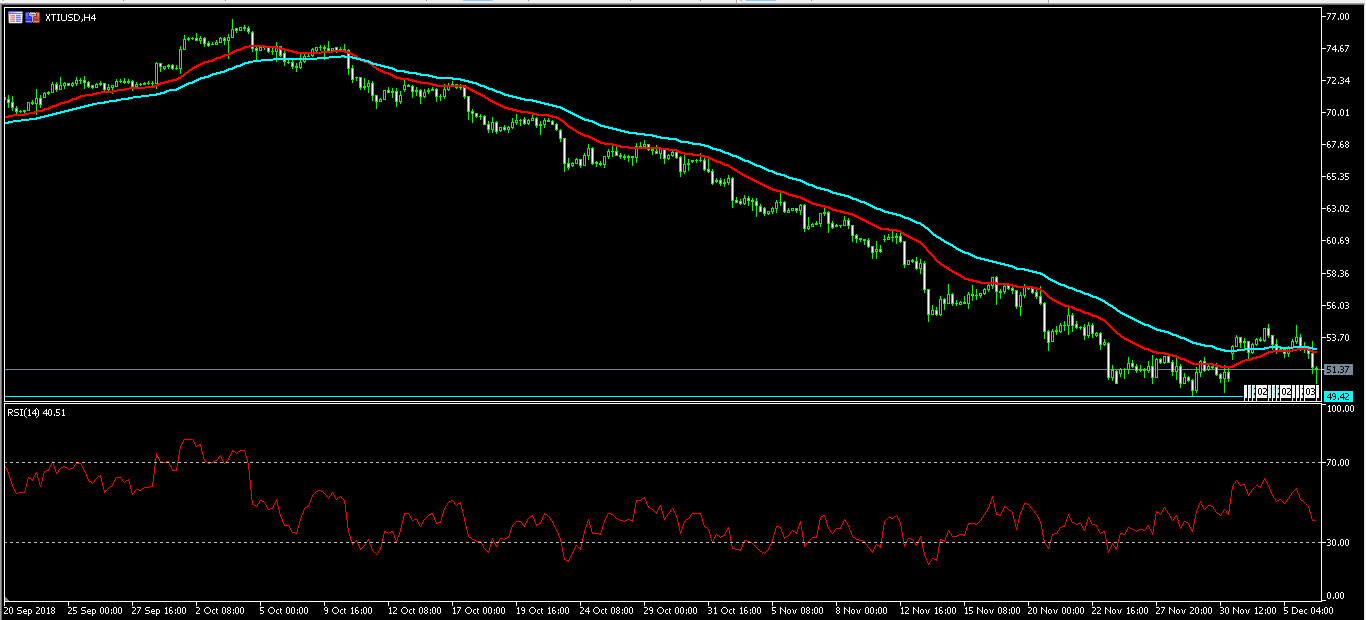
The price of crude oil dropped after the statement by OPEC. The XTI/USD pair moved to an intraday low of 50.30, ending a minor rally that started on Monday. The price will likely be affected later today by the inventory numbers from the US. On the four-hour chart below, the pair’s price is close to last week’s low of 49.42. Its price is also below the 50-day and 25-day EMA while the RSI has dropped from 62 to 40. It points to a continued pace of declines. Therefore, with today’s statement by OPEC, there is a likelihood that the pair will continue moving lower. However, the price could start a rally if US congress moves ahead with the planned retaliation over Khashoggi’s killing.
AUD/JPY
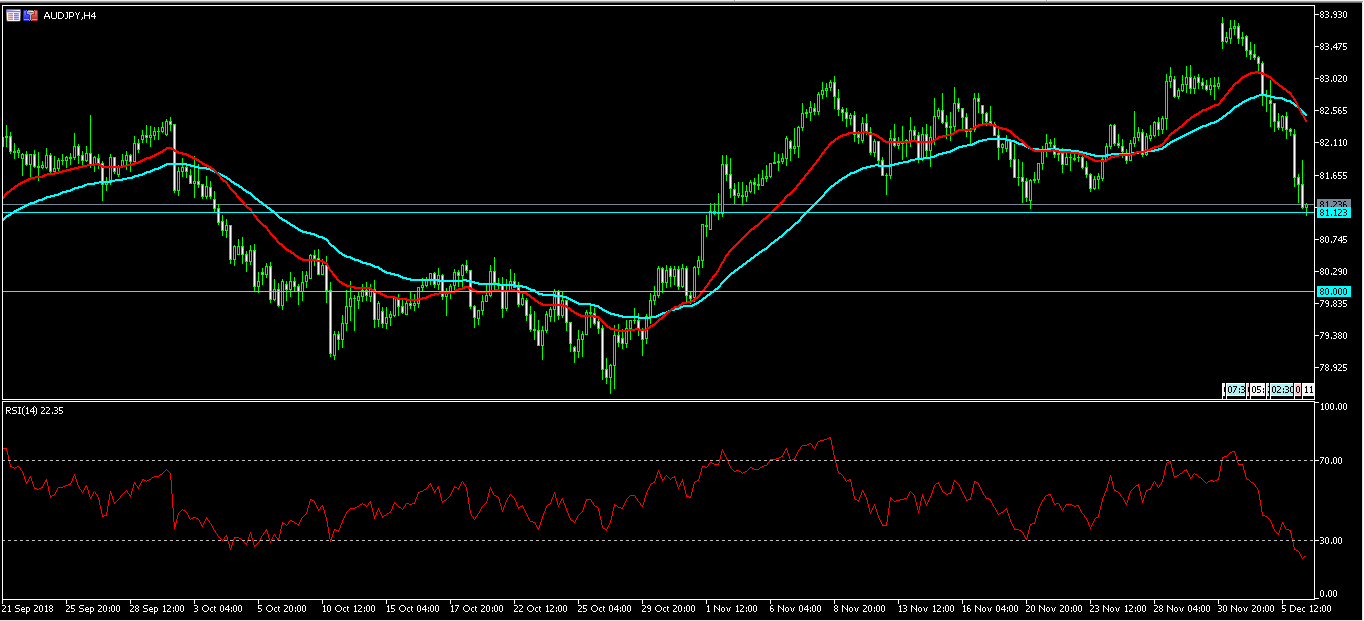
The AUD/JPY cross has fallen sharply since Monday. After a few weeks of upward trend, the pair has fallen by more than 2% after a series of disappointing data from Australia. As of writing, the pair is trading at 81.2, which is the lowest decline since the beginning of November. On the four-hour chart below, the pair’s current price is below the 25-day and 50-day EMA. The RSI has moved from 75 to the current 25 and there are signs that it will continue moving lower. If it moves below the current support, the pair will likely continue moving lower to the support of 80.
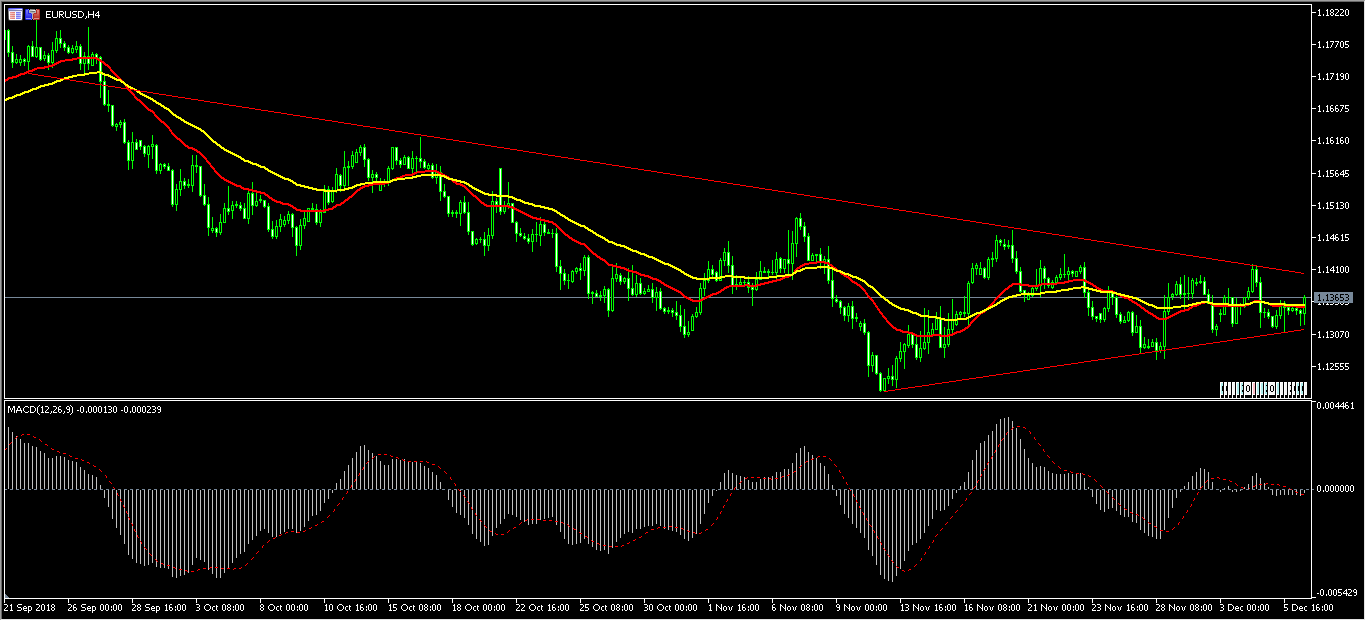
The EUR/USD pair moved up slightly after ADP released the payroll numbers. It reached an intraday high of 1.1370. Still, this was a slight movement and is within the narrow range the pair has been trading in over the past few days. The MACD on the four-hour chart was unmoved and was along the neutral level. The price was also along the short-term moving averages. With the pair close to the apex of the triangular pattern, the pair will likely have a breakout after the official government jobs numbers tomorrow.
Author
OctaFx Analyst Team
OctaFX
OctaFX is a market-leading forex broker, providing personalised forex brokerage services to customers in over 100 countries worldwide.