Why is Gold falling alongside tech stocks? A closer look at liquidity and the bond market

Something unusual happened across financial markets at the end of October.
Technology stocks suffered another sharp sell-off, gold dropped below $3,900, and silver continued its decline. At the same time, investors moved into US government bonds, pushing Treasury yields lower.
Under normal circumstances, falling bond yields could provide some support for both gold and growth stocks. Lower yields reduce the opportunity cost of holding non-yielding assets and can also make future corporate earnings more valuable.
Yet neither gold nor technology stocks managed to benefit.
This raises an interesting question. Are investors simply adjusting their expectations for interest rates and corporate earnings, or is the market beginning to experience a broader need for liquidity?
I think the answer may lie in the relationship between AI investment spending, financing conditions and the Federal Reserve's increasingly difficult policy environment.
The AI investment cycle is facing a different kind of test
For much of the AI expansion, investors have been willing to accept substantial capital expenditure in exchange for the prospect of higher future earnings.
That willingness now appears to be weakening.
The latest earnings reports suggest that investors are paying much closer attention to the relationship between investment spending and actual cash generation.
Alphabet, for example, lost more than 12% in a single session after disappointing results and concerns about the amount of money being committed to AI infrastructure. Amazon also came under pressure as investors questioned its spending requirements.
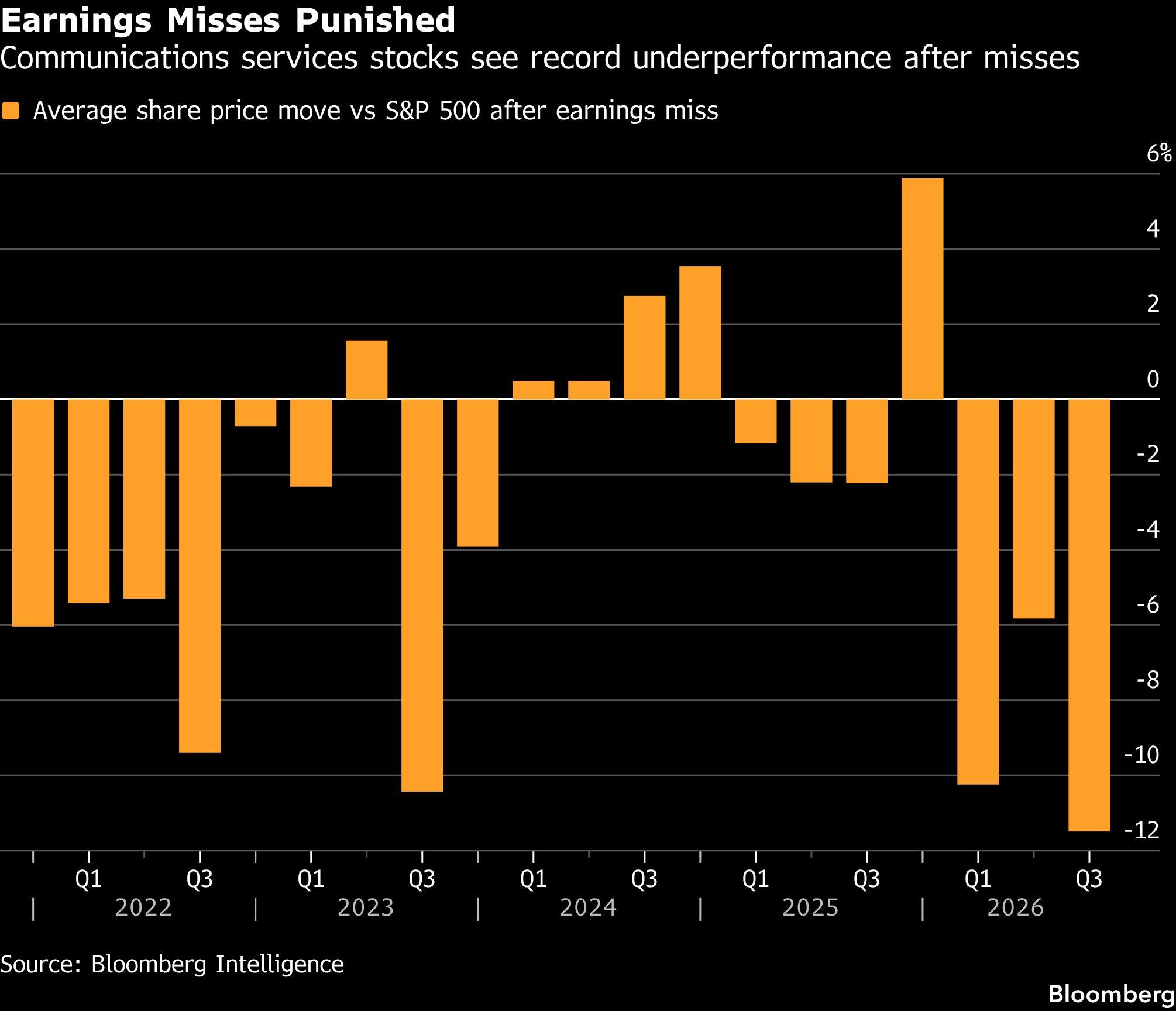
According to Bloomberg Intelligence, earnings growth in the technology sector was expected to slow from nearly 77% in the second quarter to approximately 65% in the third quarter.
That is still considerable growth, but the direction matters.
Companies are spending more on infrastructure while the pace of earnings growth is beginning to moderate.
The problem is not necessarily that artificial intelligence has stopped creating economic opportunities. It is that investors are becoming less willing to value those opportunities without stronger evidence of future profitability.
This was particularly visible on October 30, when the Nasdaq 100 declined by approximately 3.5%, according to Bloomberg.
There is an important distinction here.
A company can experience strong revenue growth and still face pressure on its valuation if the cost of generating that growth increases faster than investors expected.
For capital-intensive businesses, this becomes especially important when financing conditions are no longer as favorable as they once were.
And this is where the weakness in technology stocks may begin to matter for other asset classes.
Why gold is falling during a risk-off environment
Gold's recent performance is particularly interesting.
On October 30, spot gold fell to approximately $3,881 per ounce during the US session, according to Reuters. Silver also dropped below $50, continuing an exceptionally sharp decline from its previous highs.
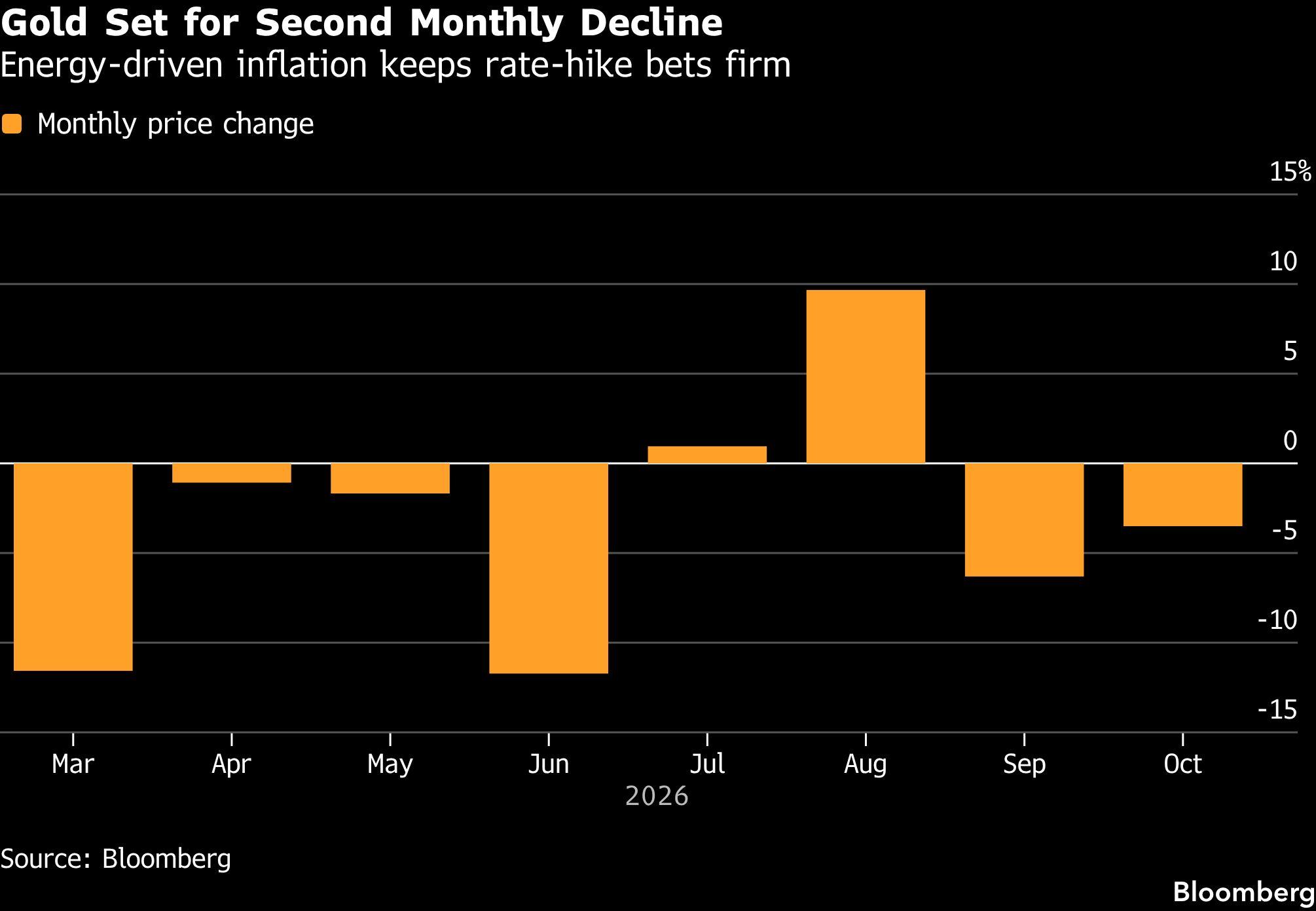
The move came during another significant sell-off in US equities.
Normally, we would expect gold to attract at least some defensive demand when investors become concerned about economic growth or financial market stability.
But gold is not only a safe-haven asset. It is also a highly liquid asset.
When investors face significant losses elsewhere in their portfolios, they may need to raise cash quickly. That can involve reducing leveraged positions, meeting margin requirements or selling assets that can be converted into cash without substantial difficulty.
Gold can become part of that process.
In other words, investors may sell gold not because they have become fundamentally bearish on the metal, but because they need liquidity.
Analysts at Commerzbank raised the possibility that forced selling and margin calls contributed to the latest decline in precious metals.
This explanation is plausible, although the available market data do not establish how much of the selling was directly related to margin calls.
There is another factor that makes the situation more complicated.
While Treasury yields declined during the equity sell-off, expectations of restrictive monetary policy remained an important source of pressure on precious metals.
Falling nominal bond yields do not necessarily mean that real yields are falling by the same amount.
And for gold, the direction of real interest rates matters considerably.
If nominal yields decline while inflation expectations fall even faster, real yields can actually increase.
That would make holding a non-yielding asset such as gold relatively less attractive.
The result is a market where several competing forces are operating at the same time.
Gold may benefit from lower interest rates and defensive demand, but those effects can be overwhelmed by liquidity requirements, changes in real yields or expectations that monetary policy will remain restrictive.
The treasury market is sending a different signal
The behavior of US government bonds adds another dimension to this development.
The yield on 10-year US Treasuries stood at approximately 5.05% on October 28, according to US Treasury data.
By October 30, it had declined to around 4.94%.
This was happening while technology stocks were experiencing substantial selling pressure.
One possible interpretation is that investors were reducing equity exposure and increasing their allocation to government bonds.
In that case, falling Treasury yields would reflect stronger demand for relatively safe assets rather than a straightforward improvement in financial conditions.
However, there is another possibility.
Bond investors may also be reassessing the sustainability of future economic growth, particularly if the technology investment cycle begins to slow.
That distinction is important.
If Treasury yields decline because inflation is moderating and financing conditions are improving, the environment could become more supportive for equities.
If yields decline because investors expect weaker growth, lower corporate earnings or greater financial stress, the implications are very different.
This is why I would be cautious about interpreting falling Treasury yields as an automatic bullish signal for the Nasdaq.
The reason behind the decline matters more than the decline itself.
Credit spreads are the missing piece
The next question is whether the weakness in equities is beginning to affect broader financing conditions.
A company's borrowing costs are determined by more than the underlying Treasury yield.
Investors also require compensation for taking corporate credit risk.
That additional compensation is reflected in credit spreads.
If Treasury yields decline while credit spreads widen more sharply, corporate borrowing costs can remain elevated or even increase.
For businesses that depend heavily on external financing, this can create difficulties.
However, the latest broad credit-market data require some caution.
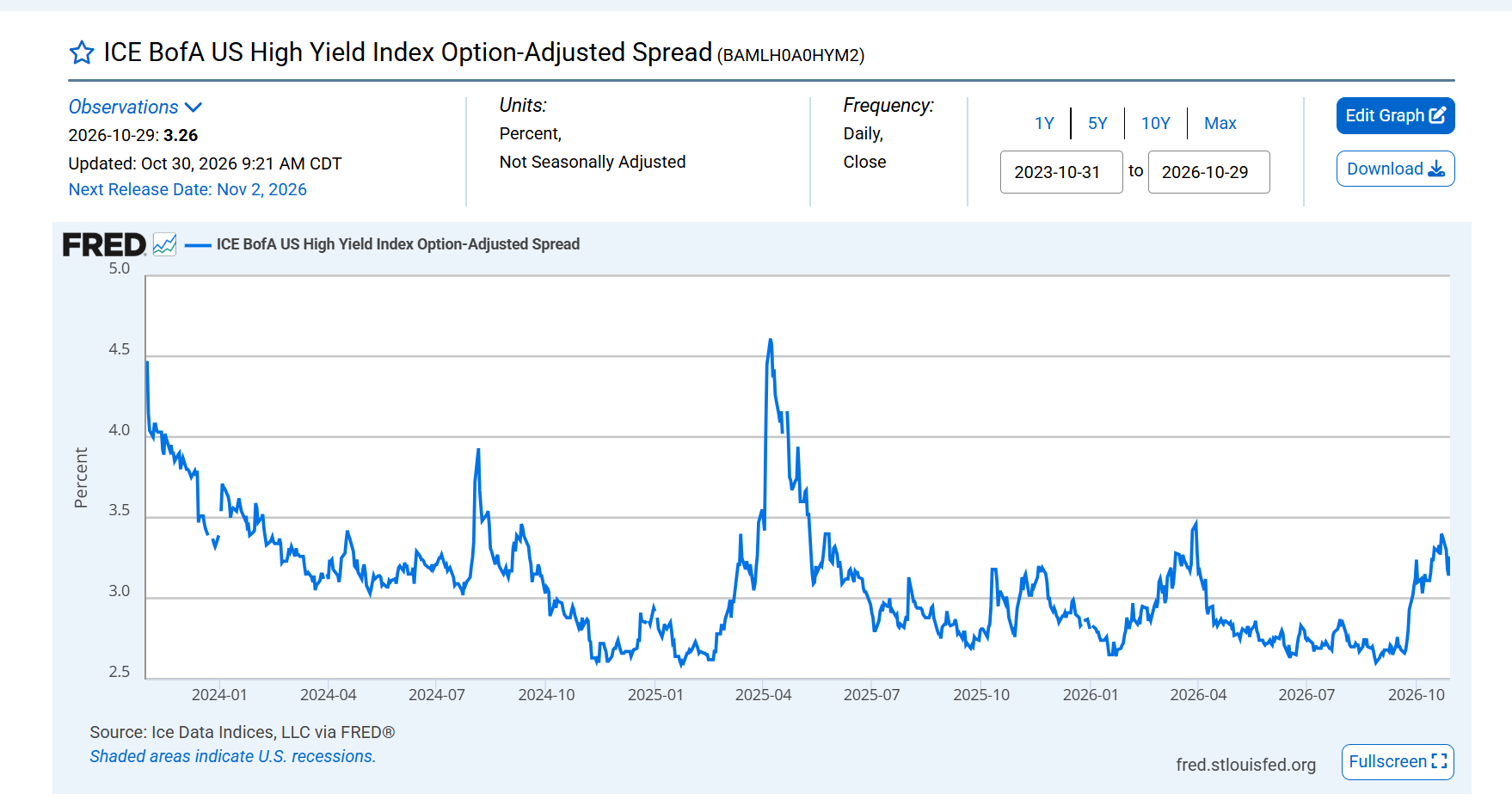
According to ICE BofA data published through the Federal Reserve Bank of St. Louis, the US High Yield Option-Adjusted Spread stood at approximately 3.26 percentage points on October 29, compared with 3.38 percentage points on October 23.
Although the spread widened from 3.14 percentage points on October 28, the available figures do not establish a sustained, market-wide deterioration in credit conditions.
This matters because stress in individual companies or sectors should not automatically be interpreted as a systemic credit crisis.
Nevertheless, the relationship between government bond yields and corporate borrowing costs remains worth monitoring.
If credit spreads begin widening persistently while Treasury yields continue falling, that would suggest investors are becoming more concerned about credit risk than about the direction of monetary policy alone.
For the AI industry, this would be particularly relevant.
Data centers, computing infrastructure and energy facilities require substantial upfront investment. A sustained increase in financing costs could affect the economics of future projects even if demand for AI services continues growing.
The financial sustainability of the investment cycle may therefore become just as important as the technology itself.
Rising Oil prices are complicating the outlook
The situation becomes more difficult when energy prices are included.
WTI crude oil finished October 30 near $104 per barrel, while Brent rose to approximately $118, according to Reuters.
Geopolitical tensions and concerns about supply disruptions have contributed to the pressure on energy markets.
For the broader economy, higher oil prices create several potential problems.
Transportation becomes more expensive, industrial production costs increase and households may have less disposable income available for other spending.
These effects can gradually work their way through supply chains.
Recent producer-price data already show how significant cost pressures have become.
According to the Bureau of Labor Statistics, the US Producer Price Index increased by 1.3% month over month in September and 6.3% compared with the previous year.
At the same time, the September PCE Price Index increased by 0.5% month over month, bringing annual headline PCE inflation to 3.6%.
Core PCE inflation stood at 3.1% year over year.
This creates an uncomfortable situation for the Federal Reserve.
Even if financial markets begin showing signs of weaker risk appetite, inflation remains well above the central bank's 2% target.
And if oil prices remain elevated, the inflation outlook could become even more complicated.
The risk is not simply that energy prices increase headline inflation temporarily.
A more persistent shock could also affect transportation costs, production expenses and inflation expectations.
For businesses already dealing with higher capital expenditure, that would create another financial burden.
The Federal Reserve faces two different risks
At its October 28 meeting, the Federal Reserve left the federal funds target range unchanged at 3.75% to 4.00%.
The decision was approved by a 10–2 vote, with Lisa Cook and Beth Hammack favoring a 25-basis-point increase.
The statement acknowledged that inflation remained elevated while describing economic activity as expanding at a strong pace.
This presents Kevin Warsh with a difficult policy decision.
Higher interest rates could help contain demand and reduce the risk that elevated inflation becomes more persistent.
But additional tightening would also raise financing costs and could place further pressure on interest-rate-sensitive sectors.
Keeping rates unchanged avoids adding immediate pressure, but it does not necessarily solve the inflation problem.
There is also a limit to what monetary policy can accomplish when inflation is partly driven by energy supply disruptions.
Higher interest rates cannot directly increase oil production or restore disrupted supply routes.
They can, however, reduce demand and help limit the transmission of higher energy costs into broader inflation.
The question is whether that adjustment can occur without causing an excessive slowdown in economic activity.
For financial markets, the answer matters considerably.
A combination of persistent inflation, weaker investment growth and deteriorating financing conditions would be much more difficult for risk assets than an environment where inflation declines alongside stable economic growth.
Conclusion
The recent weakness in technology stocks is increasingly connected to questions about the cost and profitability of the AI investment cycle.
At the same time, gold's decline shows that safe-haven assets do not always behave defensively when investors are reducing exposure or raising liquidity.
The Treasury market is responding to growing uncertainty, while high energy prices continue to complicate the Federal Reserve's policy options.
For now, I see this as a market reassessing risk rather than clear evidence of a systemic crisis.
But I believe the interaction between Treasury yields, credit spreads, real interest rates and corporate investment spending will become increasingly important.
The next significant move in the Nasdaq may not depend solely on whether technology companies continue reporting strong revenues.
It may depend on whether the financial conditions supporting those revenues and future investment plans remain sustainable.
And if gold continues falling while government bonds attract defensive demand, that divergence will be worth watching closely.
It could tell us more about the market's underlying demand for liquidity than the direction of either asset alone.
Author

Serhad Colak
Capital Insights
Serhad Colak is the founder of Capital Insights. His work focuses on macroeconomic research, monetary policy and cross-asset analysis, with particular attention to inflation, labor-market developments and interest-rate expectations.