The 2% inflation target came from a throwaway remark. It now moves trillions

The Federal Reserve's 2% inflation goal grew out of an off-the-cuff remark by a New Zealand politician in 1988. Bond investors still price long-term US debt as if 2% holds, so a change in how the Fed measures inflation would move markets.
On April 1, 1988, New Zealand Finance Minister Roger Douglas said on television that he wanted inflation somewhere between zero and 1%, without checking the number with his officials. Central bank after central bank copied the idea, and that answer became the 2% goal that $31.835 trillion of tradable US Treasury debt is priced around. The risk to that debt now is a new way of measuring inflation against the same number, not a new number.
Federal Reserve (Fed) Chair Kevin Warsh said in October that anyone who thought the Fed was tolerating a target somewhere in the 2% range was wrong, and that the goal is 2% flat. A task force he set up in June is reviewing how inflation gets measured, and that review is the risk for bondholders.
Nobody modelled the number before it went to air
New Zealand's inflation had come down from the high teens in 1985 to about 9% by early 1988. Douglas wanted to stop people assuming the government would be happy with 5-7%. According to a later account by the Reserve Bank of New Zealand (RBNZ), his answer surprised the central bank as much as anyone.
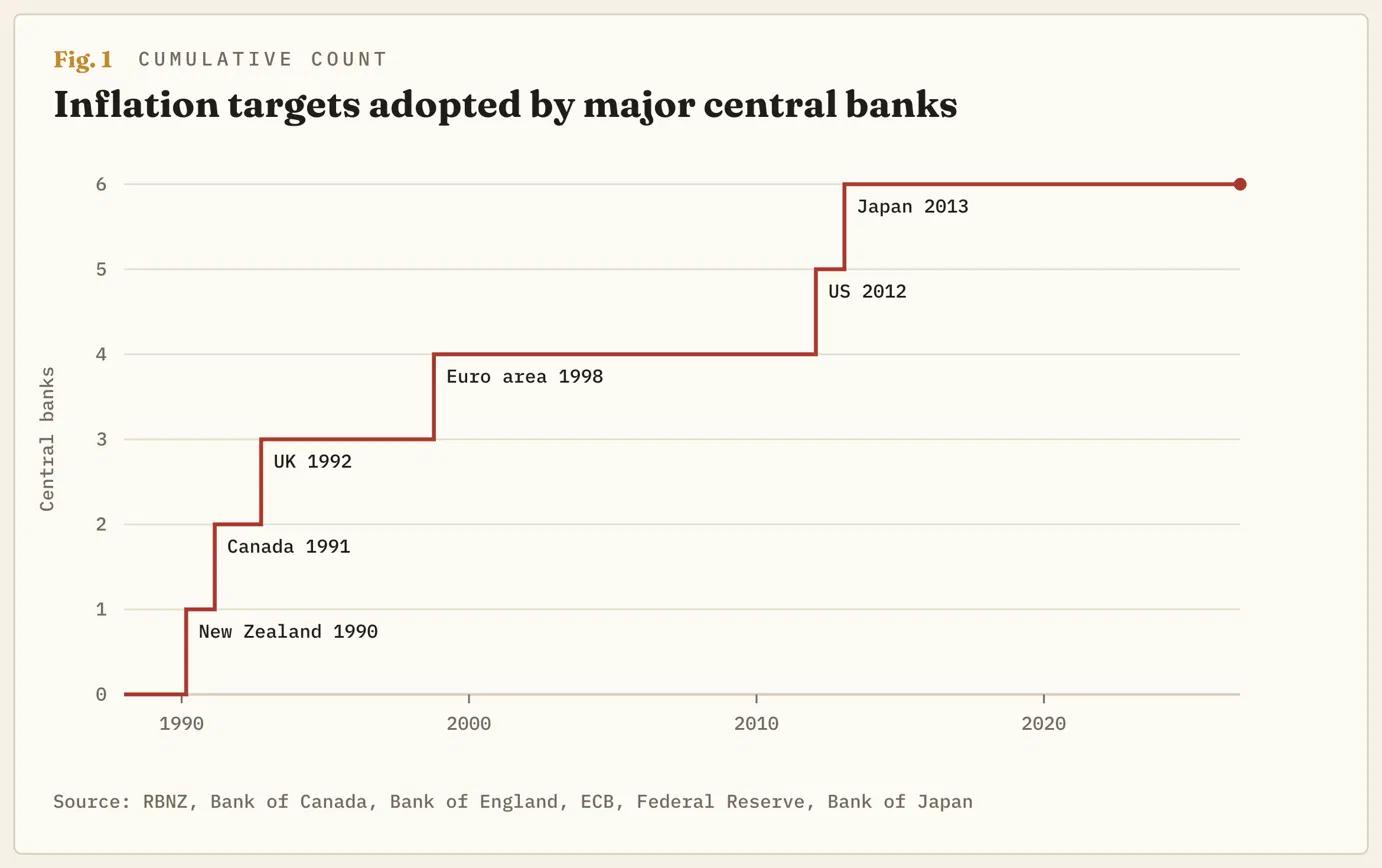
The RBNZ turned the remark into a target of 0-2%. Over the next 25 years, Canada, the UK, the Euro area and Japan adopted targets at or around 2%. The Fed took its own route. Its officials informally settled on 2% at a July 1996 meeting but didn't announce it. The Fed made it official in January 2012, using the Personal Consumption Expenditures Price Index (PCE), its preferred gauge of consumer prices.
Former Fed Chair Bernanke, who pushed for the public target, cited studies showing 2% was about the lowest inflation rate that kept the risk of the Fed's rate hitting zero small. Every central bank that adopted it added another government bond market priced around the same number. Douglas asked for somewhere between zero and 1%, and the number the big central banks hold to now is twice the top of what he asked for.
No US law sets the number
No US law puts a number on inflation. Congress told the Fed to aim for stable prices and maximum employment without defining either in figures. The 2% comes from a statement that the Fed officials who set rates, the Federal Open Market Committee (FOMC), vote to reaffirm every January. Its 2025 strategy review didn't revisit the number. The goal behind the whole Treasury market can be changed by a committee vote at an ordinary January meeting.
Chair Warsh himself told a House of Lords committee in July 2023 that nobody can tell the difference between inflation of 1.7% and 2.3%. He said he preferred a range to a single number, though not one stretching to 3%, and as Fed chair he has called 2% fixed and not up for debate.
Bond investors would care more about the 2023 view. A range would let inflation run a little above 2% for years without the Fed missing its goal. Each extra tenth of a point on the 30-year Treasury yield knocks about 1.5% off a 30-year bond's price.
Bond investors are still pricing in 2%
You can see what bond investors expect by comparing two kinds of government bonds. Treasury Inflation-Protected Securities (TIPS) pay out more when consumer prices rise, and ordinary Treasuries don't, so the gap between their yields reflects the inflation rate investors expect.
Since the war with Iran started in late February, the 30-year Treasury yield has risen about three-quarters of a percentage point, reaching its highest since 2002 in early October. The 30-year TIPS yield, which strips out inflation, rose almost as much, so the move wasn't about inflation. Of the three-quarters of a point, only about six hundredths came from investors expecting more inflation.
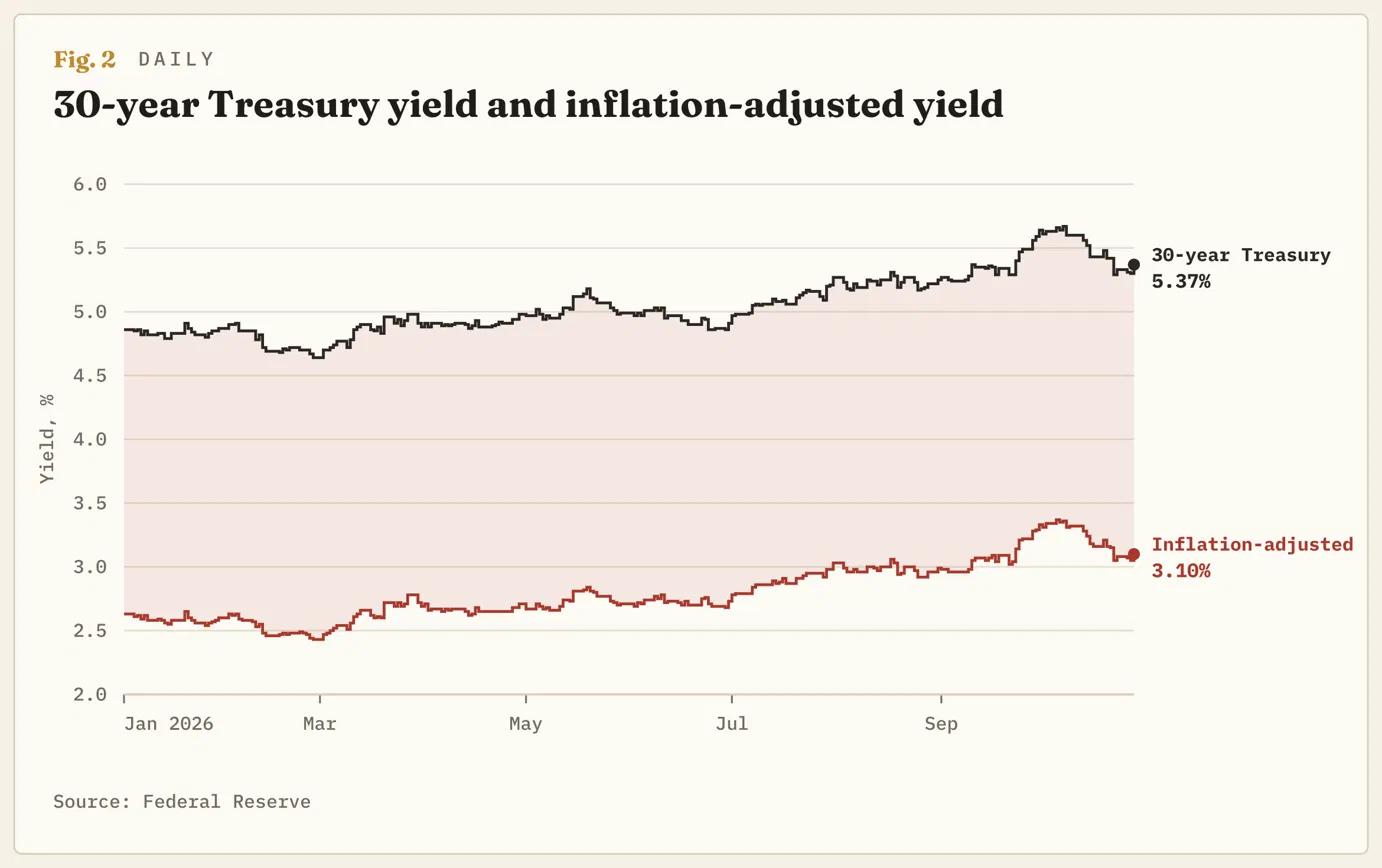
Longer-term inflation expectations have hardly moved in 2026, staying a little above 2% even though consumer prices are 3.7% higher than a year earlier. Bond investors are treating the war's inflation as temporary because they still expect the Fed to get back to 2%.
The measure is under review; the number isn't
That trust is tied to one way of measuring inflation, the PCE index. A task force Chair Warsh set up in June is rethinking how the Fed approaches inflation from first principles. Changing how inflation is measured is reported to be one of its goals. In July, he said he looks at a broader set of inflation data than PCE.
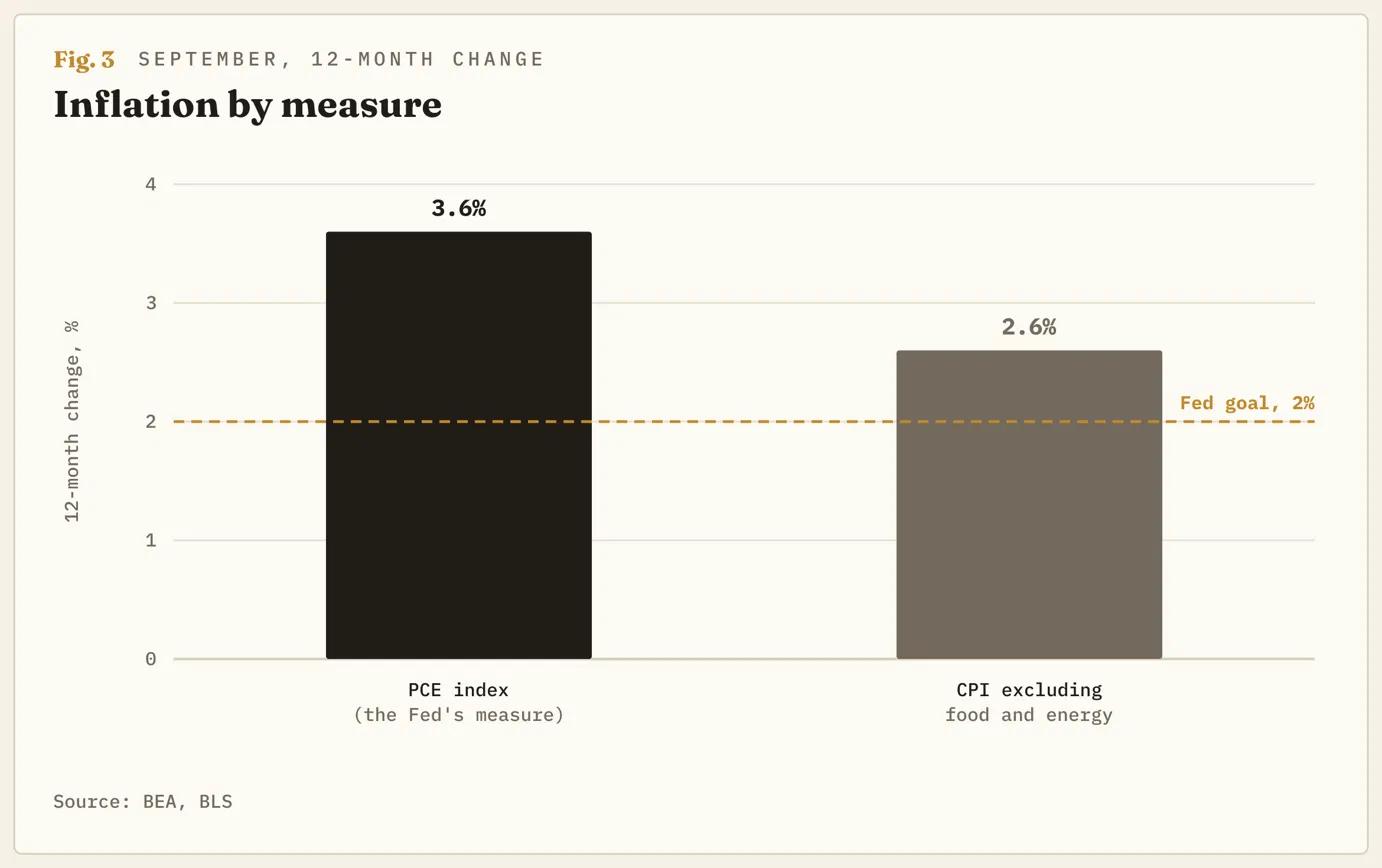
Which measure you use matters as much as the number. In September, the PCE index was up 3.6% on the year, 1.6 points above the goal. The consumer price measure that strips out food and fuel was up 2.6%, only 0.6 points above it. Swap one for the other and the Fed is a full point closer to its goal without a single price changing.
The first chance to change anything is the FOMC's January 26-27, 2027, meeting, when it votes to reaffirm the 2% statement. Most of the task forces were due to report by the end of 2026.
A new ruler would move the 30-year yield
A January vote that keeps 2% on the PCE index as it is changes nothing for bond investors, and 30-year yields keep moving for reasons other than inflation. Bond investors could read a switch to a measure that runs lower during an energy shock, such as one that leaves out fuel, as a softer target. The inflation part of the 30-year yield, which barely moved through a war, would then start to move, meaning lower prices for long-term bonds.
Douglas was trying to stop New Zealanders expecting 5-7% inflation, and 38 years later the number that came out of it is still what keeps 30-year bond investors expecting about 2%. The first number to change is long-term inflation expectations. As long as they stay a little above 2%, investors still trust the goal. A climb before January would mean investors are betting on a change before the committee has voted on one.
Author

Joshua Gibson
FXStreet
Joshua joins the FXStreet team as an Economics and Finance double major from Vancouver Island University with twelve years' experience as an independent trader focusing on technical analysis.

















