|

What’s next for the SNB and the CHF?

What’s next for the SNB and the CHF? In December’s meeting, the SNB hiked rates by 50bps as expected to 1%. The SNB like central banks around the world has been responding to an uptick in its inflationary pressures. The latest headline inflation print for Switzerland is at 2.8% for December and that is well down from the August peak of 3.5%.
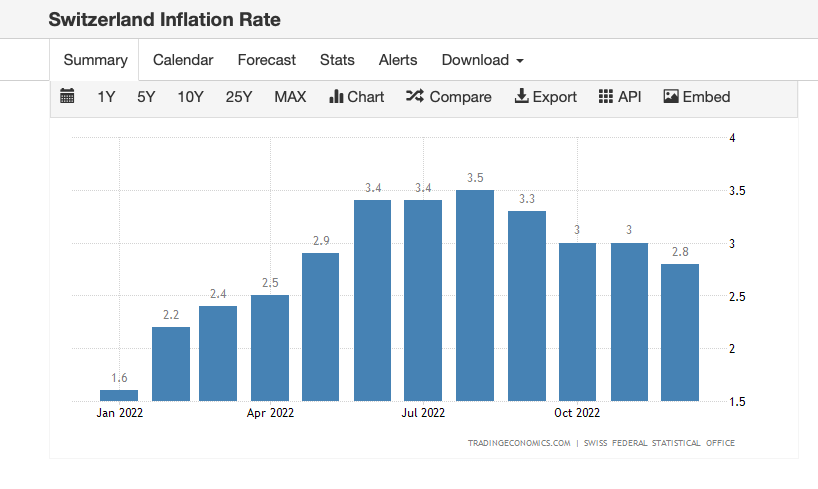
Chart

However, December’s reading for the core inflation rate showed an uptick to 2% which is in line with the high summer reading of 2%.

Core

On balance there is nothing happening in Switzerland that is very different from the rest of the world and Short Term Interest Rate markets are now pricing in a peak of 1.67% for this year and around a 50/50 split as to whether the SNB hikes by 25 or 50bps at the next meeting on March 23. The meaning? Well, a 50bps hike in March by the SNB could signal the end of its hiking cycle for now.

The takeaway

The recent CHF strength could start to see a top on the CHF index if you look at the chart below around the level marked.
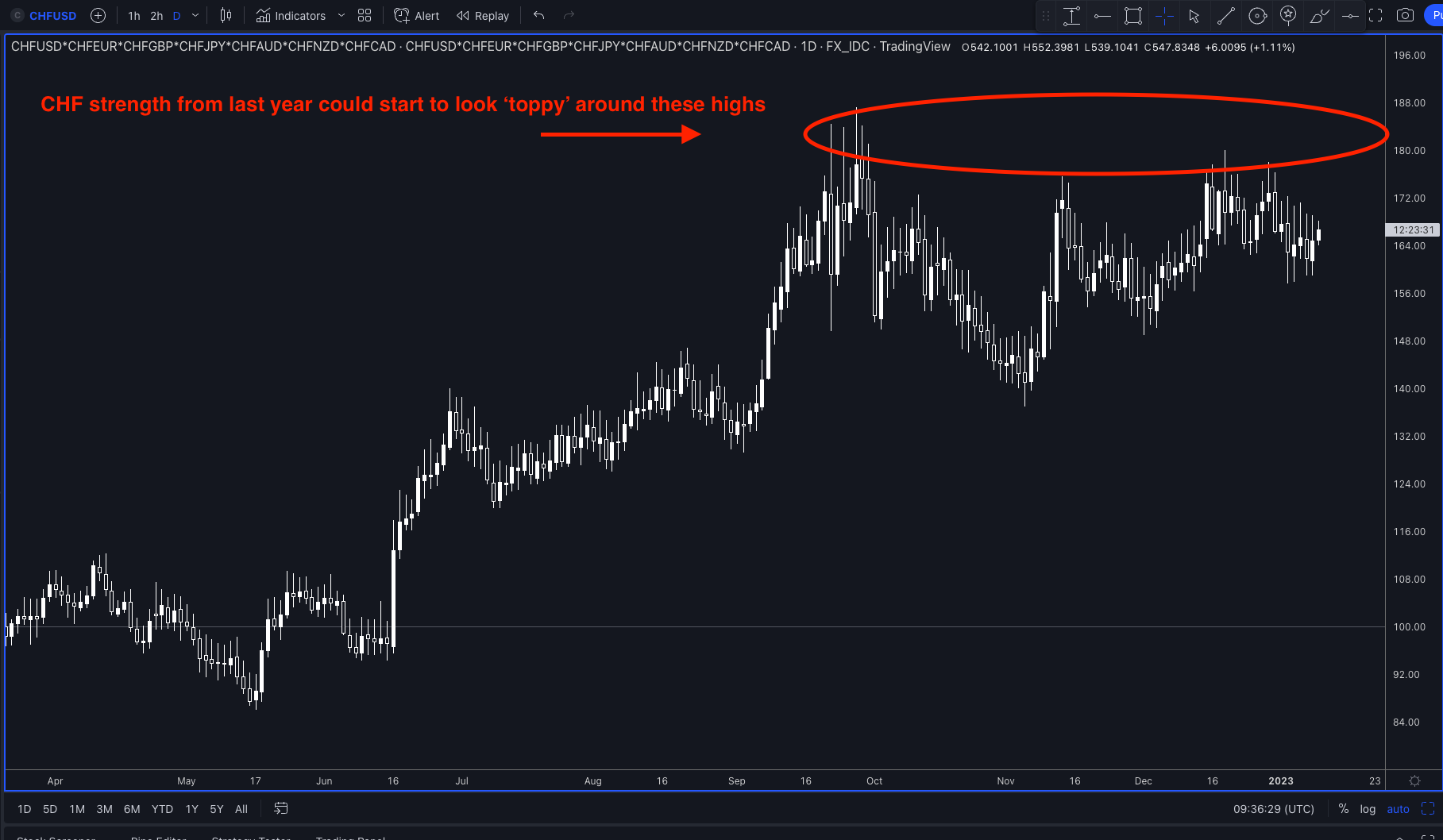
Chart

With the SNB rate possibly peaking in March a retracement lower in the CHF could be a potential play against another currency that has a strong reason for gains. So, if US inflation rises, but Swiss inflation falls this may open up a divergence between the SNB and the Fed. If you want to have a quick way of seeing if this divergence is in play look at the bind yield spread between the US10Y and the CH10Y overlaid on a USDCHF chart.
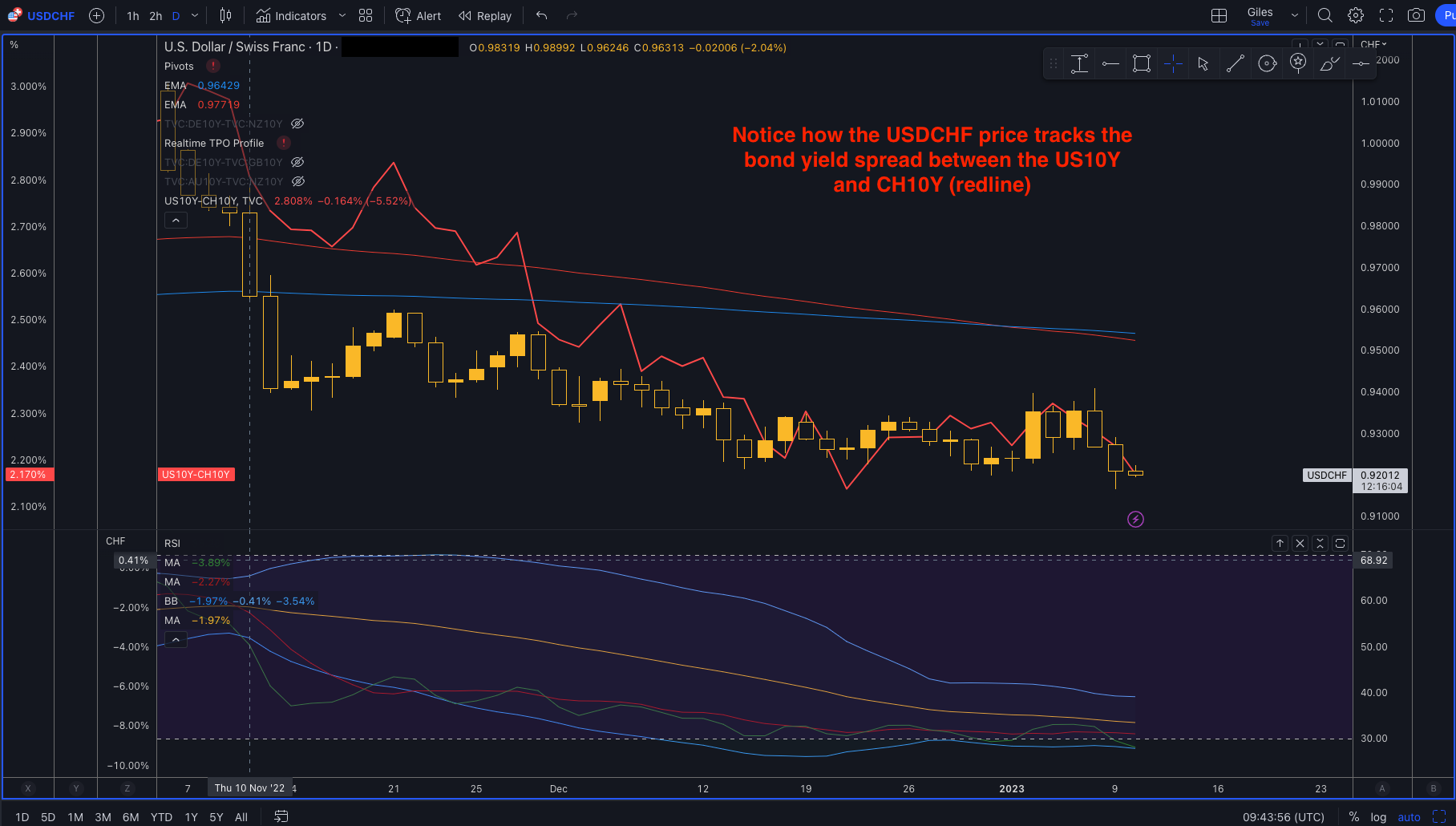
Chart

Learn more about HYCM


Author

Giles Coghlan LLB, Lth, MA

Giles is the chief market analyst for Financial Source. His goal is to help you find simple, high-conviction fundamental trade opportunities. He has regular media presentations being featured in National and International Press.


More from Giles Coghlan LLB, Lth, MA
Share:

Markets move fast. We move first.

Orange Juice Newsletter brings you expert driven insights - not headlines. Every day on your inbox.

By subscribing you agree to our Terms and conditions.

Editor's Picks

EUR/USD flat lines near 1.1750 ahead of ECB policy decision

EUR/USD remains flat after two down days, trading around 1.1750 in the European session on Thursday. Traders move to the sidelines and refrain from placing any fresh directional bets on the pair ahead of the ECB policy announcements and the US CPI inflation data. 

GBP/USD consolidates above mid-1.3300s as traders await BoE and US CPI report

The GBP/USD pair struggles to capitalize on the overnight bounce from the 1.3310 area, or a one-week low, and oscillates in a narrow band during the Asian session on Thursday. Spot prices currently trade around the 1.3370 region, down less than 0.10% for the day, as traders opt to wait on the sidelines ahead of the key central bank event risk and US consumer inflation data.

Gold awaits weekly trading range breakout ahead of US CPI report

Gold struggles to capitalize on the previous day's move higher back closer to the $4,350 level and trades with a mild negative bias during the Asian session on Thursday. The downtick could be attributed to some profit-taking amid a US Dollar uptick, though it is likely to remain cushioned on the back of a supportive fundamental backdrop. 

Dogecoin breaks key support amid declining investor confidence

Dogecoin trades in the red on Thursday, following a 4% decline on the previous day. The DOGE supply in profit declines as large wallet investors trim their portfolios. Derivatives data shows a surge in bearish positions amid declining retail interest.

Monetary policy: Three central banks, three decisions, the same caution

While the Fed eased its monetary policy on 10 December for the third consecutive FOMC meeting, without making any guarantees about future action, the BoE, the ECB and the BoJ are holding their respective meetings this week. 

Dogecoin Price Forecast: DOGE breaks key support amid declining investor confidence

Dogecoin (DOGE) trades in the red on Thursday, following a 4% decline on the previous day. The DOGE supply in profit declines as large wallet investors trim their portfolios. Derivatives data shows a surge in bearish positions amid declining retail interest.