|

What’s most important to markets right now? Vaccines

The news last week that Johnson and Johnson’s vaccine caused blood clots sent a shiver down markets mid-week. However, once the headline was digested it was realized that there were still vaccine alternatives to replace J&J’s even if there was a delay in the rollout.

White house confirms vaccine coverage

This was underlined by White House COVID Coordinator Zients who stated last week that there is plenty of vaccine supply in the system, even without J&J’s COVID-19 vaccine and that the US Gov’t is doing everything it can to accelerate the Pfizer and Moderna vaccines.

Ok, panic over. The dip was bought on the headline last week.

However, it is interesting to note that in stark contrast to the inflation fears, which came to nothing last week, the market remains laser-focused on the vaccine rollout. So, right now, vaccines matter most.

One interesting headline from last week that could be lost in the mix is the fact that Novavax will be taking part in an Oxford University study comparing mixed COVID-19 vaccine combinations from different manufacturers. The idea of the study is to explore any potential possibility there is of mixing doses. This will be extremely helpful if a ‘mix&max’ combination is possible and should help speed up the vaccination process and reward manufacturers who can supply the most quickly. One report to look out for as it could give risk assets a positive boost if the study proves positive. The current levels of people who have received at least one vaccine can be seen here below. 
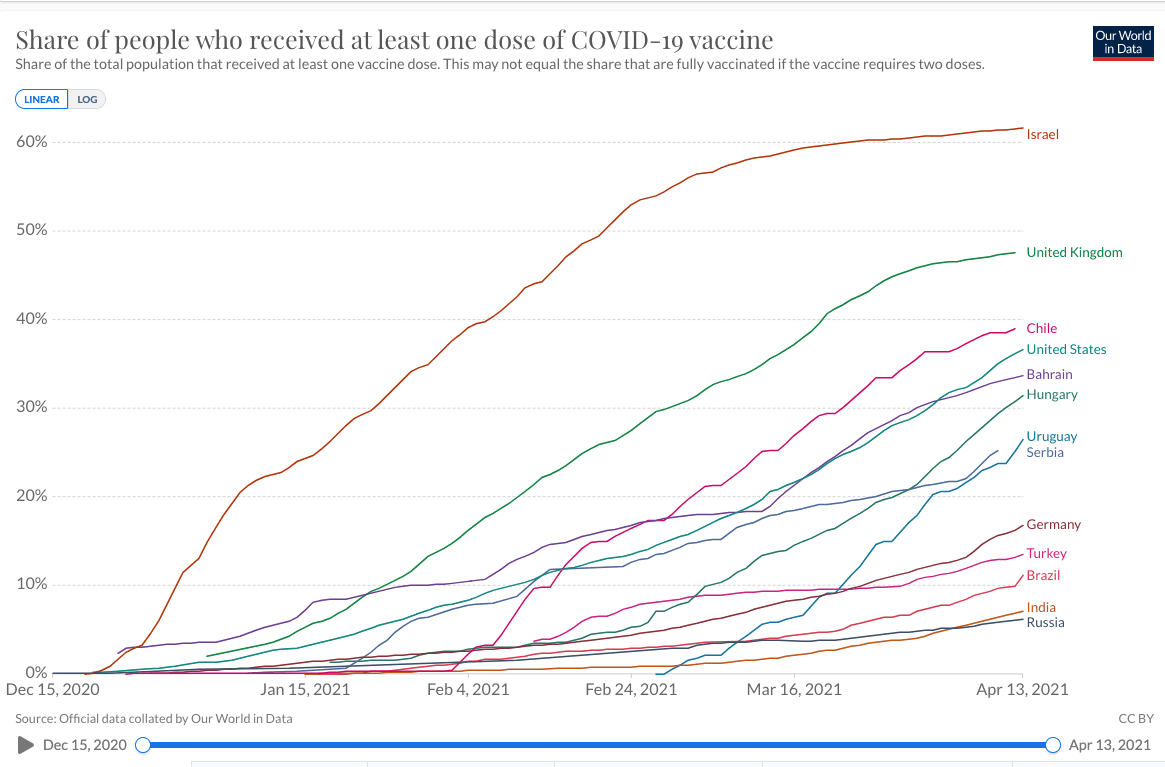
Vaccine

The key impact of any significant delay/problem in the vaccination program would be a sell-off in equity markets.
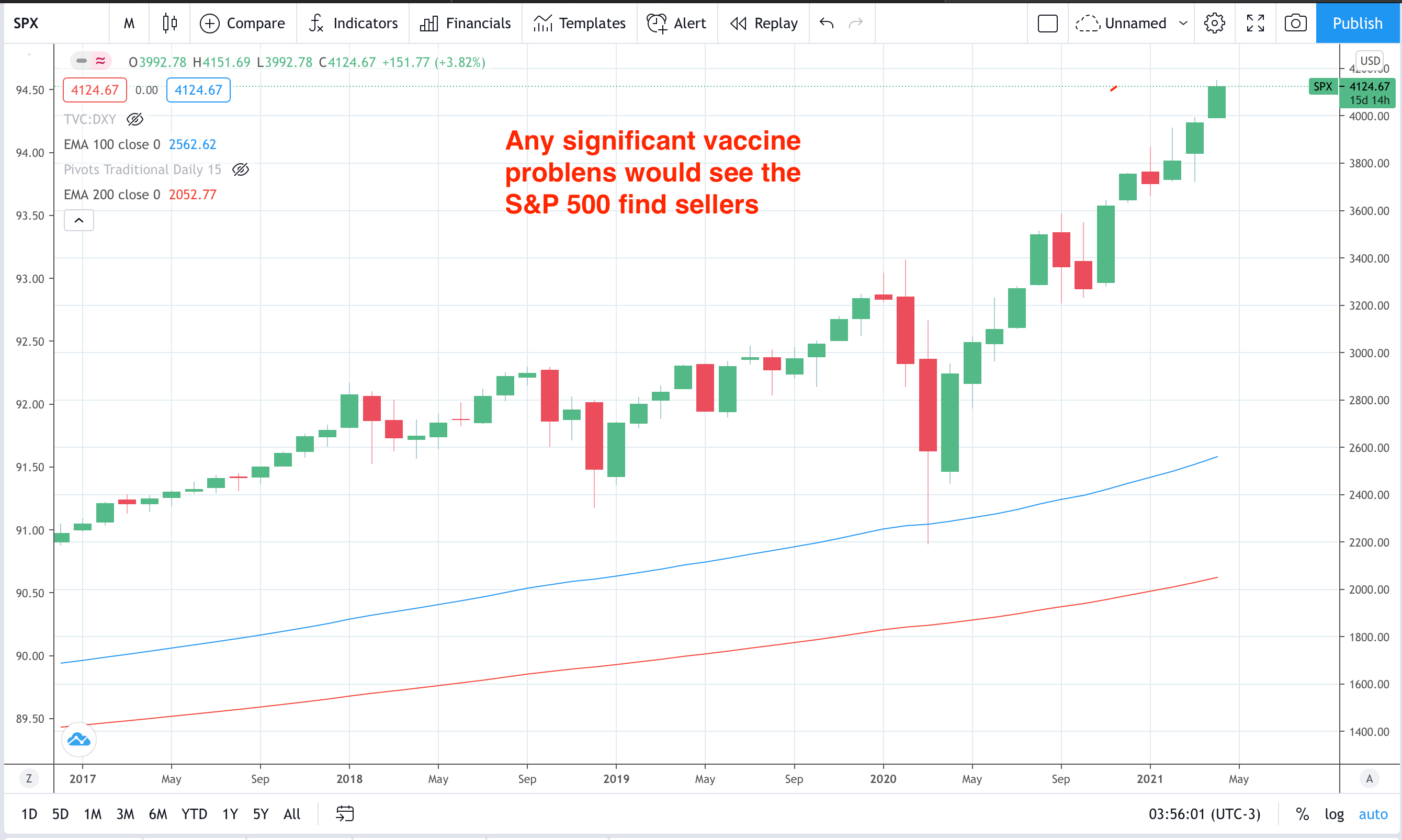
SP500

Learn more about HYCM


Author

Giles Coghlan LLB, Lth, MA

Giles is the chief market analyst for Financial Source. His goal is to help you find simple, high-conviction fundamental trade opportunities. He has regular media presentations being featured in National and International Press.


More from Giles Coghlan LLB, Lth, MA
Share:

Editor's Picks

EUR/USD treads water above 1.1850 amid thin trading

EUR/USD stays defensive but holds 1.1850 amid quiet markets in the European hours on Monday.  The US Dollar is struggling for direction due to thin liquidity conditions as US markets are closed in observance of Presidents' Day. 

GBP/USD flat lines as traders await key UK and US macro data

GBP/USD kicks off a new week on a subdued note and oscillates in a narrow range near 1.365 in Monday's European trading. The mixed fundamental backdrop warrants some caution for aggressive traders as the market focus now shifts to this week's important releases from the UK and the US.

Gold sticks to intraday losses; lacks follow-through

Gold remains depressed through the early European session on Monday, though it has managed to rebound from the daily trough and currently trades around the $5,000 psychological mark. Moreover, a combination of supporting factors warrants some caution for aggressive bearish traders, and before positioning for deeper losses.

Bitcoin, Ethereum and Ripple consolidate within key ranges as selling pressure eases

Bitcoin and Ethereum prices have been trading sideways within key ranges following the massive correction. Meanwhile, XRP recovers slightly, breaking above the key resistance zone. The top three cryptocurrencies hint at a potential short-term recovery, with momentum indicators showing fading bearish signs.

Global inflation watch: Signs of cooling services inflation

Realized inflation landed close to expectations in January, as negative base effects weighed on the annual rates. Remaining sticky inflation is largely explained by services, while tariff-driven goods inflation remains limited even in the US.

Ripple Price Forecast: XRP potential bottom could be in sight

Ripple edges up above the intraday low of $1.35 at the time of writing on Friday amid mixed price actions across the crypto market. The remittance token failed to hold support at $1.40 the previous day, reflecting risk-off sentiment amid a decline in retail and institutional sentiment.















