What is the nearest future of oil?

I guess most of you know what happened to oil this week. It went through the roof at the very beginning of the week, just to slightly reverse in the second half of the week. Why did that happen and what can we expect next?
First, why did oil rise higher? That’s pretty obvious. The Russian aggression on Ukraine and as a consequence, a ban on Russian oil. Not only a ban but also a stand by many countries to relieve themselves from Russian oil, and not supply their unpredictable war machine with taxpayers’ money. Understandable. If the only huge supplier is out of the market, that means an increase in price of the commodity – Economy 101.
Almost all wars which involve oil producing countries have the same effect. Oil surged during the Gulf War as well.
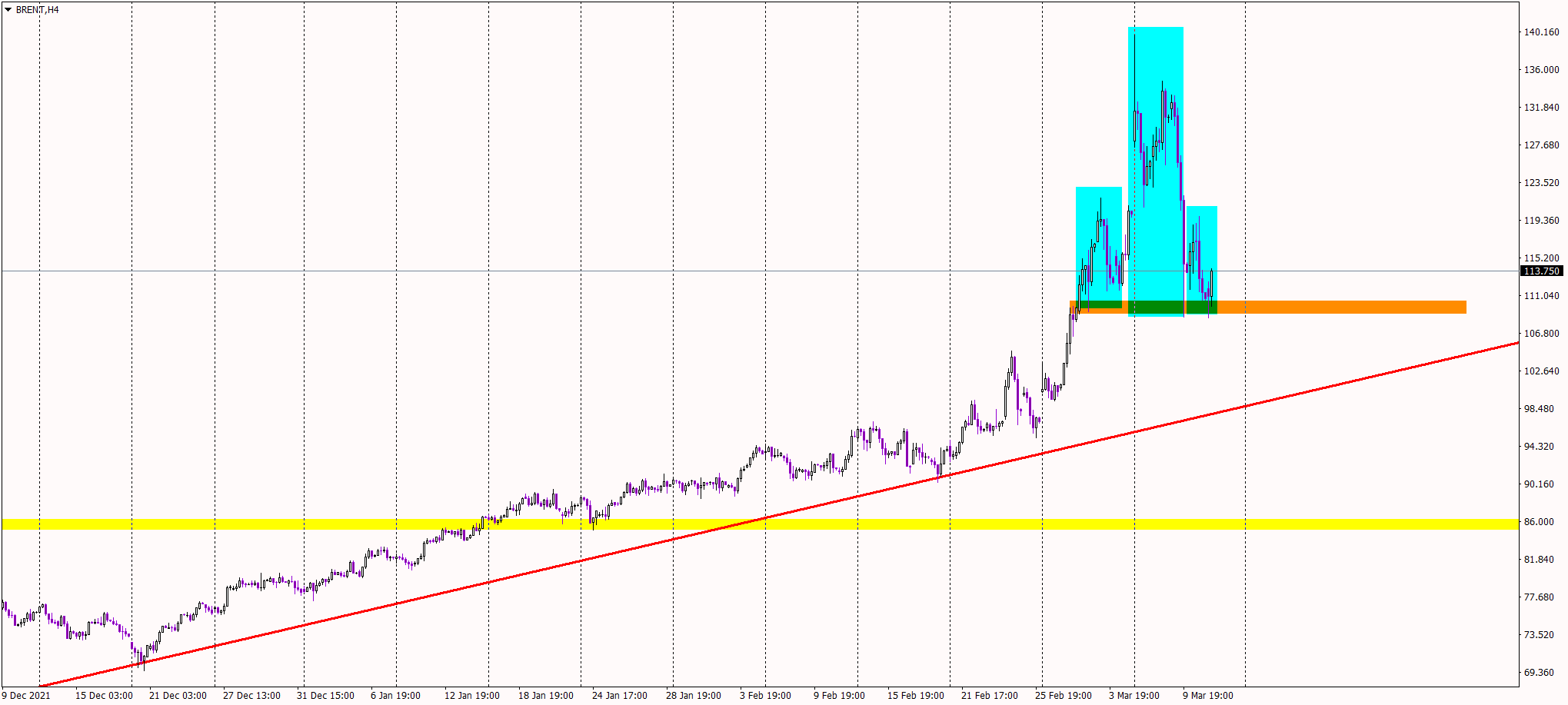
But what happened after the Brent price almost touched the 140 USD mark? The price dropped like a rock. Why? Well, Russia is not the only country that’s producing oil in the world. We have other nations. Almost all countries in the gulf region, US, Canada, Mexico, Algeria etc. There’s also Venezuela and Iran even though both of those countries were sanctioned and their oil production was limited.
The Russian invasion in Ukraine has opened a window. A small relief from sanctions and the ability to pump more oil into the global system. That rumor successfully stopped the skyrocketing price of oil.
Now look at this from the other perspective. If you’ve been trading for some time, you’re aware of OPEC and it’s influence on the oil supply. The first thing to point out is that the current price is very attractive and another is that various countries are now looking to replace Russia with another supplier.
For many OPEC countries this is an amazing opportunity to sign lucrative contracts with new countries. For this, they would have to increase their supply and that would be another bearish factor for the price of oil. In a nutshell, any rumors that OPEC will increase production will be a negative influencer for the price of the ‘black gold’.
Last but not least, is the technical side of the market. Currently, Brent is creating a huge head and shoulders pattern (blue). The neckline of this formation (orange) is still intact, so there is no sell signal but the price closing a day below the orange line will trigger one. As long as we stay above the orange support, buyers are still slightly winning this battle.
Author

Tomasz Wisniewski
Axiory Global Ltd.
Tomasz was born in Warsaw, Poland on 25th October, 1985.