|

What if?

It’s the last day of the month and the quarter – the best quarter for global equities in the past six years according to Bloomberg, despite the Iran war, disrupted oil and fertilizer flows, and a spike in energy prices that led to a rise in global inflation expectations, which in some parts of the world resulted in interest rate hikes and, in others, more hawkish monetary policy. Regardless, global equities were boosted by the AI buildout. Of course, the indices with little AI exposure were left behind, and the rather narrow market breadth is raising a few eyebrows.

The rally continues despite eye-watering volatility in the Kospi index and unusually high valuations for chipmakers. The Korean Kospi index – which was slightly lower yesterday before the announcement of massive investment in new fabs – is up 2.40% today, the Nikkei is modestly higher, while US stocks, which started the week on a strong footing, are looking bullish judging by rising S&P 500 and Nasdaq futures.
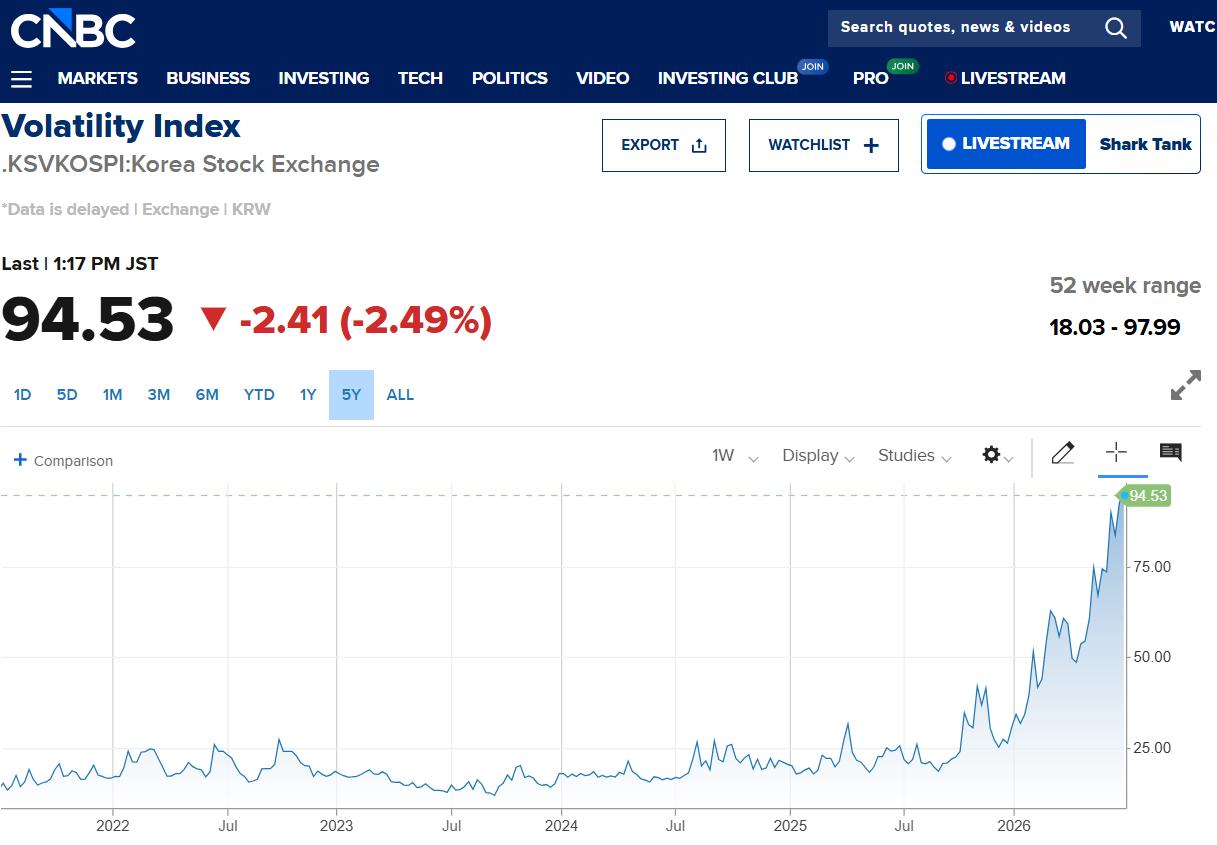
Chart

What if big tech slows spending?

But not all tech stocks are performing well. The AI enablers – the beneficiaries of massive AI spending – are outperforming, while Big Tech – the companies spending heavily on AI infrastructure – are sputtering. The Magnificent 7 is down nearly 15% since the May peak, with Microsoft losing more than a third of its valuation since October last year. The AI and software giant is being pressured on both ends: on the one hand, its massive AI spending is displeasing investors; on the other, its software business is increasingly seen as being challenged by AI. It still has its cloud segment, which should continue to grow alongside AI adoption, but investors are heading for the exits.


Read the full article here.

Author

Ipek Ozkardeskaya

Ipek Ozkardeskaya began her financial career in 2010 in the structured products desk of the Swiss Banque Cantonale Vaudoise. She worked in HSBC Private Bank in Geneva in relation to high and ultra-high-net-worth clients.


More from Ipek Ozkardeskaya
Share:

Editor's Picks

GBP/USD stays weak near 1.3250 on resurgent USD demand

GBP/USD stays weak near 1.3250 in European trading on Tuesday, reversing a part of the previous day's advance to a one-week high. The pair ditches a three-day winning streak, undermined by the USD/JPY upsurge-led broad US Dollar rebound. US jobs data in next in focus.

EUR/USD keeps the red near 1.1400 on firmer US Dollar

EUR/USD remains in the red near 1.1400 in early Europe on Tuesday, snapping a three-day winning streak amid a firmer US Dollar. The pair trades with caution ahead of Germany's preliminary inflation readings and the US JOLTS Job Openings Survey.

Gold recovers early lost ground to YTD low; Fed hike bets and firmer USD to cap upside

Gold builds on its intraday recovery from the lowest level since November 2025, touched earlier this Tuesday, and climbs to the top end of its daily range heading into the European session. Any meaningful appreciation still seems elusive in the wake of a broadly firmer US Dollar. Against the backdrop of renewed Mideast tensions, mixed signals on US-Iran talks assist the USD to stall its recent pullback from the highest level since May 2025.

Ripple defends critical support, Stellar extends recovery

Ripple (XRP) trades around the key $1.00 psychological level, consolidating as the token awaits its next directional catalyst. Stellar (XLM) extends its recovery above $0.178 after posting modest gains at the start of this week.

Just like Fed, is BoJ’s independence under threat?

When talking about central bank independence, most of the focus has been on Donald Trump’s pressure on the Federal Reserve. But a similar story, a quieter one for now, seems to be happening on the other side of the Pacific: Japan’s government may be testing the Bank of Japan’s independence.

Kevin Warsh isn't expected to say much in Sintra: That's exactly why markets will listen

Financial markets could find an important catalyst in the enchanting, fairytale-like landscape of Sintra this week. The ECB Forum will, as it does every year, gather the crème de la crème of central banks. The new boss at the Fed, who has clearly said that the Fed should stop explaining everything, will need to talk – and traders should listen.