Kevin Warsh isn't expected to say much in Sintra: That's exactly why markets will listen
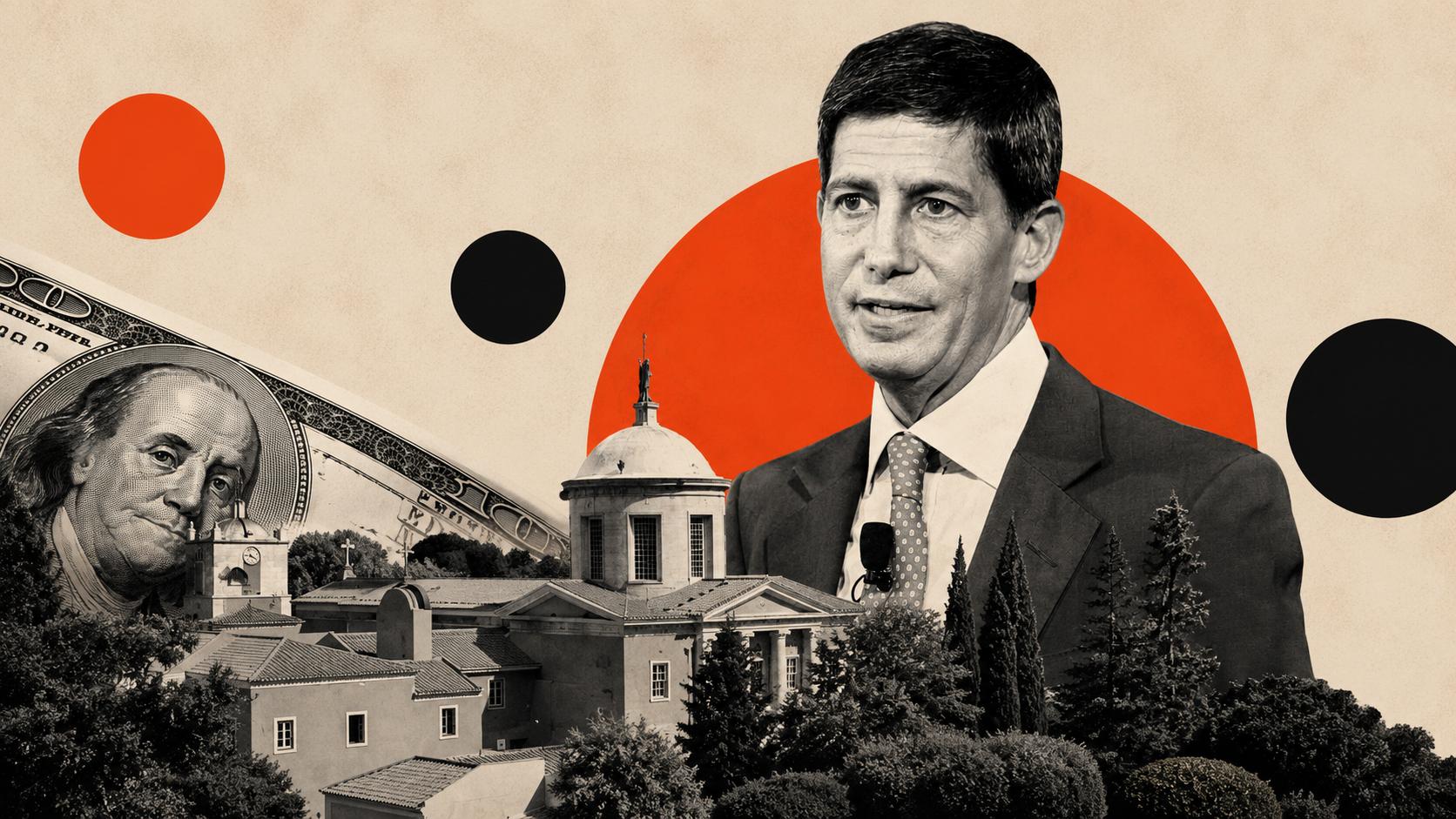
Financial markets could find an important catalyst in the enchanting, fairytale-like landscape of Sintra this week. The European Central Bank (ECB) Forum will, as it does every year, gather the crème de la crème of central banks. The new boss at the Federal Reserve, who has clearly said that the Fed should stop explaining everything, will need to talk – and traders should listen.
Held in the Portuguese town of Sintra from June 29 to July 1, the annual gathering focuses on broad economic themes instead of delivering market-moving surprises. This year, however, Wednesday's policy panel has the potential to become a tradable event, largely because Kevin Warsh will be speaking.
The Fed Chair will join ECB President Christine Lagarde, Bank of England (BoE) Governor Andrew Bailey and Bank of Canada (BoC) Governor Tiff Macklem for a panel discussion on Wednesday at 13:00 GMT. The official theme of this year's forum, "Shaping Europe's future: innovation, growth and stability," points toward discussions on innovation, productivity, financial stability and long-term growth.
Markets, however, will be paying far more attention to Warsh, who will be making his first public appearance outside the United States (US) since taking office and since chairing his first Federal Open Market Committee (FOMC) meeting in June. His first press conference left many surprises that caused big market moves, and more can be expected when he takes the stage on Wednesday.
An academic forum becomes a communication test
Sintra is not a monetary policy meeting. Central bankers typically use the forum to discuss structural challenges, institutional frameworks and long-term economic trends. Under normal circumstances, the event rarely generates sustained volatility in currencies or bond markets.
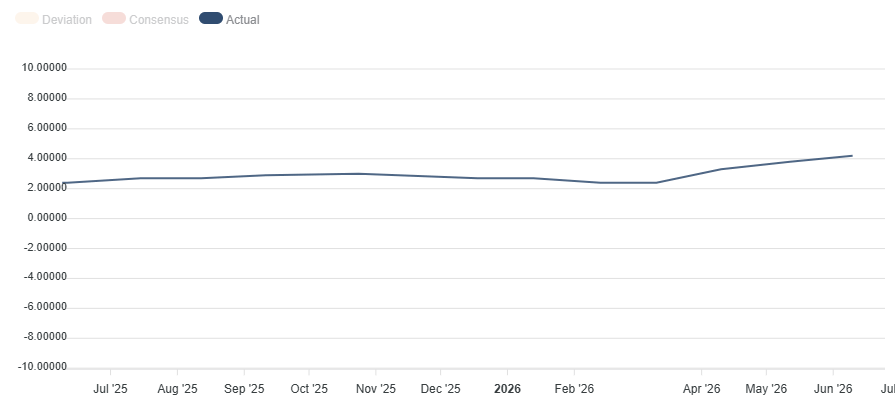
This year's edition is different as Warsh arrives in Sintra with very little public track record as Fed Chair. At its June meeting, the FOMC kept the Federal Funds Rate (FFR) unchanged at 3.5%-3.75%, but the biggest message came during Warsh's press conference. He stressed that inflation remains well above the 2% target, reiterated that the Committee's commitment to restoring price stability is unanimous and argued that monetary policy remains the primary driver of inflation.
Warsh also introduced a significant shift in the Fed's communication strategy. He unveiled a shorter policy statement, removed forward guidance and refused to provide any indication about future rate decisions. His remark that "We've dropped forward guidance" summarized the new approach. For markets, this means fewer explicit policy signals but far greater attention to the tone, wording and topics he chooses to emphasize.
Why saying less could move markets more
The paradox is straightforward: the less guidance Warsh intends to provide, the harder investors will try to interpret every public appearance.
Any unexpected shift in expectations for US interest rates can quickly ripple through the US Dollar (USD), Treasury yields, equities, emerging market currencies and commodities.
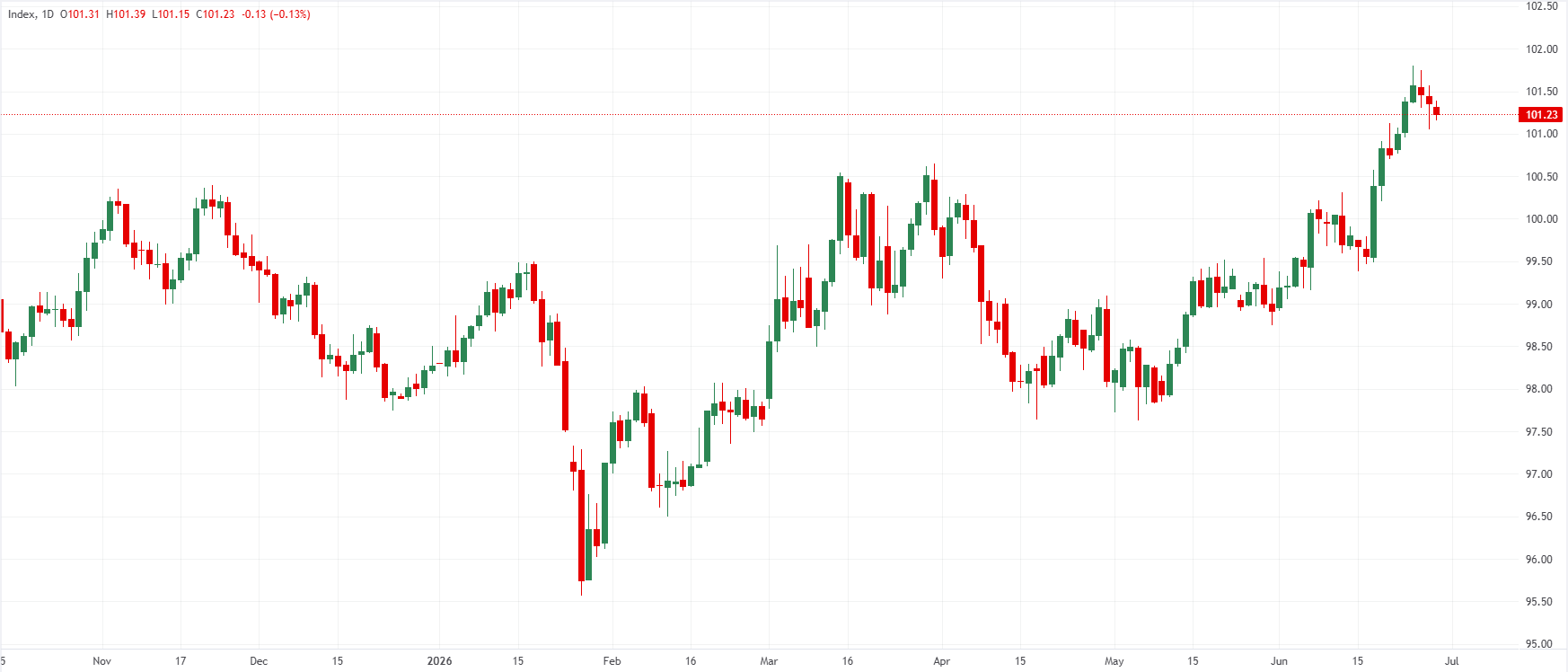
Reuters noted that Sintra will provide the first international test of Warsh's low-information communication strategy. Pierre-Olivier Gourinchas, the outgoing Chief Economist of the International Monetary Fund (IMF), argued that moving away from strong forms of forward guidance is "entirely appropriate," while also noting that a true absence of guidance is virtually impossible because markets will inevitably form their own expectations.
That is precisely what makes Wednesday's panel so important. If Warsh simply repeats his June message by emphasizing price stability while refusing to discuss future policy, markets may interpret it as confirmation of a cautious, hawkish bias. If he spends more time discussing risks to growth or the labor market, expectations for future rate increases could ease. Any comments on the neutral rate, the Fed's balance sheet or alternative data sources could also provide fresh insight into his policy reaction function.
What markets will be listening for
According to Wells Fargo, Warsh is expected to focus primarily on structural issues such as central bank communications, the Fed's balance sheet, alternative data, artificial intelligence (AI), productivity and employment. Deutsche Bank also expects limited near-term policy guidance, although it continues to anticipate a relatively hawkish policy path. Rabobank similarly believes Warsh's participation may reveal little on short-term monetary policy if his first FOMC press conference is any indication of his communication style.
Yet these structural themes are far from irrelevant for financial markets. AI-driven productivity gains could influence estimates of the neutral interest rate. Financial stability discussions may increasingly focus on the risk of asset bubbles linked to the AI investment boom. Balance sheet policy directly affects liquidity conditions. And any nuance in Warsh's inflation assessment could shape expectations for the Fed's next policy decisions.
Wednesday's panel also brings together four policymakers who played key roles during the 2008 global financial crisis. Warsh served as a Fed Governor, Lagarde was France's Finance Minister, Bailey helped oversee bank rescues in the United Kingdom, and Macklem participated in international crisis management from Canada's Finance Department.
Today, that same generation of policymakers faces a different set of challenges, including persistent inflation, geopolitical uncertainty, elevated public debt, stretched asset valuations and financial stability risks associated with artificial intelligence.
Why Sintra could become a tradable event
Markets are unlikely to receive an explicit signal about the Fed's next policy decision. Instead, the risk lies in a shift in perception. A firmer tone on inflation could support the US Dollar and Treasury yields. A more balanced assessment of growth risks could weigh on the Greenback while supporting risk assets. Any discussion of the neutral rate or balance sheet policy could trigger a more targeted reaction across the yield curve.
Because Warsh has chosen not to provide explicit forward guidance, every public appearance becomes a rare opportunity for investors to better understand his policy framework.
Sintra therefore remains a forum for ideas, but this year's edition is different. It is not the venue itself that has changed, it is the speaker. Warsh arrives on the global stage with a more hawkish Federal Reserve, a less predictable communication strategy and an ambitious reform agenda for the institution. For traders, the message may be simple: the less Warsh intends to reveal, the more carefully markets will listen.
Fed FAQs
Monetary policy in the US is shaped by the Federal Reserve (Fed). The Fed has two mandates: to achieve price stability and foster full employment. Its primary tool to achieve these goals is by adjusting interest rates. When prices are rising too quickly and inflation is above the Fed’s 2% target, it raises interest rates, increasing borrowing costs throughout the economy. This results in a stronger US Dollar (USD) as it makes the US a more attractive place for international investors to park their money. When inflation falls below 2% or the Unemployment Rate is too high, the Fed may lower interest rates to encourage borrowing, which weighs on the Greenback.
The Federal Reserve (Fed) holds eight policy meetings a year, where the Federal Open Market Committee (FOMC) assesses economic conditions and makes monetary policy decisions. The FOMC is attended by twelve Fed officials – the seven members of the Board of Governors, the president of the Federal Reserve Bank of New York, and four of the remaining eleven regional Reserve Bank presidents, who serve one-year terms on a rotating basis.
In extreme situations, the Federal Reserve may resort to a policy named Quantitative Easing (QE). QE is the process by which the Fed substantially increases the flow of credit in a stuck financial system. It is a non-standard policy measure used during crises or when inflation is extremely low. It was the Fed’s weapon of choice during the Great Financial Crisis in 2008. It involves the Fed printing more Dollars and using them to buy high grade bonds from financial institutions. QE usually weakens the US Dollar.
Quantitative tightening (QT) is the reverse process of QE, whereby the Federal Reserve stops buying bonds from financial institutions and does not reinvest the principal from the bonds it holds maturing, to purchase new bonds. It is usually positive for the value of the US Dollar.
ECB FAQs
The European Central Bank (ECB) in Frankfurt, Germany, is the reserve bank for the Eurozone. The ECB sets interest rates and manages monetary policy for the region. The ECB primary mandate is to maintain price stability, which means keeping inflation at around 2%. Its primary tool for achieving this is by raising or lowering interest rates. Relatively high interest rates will usually result in a stronger Euro and vice versa. The ECB Governing Council makes monetary policy decisions at meetings held eight times a year. Decisions are made by heads of the Eurozone national banks and six permanent members, including the President of the ECB, Christine Lagarde.
In extreme situations, the European Central Bank can enact a policy tool called Quantitative Easing. QE is the process by which the ECB prints Euros and uses them to buy assets – usually government or corporate bonds – from banks and other financial institutions. QE usually results in a weaker Euro. QE is a last resort when simply lowering interest rates is unlikely to achieve the objective of price stability. The ECB used it during the Great Financial Crisis in 2009-11, in 2015 when inflation remained stubbornly low, as well as during the covid pandemic.
Quantitative tightening (QT) is the reverse of QE. It is undertaken after QE when an economic recovery is underway and inflation starts rising. Whilst in QE the European Central Bank (ECB) purchases government and corporate bonds from financial institutions to provide them with liquidity, in QT the ECB stops buying more bonds, and stops reinvesting the principal maturing on the bonds it already holds. It is usually positive (or bullish) for the Euro.
Author

Ghiles Guezout
FXStreet
Ghiles Guezout is a Market Analyst with a strong background in stock market investments, trading, and cryptocurrencies. He combines fundamental and technical analysis skills to identify market opportunities.