What Did Fed Chair Powell Say to Set Off Dollar Rally?
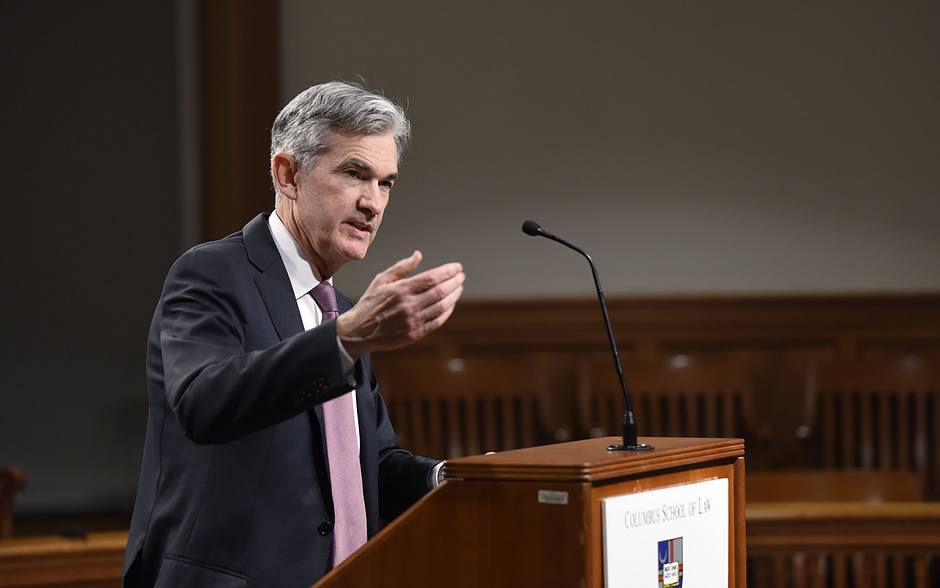

On this first trading day of May the Federal Reserve reignited the US dollar's rally.The greenback recovered all of its earlier losses and traded sharply higher after Fed Chairman Jerome Powell dismissed talk of easing. He said the Fed's policy stance is "appropriate right now" and "we don't see a strong case for moving in either direction." While the FOMC statement focused on the negatives like low inflation, weaker consumer spending and business investment, Powell downplayed these concerns. He acknowledged that inflation has been weaker, but attributed the softness to transitory factors. He also said consumer spending and business investment will most likely pick up and noted that some of the risks that they were worried about in March (such as Brexit, Europe and China) have "moderated." These upbeat comments kicked off a dollar rally so strong that it drove EUR/USD below 1.12 and AUD/USD within a few pips of 70 cents. USD/JPY, which had fallen to a low of 111.05 after the subdued FOMC statement, hit a high of 111.60 during Powell's press conference. The dollar should continue to strengthen for 2 main reasons - first the Fed chair made it very clear that when it comes to the economy he sees the glass half full. He expects the outlook to improve as the prior weakness eases. Secondly, he sees no reason to be talking about rate cuts. This view contrasts sharply with other central banks that have recently expressed concerns about growth and talked openly about the possibility of a response to counter that trend. Economic and monetary policy divergences were the reasons for the dollar's strong gains in April and they will continue to be a source of demand for the greenback.
The New Zealand and Australia dollars were hit the hardest by the rising US dollar.Although manufacturing activity in Australia improved last month, labor market conditions deteriorated significantly in New Zealand during the first quarter. The unemployment rate fell but it was due to a lower participation rate and most importantly, employment declined 0.2%. The Reserve Bank of New Zealand meets next week and last night's report hardens the case for a rate cut. After today's less dovish Fed comments, it should only be a matter of time before NZD/USD breaks below 66 cents and heads towards support at .6500.
The euro is also poised for further losses as tomorrow's German retail sales report is widely expected to confirm the vulnerability of the Eurozone's largest economy.But the main focus will be sterling. GBP/USD rallied despite weaker PMIs and lower mortgage approvals because investors don't believe that the Bank of England won't have anything new to say about the economy. However with their Quarterly Inflation report on tap along with updated economic projections and a press conference by Governor Carney, there should be wild swings in sterling.
The UK economy has held up fairly well in the face of Brexit uncertainty so the central bank really has no reason to alter their neutral bias until they make their decisions about Brexit. Prime Minister May bought the country 6 months but to the dismay of the BoE, all options remain on the table. While the central bank has a hawkish bias, sterling is finding it difficult to attract buyers because October 31st will roll around quickly. When the BoE last met in March, sterling rebounded following the rate decision because the central bank said "gradual, limited tightening is probably needed." Since then unemployment rate dropped to its lowest level since the 1970s, wage growth increased helping retail sales grow at a faster pace. Unfortunately inflation remains low, GDP growth weakened, service sector activity contracted and the trade deficit widened. The BoE won't be happy with these changes but the steadiness of spending and uptick in manufacturing could keep their economic projections unchanged. If the central bank maintains a positive attitude and views the Brexit delay as beneficial to the economy, EUR/GBP could slip below 85 cents. However if they make small negative tweaks to their economic forecasts or join the chorus of policymakers emphasizing the possibility of easing, the next stop for GBP/USD will be below 1.28.

Author
Kathy Lien
BKTraders and Prop Traders Edge