Weekly review: Federal Reserve liquidity and technical scenarios for 2026 [Video]
![Weekly review: Federal Reserve liquidity and technical scenarios for 2026 [Video]](https://editorial.fxsstatic.com/images/i/Federal-Reserve-Building_4_XtraLarge.png)

The current macro-financial environment presents an unusual combination of moderate economic growth, restrictive monetary conditions, and, at the same time, significant liquidity injections by the Federal Reserve. This weekly report examines how these dynamics may influence financial markets during the 2026 cycle, with a specific focus on technical scenarios developing in the EUR/USD currency pair and the oil market.
The purpose of this analysis is to provide structural context rather than short-term predictions, using technical frameworks, liquidity behavior, and professional risk management principles to evaluate potential market paths.
Federal Reserve liquidity in a bullish market context
Historically, large expansions of the Federal Reserve’s balance sheet have occurred during periods of systemic stress or economic contraction. The current situation differs from those precedents. The U.S. economy is not officially in recession, and equity markets continue to trade within high-valuation, bullish or range-bound structures.
This apparent contradiction suggests that current liquidity measures are not reactive but preventive. The Federal Reserve appears focused on maintaining financial stability in an environment marked by elevated capital costs, historically high debt levels, and increasing global vulnerabilities.
From a market perspective, liquidity functions as a stabilizing mechanism. It does not eliminate risk, but it alters how and when price adjustments occur, directly affecting risk assets, currencies, and commodities.
Cyclical liquidity behavior and market signals
An analysis of liquidity cycles since 2010 reveals recurring patterns in which substantial balance-sheet expansions precede transitional phases in financial markets. In 2025, the scale of liquidity injections stands out due to the absence of a clearly defined economic downturn.
This behavior may indicate anticipation of future stress in the global financial system, sovereign debt markets, or structurally fragile economies. From a technical standpoint, such periods are often associated with rising volatility and gradual changes in trend structure rather than abrupt reversals.
Technical outlook for EUR/USD in 2026
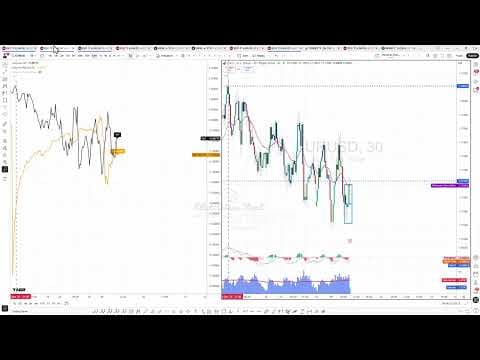
The EUR/USD pair is developing a technical structure that supports a medium-term bullish bias, reinforced by relative U.S. dollar weakness and a reallocation of capital flows within the currency market. From an Elliott Wave structural perspective, price action remains consistent with an impulsive framework, interrupted by controlled corrective phases.
Liquidity zones above current price levels suggest the potential for further extensions, provided that pullbacks respect key technical supports. In this context, retracements should be viewed as part of normal market rebalancing rather than immediate trend reversals.
Trade execution and risk control framework
In liquidity-driven environments, effective trading depends less on aggressive anticipation and more on confirmation and disciplined risk control. Selective entries on intermediate timeframes allow for precise risk definition at the outset of a trade.
Partial profit-taking at balanced risk-reward levels, combined with progressive stop adjustments, helps reduce exposure during unexpected retracements. This approach emphasizes capital preservation and consistency, which are essential for strategies designed to perform across full market cycles.
Active risk management during corrective phases
Corrective phases tend to generate the highest error rates among market participants. Active risk management—through adaptive stop placement and gradual exposure reduction—allows traders to navigate these periods without compromising overall performance.
Rather than maximizing individual price swings, the objective is to maintain a sustainable operational structure capable of adapting to changes in volatility and institutional market behavior.
Oil market perspective for the 2026 cycle
The oil market continues to show signs of consolidation within a defined technical range, with price projections bounded by well-established support and resistance levels. This structure favors tactical strategies, particularly near key zones where volume and price reaction confirm institutional participation.
The interaction between technical conditions and fundamental drivers, such as demand expectations and geopolitical developments, reinforces the need for a cautious and flexible approach in this market.
Ongoing market monitoring and analysis
Consistent evaluation of these scenarios requires continuous monitoring and structural market analysis. Access to regular updates, real-time reviews, and scenario discussions supports more informed decision-making aligned with evolving market conditions.
Current Federal Reserve liquidity dynamics are introducing atypical conditions into financial markets. Understanding their impact, alongside structural analysis of currencies and commodities, is essential for approaching the 2026 cycle with clarity and realistic expectations.
The integration of technical analysis, macro context, and disciplined risk management remains central to developing sustainable market strategies. Observation, adaptability, and consistency are likely to be decisive factors in the months ahead.
Author
Juan Maldonado
Elliott Wave Street
Juan Maldonado has a University degree in Finance, and Foreign trade started his trading career in 2008. Since 2010 has been analyzing the markets using Elliott Wave with different strategies to spot high probability trades.