Washington buys bonds, Gold buys the story: US30 vs XAU


The bond purchases coming out of Washington say two different things depending on who is listening. Stock traders read lower financing costs. Gold buyers read that government debt needs more support. The Dow Jones vs. Gold argument rests on that split, and this week's market movement showed why pessimism about fiscal policy doesn't always beat rising yields.
When the Treasury expanded its long-dated buybacks, that trade got a boost at first. But by September 29, yields were rising once more while gold bounced off a steep selloff. The US30/XAU comparison now depends on two questions: does the intervention produce durable relief, and do investors believe in the process itself?
The rescue has a credibility cost
The World Gold Council’s August analysis recorded lower yields and a softer dollar, with gold rallying 3% around the August 19 buyback announcement. It also drew a line between Treasury intervention and actual yield-curve control. Making the market run more smoothly does not equal a commitment to cap bond yields.
This distinction carries weight. Buybacks give investors holding older Treasuries another exit. They leave persistent deficits untouched and promise nothing about future demand. So the fiscal reading becomes a market call: some traders see improved liquidity, others see signs that absorbing government debt is becoming harder.
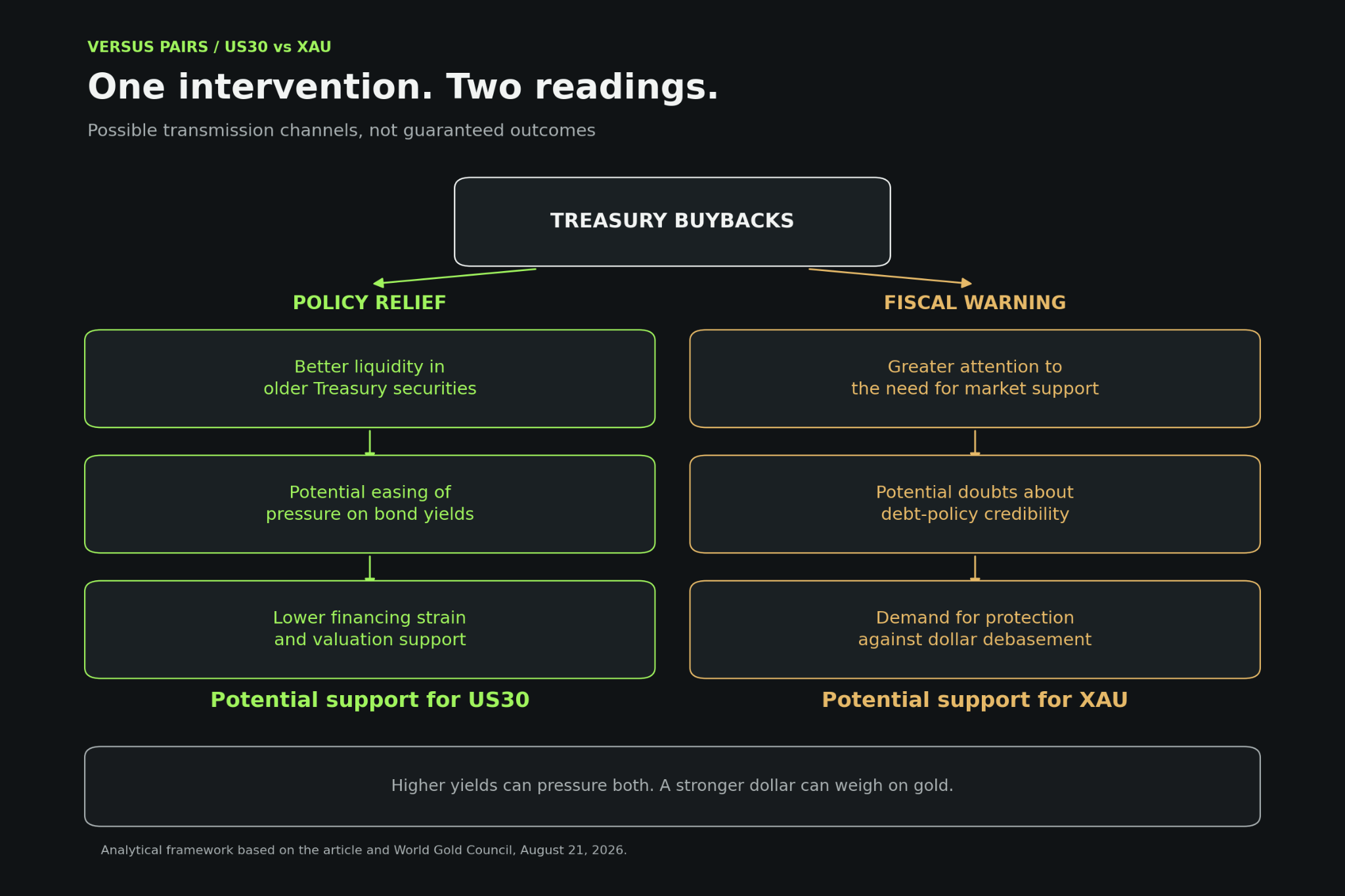
Companies in the Dow would welcome a lasting drop in borrowing costs, easing refinancing strain and supporting equity values. The same move can support bullion by strengthening demand for an asset outside Washington’s debt promises. Both can rise initially, while the Dow Jones vs. gold correlation can shift as financing costs, earnings expectations, and demand for monetary protection change.
This week, yields challenged both sides
The DJIA chart shows the buyback expansion hasn't protected stocks from renewed pressure in the Treasury market. On September 29, the DJIA price ended at 51,349.92, a 0.26% decline. Ten-year Treasury yields hit 5.293% during the session, and 30-year yields reached 5.6206%, as Reuters’ equity market report shows. Higher borrowing costs still weigh on Dow Jones performance even after the expansion.
The gold price chart muddies the fiscal warning as well. Spot bullion changed hands at $4,142.89 per troy ounce at 17:55 GMT on September 29, climbing back after a nearly 4% drop the day before. Reuters’ gold report tied that selloff to a firmer dollar, higher yields, and bets on more Federal Reserve tightening.
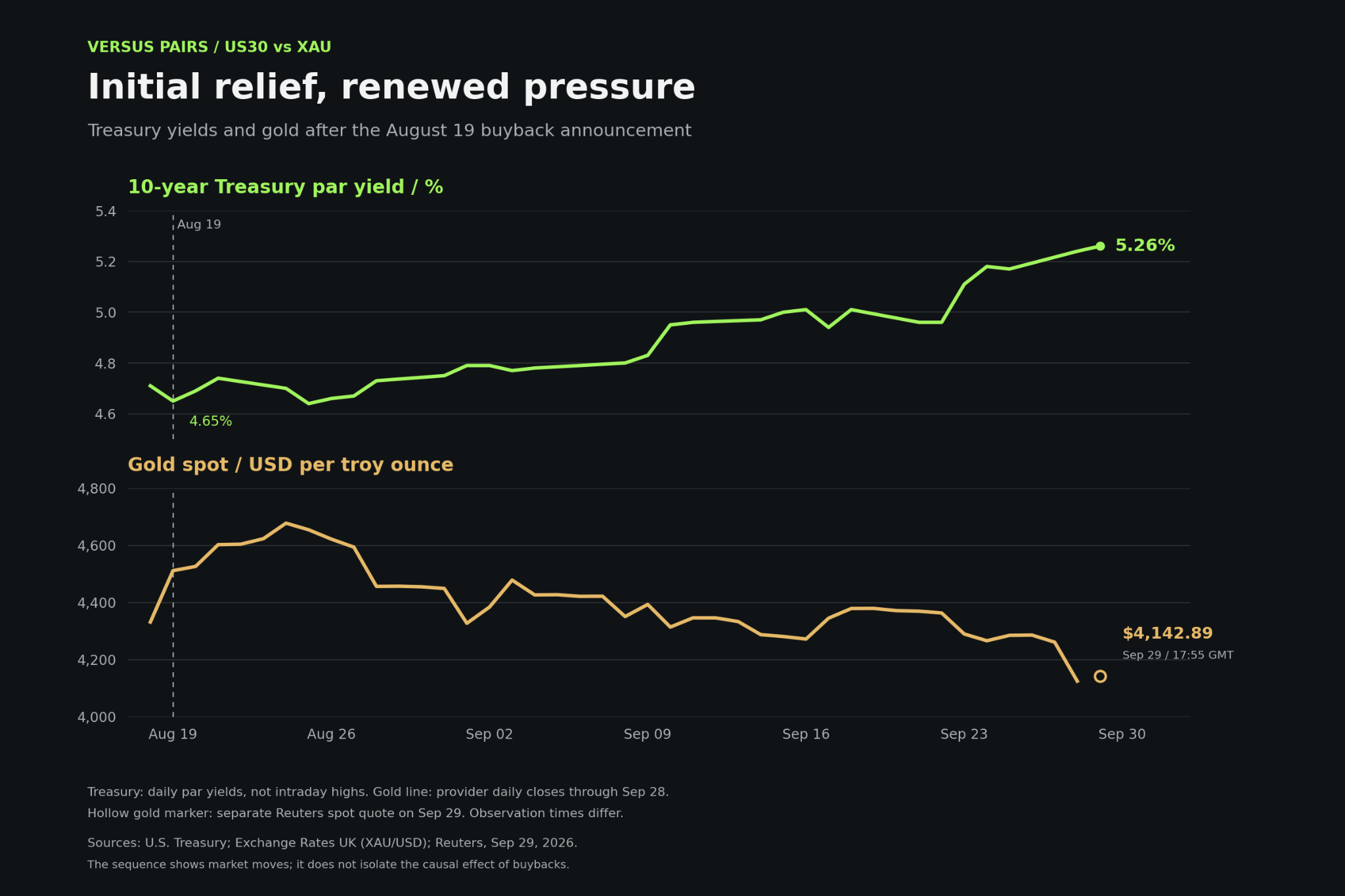
That reversal is why gold price volatility matters here. Fiscal anxiety can support bullion over time, while higher yields can still exert downward pressure by increasing the opportunity cost of holding a non-yielding asset. A bullish gold price prediction built only around buybacks overlooks that conflict.
US30 vs XAU: Relief must outlast the announcement
The Versus Trade US30 XAU framework lines up two different reactions to American financial policy. A sustained decline in yields plus resilient earnings and a stable dollar would make the Dow's relative case stronger. Falling yields paired with dollar weakness and persistent fiscal distrust could tilt toward bullion.
People typing "Which is better, the Dow Jones or Gold?" or “Should I invest in Dow Jones or Gold?" are turning a conditional contest into a permanent either/or. This week gives no verdict like that. Even a term like “gold price investment” hides the difference between a long-term allocation and a short-term response to policy.
For anyone trying to trade Dow vs gold, the signal that counts is if the relief outlives the announcement. This week's gold price forecast still depends on yields and the dollar. Washington can step in as a buyer for older bonds. It can't buy investor confidence on the same timetable.
Author

















