DXY sours following evasive Warsh

The Dollar Index is nearly 1% down across 2 days, firmly departing from the April 2025 immediate post-tariff board highs it has enjoyed recently. Much of this has to do with Warsh being up to his usual tricks at the IMF meeting in Bangkok, where he evaded, rather clumsily, “prejudging meetings” and reiterated his opinion that meetings are held on the day and decided on the day.
Markets interpreted the lack of a hawkish lean as supportive of an October hold: implied probabilities of a hike, which had risen toward the high-20s percent range after the CPI, fell below 15% after his remarks. The dollar eased further on the comments, while equity futures firmed.
Warsh did strike an upbeat tone on the real economy however, highlighting unexpected global resilience despite geopolitical shocks and energy price pressures, noting strength “almost everywhere” that he would not have predicted five or six months earlier, including across many G20 economies. In the US specifically, he pointed to a broadening investment surge—not limited to AI—as providing “plenty of tailwinds” and durability. He also underscored the global nature of the inflation fight, describing a “synchronous tightening in monetary policy in most places around the world” with “no free riders”, a real mouthful.
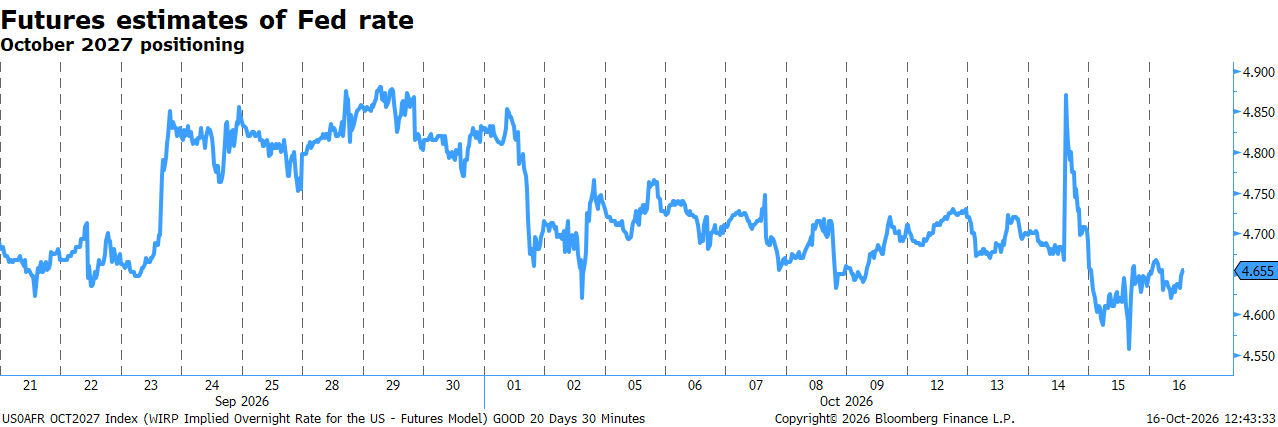
Broadly resilient estimates of the future Fed rate declined significantly, with traders departing from their expectation of a 5% base rate come this time next year and shrinking away to between 4.5-4.75%. Not great short-term news for Dollar bulls, but the Fed still looks the far more likely to actually reach this rate, with the ECB being hamstrung by the chaos of French fiscal policy and the BoE likely being uninterested in some short-term beats of GDP against expectations.
Looking into the remainder of Q4, the Dollar’s path is likely to be decided by three main factors. First, the Fed’s October decision and guidance will set the tone Warsh’s non-committal tone has reinforced the hold base case, but any pushback against December hike pricing would trigger a meaningful USD correction, while confirmation of further tightening would support a move toward 102.50–103.00 on the DXY. Second, US labour market and inflation data through November will determine whether the September CPI was a one-off energy-driven spike or evidence of more persistent pressures. Third, cross-asset dynamics, including equity volatility and gilt/Treasury yield spreads, will influence relative performance in GBP and EUR.
In the near-term consensus still leans towards USD resilience into year-end, with many banks targeting DXY above 102.50 as the base case, though structural concerns around US fiscal deficits and potential post-midterm policy shifts keep longer-term dollar weakness narratives alive.
Author

David Stritch
Caxton
Working as an FX Analyst at London-based payments provider Caxton since 2022, David has deftly guided clients through the immediate post-Liz Truss volatility, the 2020 and 2024 US elections and innumerable other crises and events.

















