Warsh separates the Fed’s inflation fight from the 5% Treasury problem
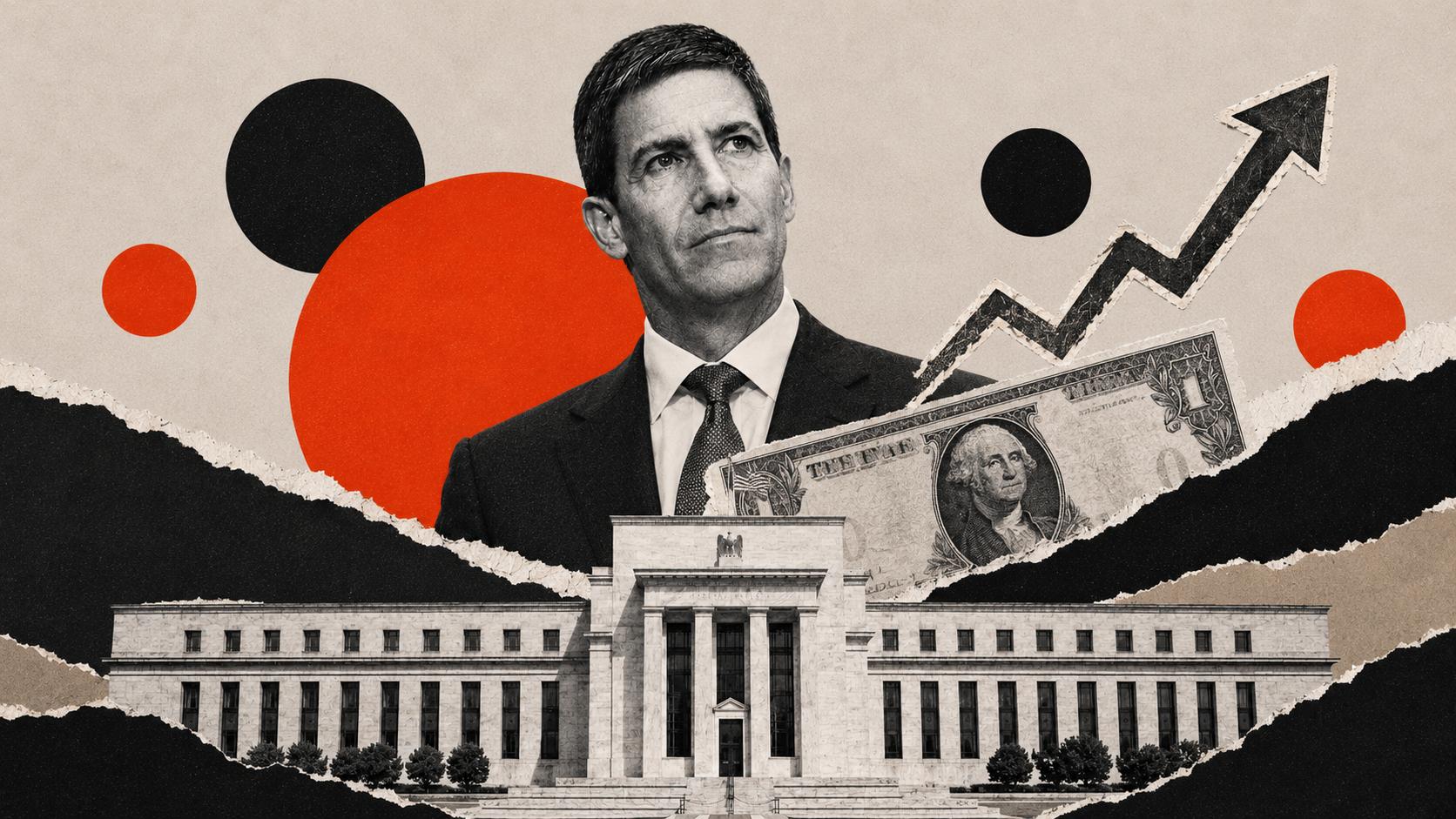
EU mid-market update: Warsh separates the Fed’s inflation fight from the 5% Treasury problem; BoE may shift long-duration risk from Threadneedle Street to the DMO; crude finds an Oman workaround while LNG has no equivalent.
Notes/observations
- Warsh has effectively split the yield curve into two different stories. The Fed’s unanimous hike to 3.75–4.00% says the front end was still too easy for 3%+ inflation, but Warsh explicitly attributed high long yields to AI/data-centre capex, geopolitical risk and commodity-market dislocation, not to doubts about Fed credibility or U.S. debt sustainability. The dots show only one more hike this year and none in 2027; futures are already trying to price much more. That leaves an unusual configuration: the Fed is tightening short money while its chairman argues that expensive long money is partly the rational price of an investment boom. If the 10Y keeps returning to 5% even after inflation expectations cool, Treasury cannot indefinitely treat the back end as a monetary-policy problem.
- Today’s BoE decision may quietly move part of Britain’s debt market from monetary policy into debt management. Bank Rate is expected to stay at 3.75%, with only three MPC members likely to favour a hike, but the more consequential decision is the APF: stopping active sales of 20Y/30Y gilts, or even transferring bonds to the DMO rather than selling them directly into the market. The distinction is not cosmetic. If the DMO becomes the sole marginal supplier, it can choose issuance timing and maturity against fiscal demand instead of having a central bank auction long duration on a mechanical QT schedule. The BoE can therefore keep shrinking its balance sheet while ceasing to be an independent source of pressure at the exact maturities causing Healey the most fiscal pain.
- The Gulf is producing two different energy markets: crude is finding detours; LNG largely cannot. Saudi Arabia is now offering Asian refiners cargoes via ship-to-ship transfers off Sohar, helping push Brent back toward $104 even while normal Hormuz traffic remains badly impaired. LNG has fewer improvisational options: Qatar and the UAE have lost roughly 36mt of exports this year, Europe is only 67% full versus an 80% storage target, and industry executives now discuss $40/mmBtu in a cold winter. A barrel can be transferred offshore, rerouted and blended; an LNG cargo still needs a functioning liquefaction train, specialised vessel and receiving slot. That is why Brent can fall for several sessions while Europe’s winter gas problem is simultaneously getting worse.
- Huawei’s latest answer to Nvidia is essentially: make the network compensate for the transistor. The 960DT arrives in Q1 2027, 960PR in Q3, but Huawei spent as much time on UnifiedBus and superclusters that can link up to one million processors; more than 1,000 smaller supernodes have already been shipped to 370+ customers. Connecting that many weaker chips is not free—latency, power, cooling and collective communication become brutal—but it moves the Chinese bottleneck away from “can one Ascend equal one Nvidia GPU?” toward “how efficiently can China pool the silicon it can manufacture?” DeepSeek is attacking memory consumption from the model side; Huawei is attacking chip inferiority from the topology side. The sanctions race is increasingly about how much weakness software and interconnect can hide before lithography catches up.
- Russia may have found a cheaper way to squeeze Ukrainian grain exports than repeatedly attacking the ports themselves. Reported damage to the Bilhorod-Dnistrovskyi/Zatoka rail bridge hits the shortcut feeding Ukraine’s Danube terminals just as those terminals are carrying more of the load lost at Odesa. The practical consequence is ugly: rail transit to the Danube can stretch toward 26 days, wagons stop turning, elevators fill faster and exporters lose cash conversion precisely into harvest and autumn sowing. Ukraine had already cut its 2026/27 grain-export forecast to 38–40Mt from 43Mt, with alternative routes running at only about 40% of normal capacity in early September. The bigger risk is persistence rather than one strike: the bridge has been hit repeatedly throughout the war, so even partial repairs do not restore a dependable corridor. Ukraine can still move grain, but every detour consumes more rolling stock, more time and more working capital—turning logistics itself into part of Russia’s pressure on farm liquidity.
- Xi answered Western demands for Chinese rebalancing today by asking for more of the thing the West wants less of. At the National Advanced Manufacturing Conference he called for advanced manufacturing to become “bigger and stronger” and for tighter Chinese control over critical industrial chains, while Li Qiang pushed further AI-driven industrial upgrading. That comes days after Chinese data showed industrial production comfortably outrunning retail sales and just as Brussels labels the trade imbalance a second China shock. Bessent goes into this weekend’s talks with He Lifeng asking Beijing to absorb more production domestically; Beijing’s own industrial strategy is still built around producing more sophisticated goods, faster. The disagreement before Trump–Xi is therefore not merely tariffs—it is over what China believes its growth model should become.
- The British consumer is separating into geography before it separates completely by income. Next raised annual profit guidance again after H1 profit rose 10.5% and full-price sales 7.7%, but cut second-half UK sales growth to 2.0% from 2.8%, citing inflation, mortgages, jobs and the risk of higher taxes; meanwhile it lifted international second-half growth expectations to 20.5%. This is a useful counterweight to the idea that Britain simply has weak consumption. A very competent retailer can still grow profit by taking cost out and selling abroad while warning that its home customer is running out of room. The UK economy can therefore look respectable at the corporate level while the domestic revenue line underneath it is already rolling over.
- At Dreamforce conf, Salesforce essentially hinted it is trying to monetize the AI disruption before it has time to become a seat problem. The company lifted its FY30 revenue framework to $63B v $61.4Be, while still guiding to organic reacceleration in H2 FY27 and roughly $15B of FY27 FCF; importantly, Sales/Service seats are still growing and Slack seats are “flying through the roof,” so the feared AI cannibalisation has not actually arrived yet. Management is instead using the transition to move customers up the stack: every 1% of the installed base upgraded is worth roughly $100M, premium migrations carry 60–80% pricing uplift, and the motion has already produced about $1B of AOV over eight quarters. The top 100 Agentforce consumption customers have roughly doubled ARR in 18 months, while 7 of Q2’s 10 largest deals were AI unlimited-license agreements—evidence that Salesforce is deliberately building several charging mechanisms before it knows which one wins: per seat, per agent, usage, transaction and outcome. That gives the FY30 target a more interesting composition than the headline implies: Salesforce does not need AI to preserve the old seat model intact; it needs AI-driven expansion to outrun whatever seat compression eventually appears. The weak point is product maturity—Claude Force still over-reasons simple requests, burns excess tokens and remains largely read-and-synthesise—but if those costs fall while contract duration and premium mix keep rising, AI could become a pricing architecture change before it becomes a labour-substitution problem.
- Cross-asset: the Fed’s hike produced a flatter curve rather than another disorderly duration selloff: UST 2Y ~4.72%, 10Y ~5.00%, 30Y ~5.35%; DXY ~100.36, with the dollar at a seven-week high. Asia was modestly firmer (MSCI Asia ex-Japan +0.3%, Nikkei +0.3%), while Chinese blue chips fell ~0.2% and Hang Seng ~0.7%; Europe is ~+0.5%, and S&P/Nasdaq futures +0.6–0.7%. Brent is around $104–106 after the Oman workaround, while gold is ~+0.7% near $4,293.
Asia
- New Zealand Q2 GDP Q/Q: 0.2% v 0.1%e; Y/Y: 2.6% v 2.2%e.
- Singapore Aug Non-oil Domestic Exports Y/Y: 46.2% v 35.1%e.
- IMF stated that RBA must keep tightening bias and be ready to hike as needed as inflation risks remained skewed to the upside.
- Japanese cabinet reshuffle has no major changes. Fin Min Katayama & Economy Min Kiuchi remained in posts.
Global conflict/tensions
- Trump reiterated he was still open to a diplomatic solution on Iran.
- Pres Trump expected to hold a meeting with Gulf leaders on the sidelines of the UN General Assembly in NY next Thursday (Sept 24th).
Americas
- FOMC raised Target Range by 25bps to 3.75-4.00% range (as expected) with decision being unanimous. Most policymakers expecting another rate hike later this year.
- Fed Chair Warsh post rate decision press conference noted that was hard-pressed to call financial conditions restrictive; Heard an attitude of optimism inside the FOMC over the last two days; Predominant focus was inflation.
- Trump praised Warsh for supporting the Fed's interest; rate increase but criticized other Fed officials who backed the move. Believed rates should be at 1.00% level or lower.
- US July Total Net TIC Flows: $83.7B v $135.5B prior; Net Long-term TIC Flows: -$27.9B v +$174.4B prior.
- House approved legislation giving President Trump authority to impose tariffs of up to 100% on the five largest importers of Russian oil and gas.
- Bank of Canada (BOC) Summary of Deliberations noted that Council agreed near-term inflation was likely to remain elevated.
- Trump stated that allowing Canada to become an associate member of EU could be a ‘hostile act’.
- Brazil Central Bank (BCB) cut the Selic Target Rate by 25bps to 13.75% (as expected) for its 5th straight rate cut under the current easing cycle. Decision to cut by 25bps was unanimous.
Trade
- Trump ordered US government agencies to exclude Canadian goods from federal procurement contracts.
Energy
- Saudi Arabia seeks to resume half of their key East-West oil pipeline within days.
Speakers/fixed income/FX/commodities/erratum
Equities
Indices [FTSE +0.49% at 10,740.72, DAX +0.40% at 25,661.87, CAC-40 +0.21% at 8,157.32, IBEX-35 +0.41% at 19,716.63, FTSE MIB +0.31% at 52,128.50, SMI +0.29% at 13,908.90, S&P 500 Futures +0.82%].
Market focal points/key themes: European equities posted a measured advance on Thursday, with the Euro Stoxx 50 rising 0.53%, the FTSE 100 gaining 0.49%, the DAX climbing 0.40%, the IBEX 35 adding 0.41% and the CAC 40 up 0.21%, as desks absorbed the Federal Reserve’s first rate increase since mid-2023 and interpreted it as a firm demonstration of institutional independence against energy-driven inflation pressures. Parallel support came from President Trump’s public optimism that a seven-month Iran conflict could be nearing resolution, reinforced by planned high-stakes bilateral meetings with Gulf leaders on the sidelines of the UN General Assembly. The session’s most striking individual movers were Exosens, which jumped 12% after lifting 2026 revenue guidance to €558-570m and adjusted EBITDA to €186-192m on accelerated defence-imaging capacity, against Bilfinger’s 24% collapse following a second downward revision of its 2026 revenue outlook to €5.3-5.7bn and Raiffeisen Bank International’s 9% slide after a short-seller report alleged involvement in $1.191bn of Russian trade. Focus now shifts to the Bank of England’s rate decision against a 3.1% UK CPI backdrop and the final Eurozone CPI print, with the Bank of Japan widely expected to raise its policy rate 25 basis points to 1.25% on Friday.
Equities
- Consumer discretionary: Moncler [MONC.IT] +2.0%, Brunello Cucinelli [BC.IT] +1.0% (led a Milan fashion-sector rebound amid firmer risk appetite, retreating oil and stabilising bond yields).
- Financials: Raiffeisen Bank International [RBI.AT] -9.0% (a short-seller report alleged the bank was involved in $1.191bn of Russian trade), Helvetia Baloise [HBAN.CH] +1.0% (first combined half-year results showed CHF631.6m of underlying earnings and faster integration, prompting a rise in the 2026 synergy-realisation target to around 60% from 50%).
- Industrials: Exosens [EXENS.FR] +12.0% (raised 2026 revenue guidance to €558-570m from €520-540m and adjusted EBITDA guidance to €186-192m from €168-178m as defence-imaging capacity ramps faster than expected), Bilfinger [GBF.DE] -24.0% (cut its 2026 outlook for the second time, lowering expected revenue to €5.3-5.7bn from €5.4-5.9bn), Dassault Systèmes [DSY.FR] -2.5% (BNP Paribas downgraded to Underperform from Neutral with a €17 price target).
- Technology: ASML [ASML.NL] +2.0% (technology shares rebounded as the global bond selloff paused and US equity futures recovered following the Federal Reserve's rate increase).
Speakers
- ECB's Makhlouf (Ireland) reiterated stance of not seeing signs 2nd round effects. Markets did understand its commitment to its inflation target. Every meeting was live due to uncertainty as inflation risks were to the upside.
- Swiss SECO (Govt) Autumn Economic Forecasts raised the 2026 GDP growth forecast from 0.9% to 1.7% while maintaining 2027 GDP growth forecast at 1.6%. Seco maintained both 2026 and 2027 CPI forecasts at 0.6%.
- China Commerce Ministry (MOFCOM): US-China economic teams in talks regarding tariffs.
- China Commerce Ministry said to hold video talk with EU trade officials.
- Taiwan Central Bank Policy Statement noted that the current inflation level remained mild and that steady rates to help maintain stable economic and financial development. Saw 2027 growing stably aided by exports.
Currencies
- USD retraced some of its post FOMC gains during the EU session. Greenback was aided by Fed projections for at least one more rate increase this year. The rash of decisions this week highlighting their focus on inflation risks.
- GBP/USD probed the 1.34 level ahead of the BOE rate decision. Markets expect the central bank to keep policy steady and currently sees four rate hikes through the end of 2027 period. Dealers ponder whether the BOE could disappoint expectations more than other central banks given its weak labor market. A potential slowdown in BOE QT could ease the recent rise in Gilt yields.
- USD/JPY at 155.70 ahead of the BOJ rate decision. Markets anticipate BOJ raising its key rate to 1.25% with focus on Gov Ueda's post-meeting press conference where he could Drop a few hints on timing, pace of future hikes. Dealers noted potential acceleration in rate hikes to tame inflation despite market concerns over rising long-term yields.
- The 10-year German Bund yield last at 3.51%, France 10-year Oat at 4.47% and 10-year Gilt yield at 5.29%; 10-year Treasury yield: 4.98%; 10-year JGB: 2.96%.
Economic data
- (SE) Sweden Aug PES Unemployment Rate: 3.8% v 3.8% prior.
- (NL) Netherlands Aug Unemployment Rate: 4.0% v 4.0% prior.
- (CH) Swiss Aug Trade Balance (CHF): 3.8B v 5.7B prior; Real Exports M/M:-8.6% v +11.2% prior; Real Imports M/M: -3.1% v -1.5% prior; Watch Exports Y/Y: 9.1% v 9.6% prior.
- (ES) Spain Q2 Labour Costs Y/Y: 4.0% v 4.9% prior.
- (AT) Austria Aug Final CPI M/M: 0.6% v 0.6% prelim; Y/Y: 3.2% v 3.2% prelim.
- (PL) Poland Sept Consumer Confidence: -10.8 v -11.8e.
- (NO) Norway Q3 Regional Network Survey: Output Current Quarter Q/Q: 0.3% v 0.2% prior; Output Next Quarter Q/Q: 0.3% v 0.3% prior.
- (ZA) South Africa Q3 BER Consumer Confidence: -13 v -19 prior.
- (HK) Hong Kong Aug Unemployment Rate: 3.8% v 3.7%e.
- (TW) Taiwan Central Bank (CBC) left the Benchmark Interest Rate unchanged at 2.00% (as expected).
- (EU) Eurozone Aug Final CPI Y/Y: 3.2% v 3.3% prelim; CPI Core Y/Y: 2.4% v 2.4% prelim.
- (CY) Cyprus Aug CPI Harmonized M/M: 1.5% v 0.7% prior; Y/Y: 5.2% v 4.4% prior.
Fixed income issuance
- (ES) Spain Debt Agency (Tesoro) sold total €5.74B vs. €5.0-6.0B indicated range in 2032, 2034 and 2036 SPGB bonds.
- (FR) France Debt Agency (AFT) sold total €12.991B vs. €11.0-13.0B indicated range in 2029, 2031 and 2032 Bonds.
- (SE) Sweden sold total SEK750M vs. SEK750M indicated in 2030 and 2039 I/L Bonds.
Looking ahead
- (AR) Argentina Sept Consumer Confidence: No est v 40.23 prior.
- 05:25 (EU) Daily ECB Liquidity Stats.
- 05:30 (VN) Vietnam Finance Ministry announcement on upcoming bond issuance (held on Wed).
- 05:30 (HU) Hungary Debt Agency (AKK) to sell 3-year, 5-year and 10-year bonds.
- 05:40 (UK) BOE 7-day short-term repo operation (STR).
- 05:50 (FR) France Debt Agency (AFT) to sell €2.0-2.5B in 2.10% Mar 2037 inflation-linked bonds (Oatei); Real Yield: %; bid-to-cover: x (no prior history).
- 6:00 (CZ) Czech Republic to sell CZK5.0B in 9-month Bills.
- 06:00 (FI) ECB's Rehn (Finland) in London.
- 07:00 (UK) Bank of England (BOE) Interest Rate Decision: Expected to leave Bank Rate unchanged at 3.75%.
- 07:00 (UR) Ukraine Central Bank (NBU) Interest Rate Decision: expected to raise Key Rate by 50bps to 16.00%.
- 07:00 (CA) Canada Sept CFIB Business Barometer: No est v 57.6 prior.
- 08:00 (UK) Daily Baltic Dry Bulk Index.
- 08:30 (US) Aug Housing Starts: 1.319Me v 1.239M prior; Building Permits: 1.405Me v 1.433M prior.
- 08:30 (US) Aug Housing Starts M/M: +6.7%e v -12.4% prior; Building Permits M/M: -1.5%e v +4.3% prior.
- 08:30 (US) Sept Philadelphia Fed Business Outlook: 32.5e v 47.4 prior.
- 08:30 (US) Initial Jobless Claims: 207Ke v 206K prior; Continuing Claims: 1.78Me v 1.774M prior.
- 08:30 (CA) Canada Aug Industrial Product Price M/M: 0.0%e v 0.6% prior; Raw Materials Price Index M/M: +0.8%e v -2.2% prior.
- 08:30 (CA) Canada July Int'l Securities Transactions (CAD): No est v 40.8B prior.
- 08:30 (CZ) Czech Central Bank (CNB) Interest Rate Decision: Expected to leave 2-Week Repurchase rate unchanged at 3.75%.
- 08:30 (US) Weekly USDA Net Export Sales.
- 09:00 (RU) Russia Gold and Forex Reserve w/e Sept 11th: No est v $753.5B prior.
- 09:00 (CZ) Czech Central Bank (CNB) Post rate decision press conference.
- 10:00 (US) Aug Pending Home Sales M/M: 0.0%e v -2.3% prior; Y/Y: -5.0%e v -2.5% prior.
- 10:30 (US) Weekly EIA Natural Gas Inventories.
- 11:30 (US) Treasury to sell 4-Week and 8-Week Bills.
- 12:00 (CA) Canada to sell 30 Year Bonds.
- 13:00 (US) Treasury to sell 10-Year TIPS Reopening.
- 15:00 (AR) Argentina Q2 GDP Q/Q: -0.9%e v +0.7% prior; Y/Y: 1.6%e v 2.3% prior.
- 15:00 (AR) Argentina Q2 Unemployment Rate: No est v 7.8% prior.
- 17:00 (KR) South Korea Aug PPI Y/Y: No est v 7.7% prior.
- 18:45 (NZ) New Zealand Aug Food Prices M/M: No est v 0.1% prior.
- 18:45 (NZ) New Zealand Aug Trade Balance (NZD): No est v -1.9B prior; Exports: No est v 7.4B prior; Imports: No est v 9.3B prior.
- 19:01 (UK) Sept GfK Consumer Confidence: -16e v -14 prior.
- 19:30 (JP) Japan Aug National CPI Y/Y: 2.0%e v 1.9% prior; CPI (ex-fresh food) Y/Y: 1.8%e v 1.8% prior; CPI (ex-fresh food/energy) Y/Y: 2.0%e v 1.9% prior.
- 19:30 (AU) RBA Gov Bullock.
- (JP) Bank of Japan (BOJ) Interest Rate Decision: Expected to raise Target Rate by 25bps to 1.25%.
Author

TradeTheNews.com Staff
TradeTheNews.com
Trade The News is the active trader’s most trusted source for live, real-time breaking financial news and analysis.