Warning: The RBI's October rate hike may be too late as oil risks mount
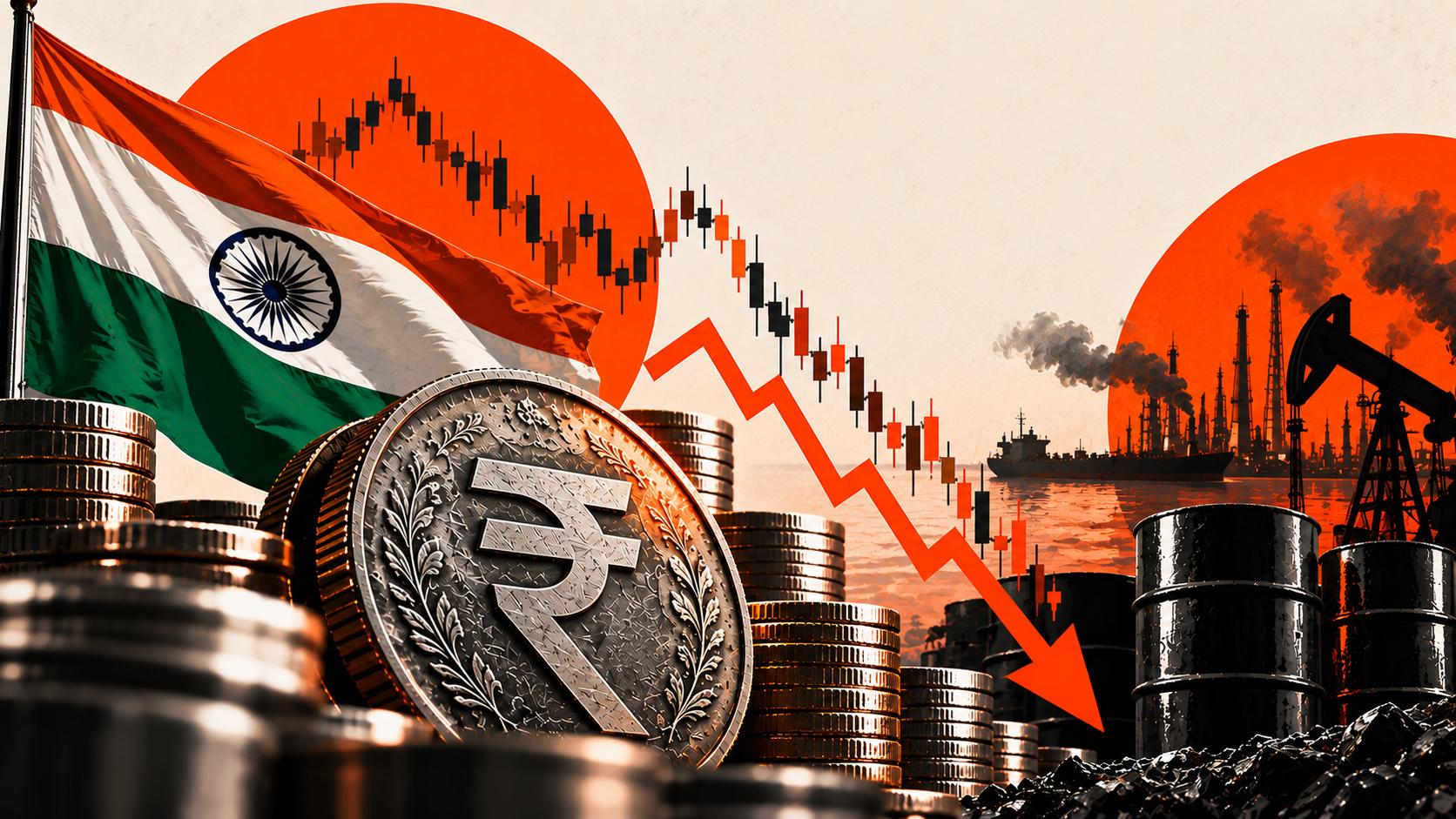
The Indian Rupee (INR) is one of the worst-performing Asian currencies in 2026, down about 6.5% year-to-date against the US Dollar (USD) and trading near historic lows ahead of the October 5–7 Reserve Bank of India (RBI) meeting. Economists expect the RBI to raise its repo rate by 25 basis points (bps) next month and follow up with another increase in December to counter rising retail inflation.
RBI rate hike seems imminent
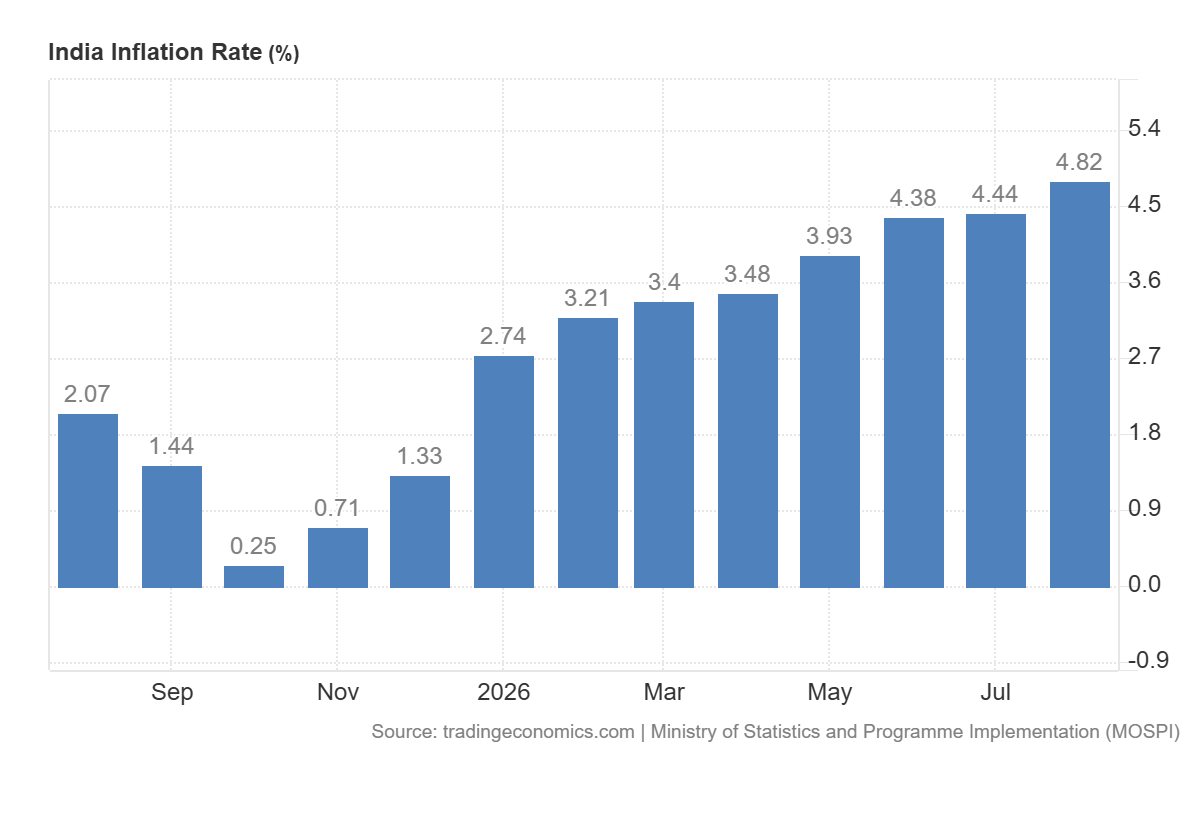
According to data released by the Ministry of Statistics and Programme Implementation (MoSPI), India's inflation based on the Consumer Price Index (CPI) accelerated to a provisional 4.82% year-on-year in August. This marks the highest reading under the new series that began in January and strengthens the case for a rate hike by the central bank in October. Moreover, strong economic growth and surplus cash in the domestic banking system allow room for monetary tightening.
Rupee struggles to lure buyers
Interest rate hikes, however, might do little to save the Indian Rupee amid mounting macroeconomic pressures stemming from intense geopolitical tensions in West Asia and subsequent global energy shocks. India relies on imports for roughly 90% of its crude oil consumption, and developments in the Middle East point to worsening supply disruptions. Elevated energy prices significantly widen India's Current Account Deficit (CAD) by inflating its import bill, putting pressure on the INR's valuation.
US factors add to Rupee’s woes
Moreover, steeper US tariffs make Indian goods more expensive, which could reduce export volumes and lower dollar inflows. Adding to this, the simultaneous portfolio and capital outflows have strained India's Balance of Payments (BoP), with foreign exchange reserves depleted by $30.8 billion in fiscal year (FY) 2025-26. This represents a multi-fold increase compared to a deficit of $5 billion in FY 2024-25 and was further driven by the narrowing interest rate differential between the US and India.
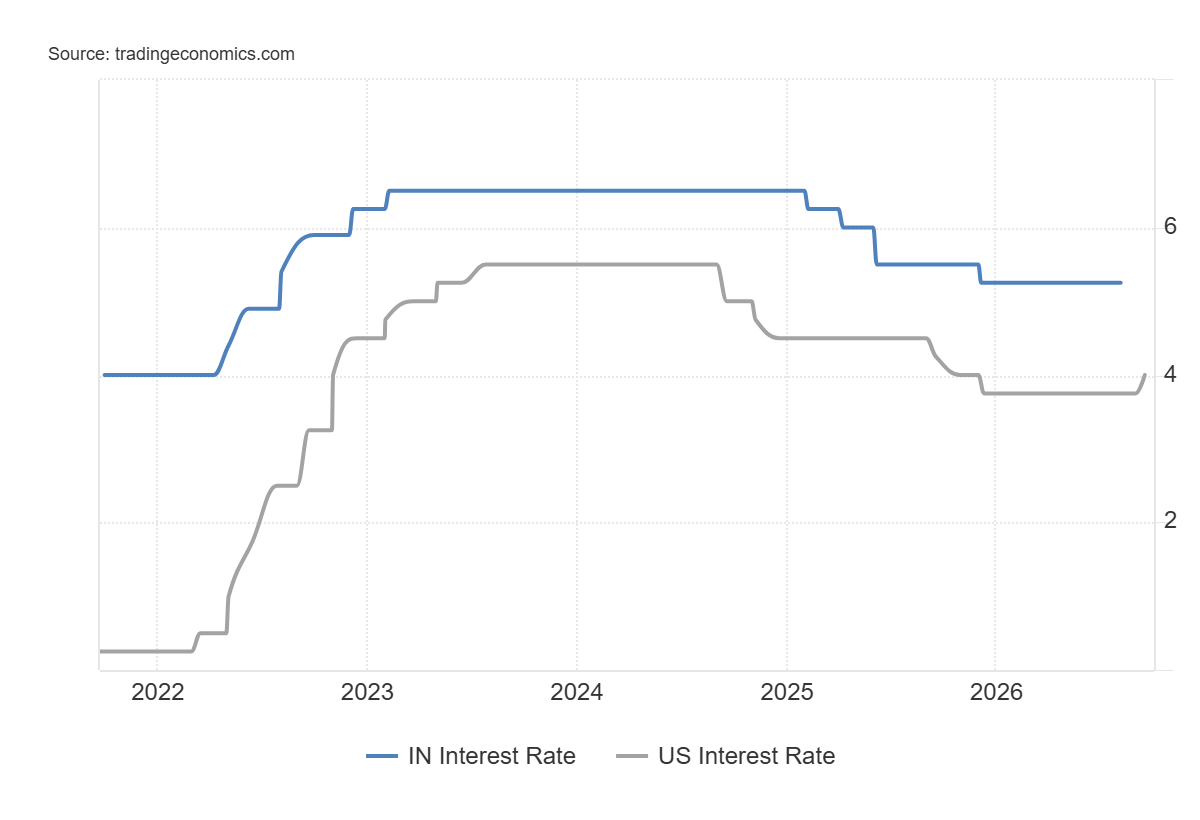
In fact, the rate gap is at its lowest point in nearly two decades, at 125 bps above the upper end of the Federal Reserve’s (Fed) new target range of 3.75%-4% following the 25-bps hike in September. Adding to this, a broad US Dollar rally, fueled by the hawkish Fed signals and the recent surge in US Treasury bond yields to multi-year highs, weighs on the local unit. However, aggressive RBI FX market intervention and the central government's efforts to bolster dollar inflows have prevented a sharp INR depreciation for the time being.
INR bears await geopolitical developments
Moreover, robust domestic Gross Domestic Product (GDP) growth figures suggest that the current situation is far from triggering a fresh downward spiral. However, the government and the RBI need to roll out major reforms to significantly boost stable long-term foreign capital inflows, which would underpin long-term currency stability. That said, the lack of clarity on the Strait of Hormuz and elevated Oil prices could introduce tail risks for the INR, warranting caution before positioning for any meaningful recovery.
USD/INR Technical Analysis: Bullish consolidation underway before the next leg up
The USD/INR pair has been oscillating in a range since late April, forming a rectangle on the daily chart. Against the backdrop of a strong rally from the May 2025 swing low, this might be categorized as a bullish consolidation phase before the next leg up. Moreover, the pair holds well above the 200-day Simple Moving Average (SMA), which reaffirms a near-term constructive outlook and suggests that downside attempts are likely to be absorbed.
Bulls, however, need to wait for a sustained breakout above the trading range hurdle, around the 96.65-96.70 region, before placing fresh bets. This is followed by the record high, near the 97.00 neighborhood, which, if cleared, should pave the way for an extension of the well-established uptrend. On the downside, the 95.00 psychological mark could act as an immediate support ahead of the 94.25 area, or the lower boundary of the trading range, with stronger underlying demand emerging at the 200-day SMA near 93.76. A sustained break below this dynamic support would be needed to hint at a more meaningful bearish shift.
(The technical analysis of this story was written with the help of an AI tool. Know more.)
Indian Rupee FAQs
The Indian Rupee (INR) is one of the most sensitive currencies to external factors. The price of Crude Oil (the country is highly dependent on imported Oil), the value of the US Dollar – most trade is conducted in USD – and the level of foreign investment, are all influential. Direct intervention by the Reserve Bank of India (RBI) in FX markets to keep the exchange rate stable, as well as the level of interest rates set by the RBI, are further major influencing factors on the Rupee.
The Reserve Bank of India (RBI) actively intervenes in forex markets to maintain a stable exchange rate, to help facilitate trade. In addition, the RBI tries to maintain the inflation rate at its 4% target by adjusting interest rates. Higher interest rates usually strengthen the Rupee. This is due to the role of the ‘carry trade’ in which investors borrow in countries with lower interest rates so as to place their money in countries’ offering relatively higher interest rates and profit from the difference.
Macroeconomic factors that influence the value of the Rupee include inflation, interest rates, the economic growth rate (GDP), the balance of trade, and inflows from foreign investment. A higher growth rate can lead to more overseas investment, pushing up demand for the Rupee. A less negative balance of trade will eventually lead to a stronger Rupee. Higher interest rates, especially real rates (interest rates less inflation) are also positive for the Rupee. A risk-on environment can lead to greater inflows of Foreign Direct and Indirect Investment (FDI and FII), which also benefit the Rupee.
Higher inflation, particularly, if it is comparatively higher than India’s peers, is generally negative for the currency as it reflects devaluation through oversupply. Inflation also increases the cost of exports, leading to more Rupees being sold to purchase foreign imports, which is Rupee-negative. At the same time, higher inflation usually leads to the Reserve Bank of India (RBI) raising interest rates and this can be positive for the Rupee, due to increased demand from international investors. The opposite effect is true of lower inflation.
Author

Haresh Menghani
FXStreet
Haresh Menghani is a detail-oriented professional with 10+ years of extensive experience in analysing the global financial markets.