Gold and Silver plunge at weekly open: Can month-end flows and NFP spark a reversal?
- Gold drops over 3% at the weekly open, support is beginning to slow the decline.
- Silver falls over 5% and tests a low around $60.90.
- Month-end flows and the US NFP report could determine whether sellers retain control.

All eyes are on the metals market at the start of the new trading week. Gold and silver have come under intense selling pressure, with gold down almost 3% and silver falling over 5% on the board this morning.
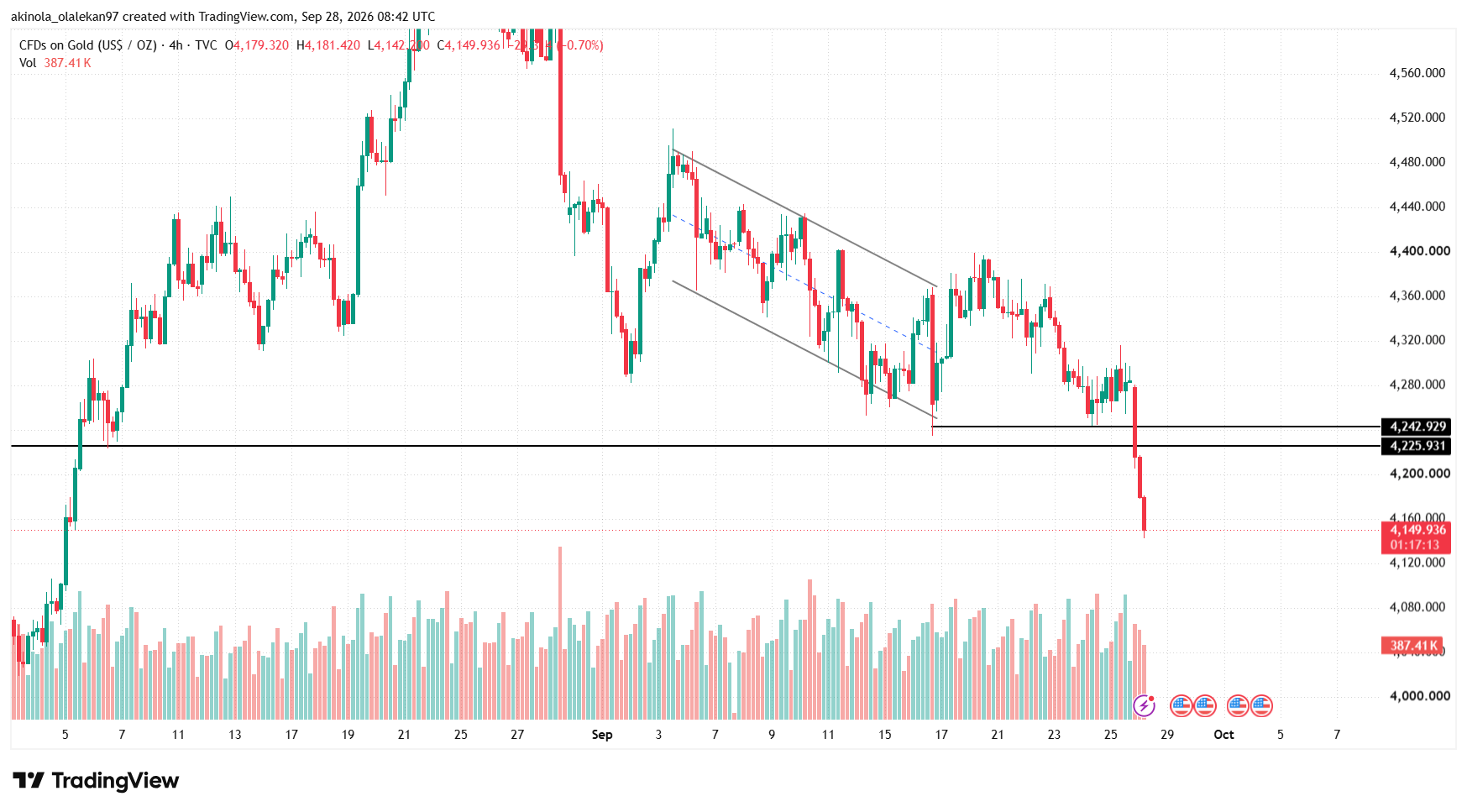
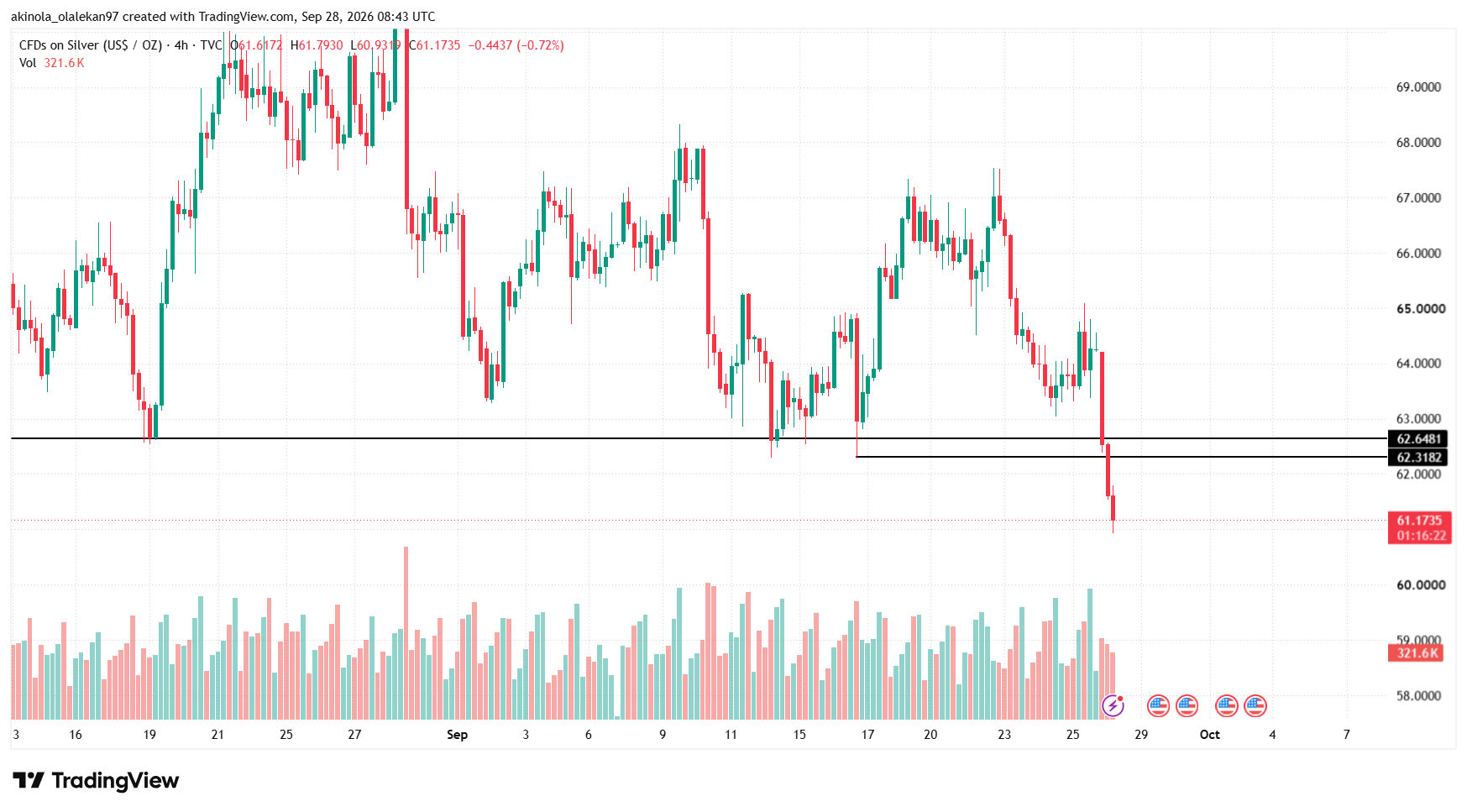
Gold broke below the key support around $4,225 and extended its decline towards a low near $4,143. Silver followed a similar path, breaking below the important $62.30 support before falling towards $60.90.
The renewed selling pressure has been attributed to hawkish Federal Reserve expectations, rising oil prices and higher US Treasury yields. However, the scale of the decline in metals has not been replicated across the broader market. Oil is up approximately 3% at the open, the US100 is down around 1%, while major currency pairs are mostly flat on the day.
This raises several questions: Is such a sharp and largely one-sided move justified by expectations of a more hawkish Fed and higher US yields? Can the metals market extend its decline? And could month-end flow or Friday’s US Nonfarm Payrolls report change the direction of the market?
Higher yields support the bearish case
There is no doubt that higher yields and a hawkish Fed are negative for gold and silver, and both conditions are currently present. Markets are pricing a strong probability of another Federal Reserve rate hike in October, while the US 10-year Treasury yield is trading around 5.23%, according to Bloomberg.
However, the concentration of today’s selling pressure in the metals market deserves some scrutiny. The speed and size of the decline could indicate that positioning, liquidation and institutional flows are amplifying the underlying macroeconomic pressure.
Month-end and quarter-end portfolio rebalancing could add further volatility over the next few sessions. These flows do not guarantee a recovery, but they leave the market exposed to a sharp reversal if sellers begin taking profits or if new buying demand emerges near the current support levels.
Gold sellers target $4,120
Gold’s break below $4,225 represents an important technical victory for sellers. Price is now testing support around $4,143, with attention turning towards the next major level around $4,120.
A sustained break below $4,120 would strengthen the bearish structure and could encourage sellers to extend the decline. Conversely, a recovery above $4,225 would suggest that the breakdown is losing momentum and could open the door to a deeper rebound.
Silver approaches the psychological $60.00 level
Silver’s break below $62.30 has also strengthened sellers’ control of the market. Price has already tested the $60.90 region, leaving the psychological $60.00 level as the next major downside target.
A sustained move below $60.00 would reinforce the bearish outlook, while a recovery above $62.30 would be required to weaken the immediate selling pressure.
Overall, the macroeconomic environment continues to put pressure on gold and silver. Month-end flows could trigger short-term volatility or profit-taking, but they may not be enough to reverse the broader directional bias.
Friday’s US jobs report could have a more lasting impact. A stronger-than-expected report would likely reinforce expectations of another Fed rate hike and place additional pressure on metals. However, weaker employment growth or an unexpected rise in unemployment could pull Treasury yields lower, weaken the dollar and give gold and silver buyers an opportunity to recover.
Author

Olalekan Akinola
Independent Analyst
Olalekan Akinola is a financial-markets analyst and writer with five years of experience covering forex, commodities, and global macroeconomic developments.