Wall Street rallies on strong jobs data


Better-than-expected US non-farm payrolls data lifted US equities on Friday. Indices have started slightly negatively this morning after China’s trade data released at the weekend disappointed.
US30USD Daily Chart
Source: OANDA fxTrade
-
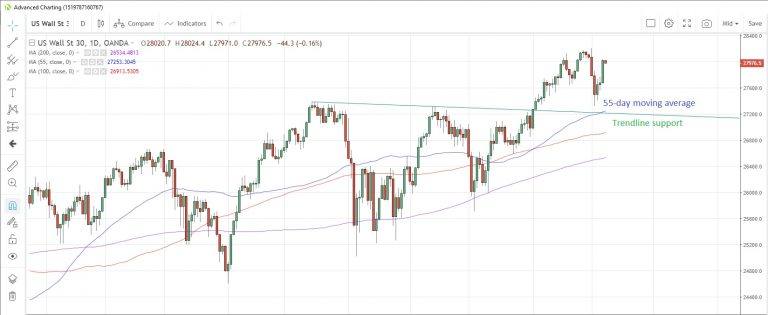
The US30 index rallied for a third straight day Friday after the US economy added more jobs than forecast
-
The index remains above the convergence area of the 55-day moving average at 27,253 and trendline support around the 27,205 level
-
US non-farm payrolls rose by a whopping 266,000 in November, much more than the 180,000 expected. The unemployment rate unexpectedly dipped to 3.5%. There are no major US data releases scheduled for today.
DE30EUR Daily Trade
Source: OANDA fxTrade
-
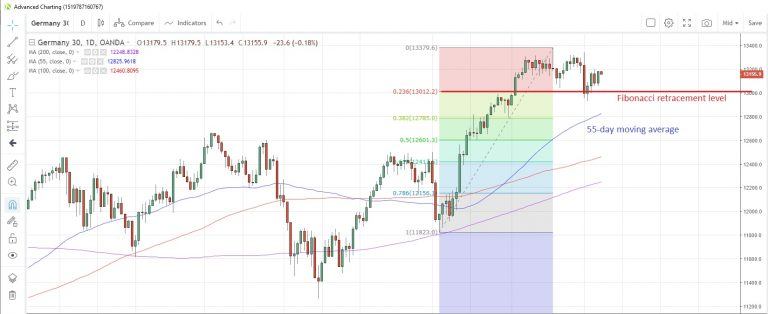
The Germany30 index rose on Friday, following Wall Street’s lead
-
The index is holding the rebound from the 23.6% Fibonacci retracement of the October 3 to November 19 rally at 13,012. The 55-day moving average has risen to 12,826
-
German trade data today is expected to show a barely changed surplus of €19.0 billion in October from €19.2 billion in September. Exports and imports are seen falling 0.3% and 0.1%, respectively.
CN50USD Daily Chart
Source: OANDA fxTrade
-
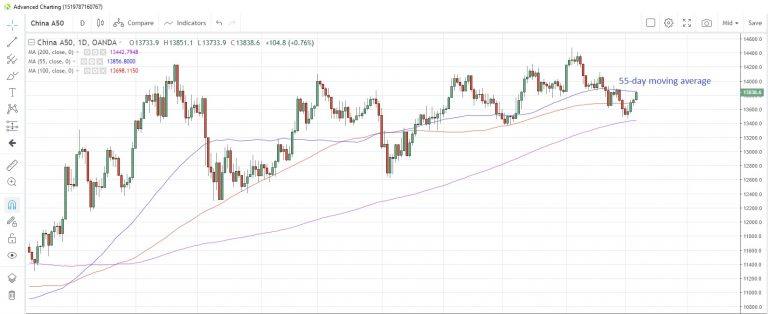
China shares rose for a fourth day on Friday with the CN50 index hitting a one week high. Today could be less positive after weekend trade data came in below forecast
-
The China50 index tested the 55-day moving average at 13,857, which has capped prices on a closing basis since November 20
-
China’s exports fell 1.1% y/y in November, the fourth month of negative growth in a row, and is testimony of the impact the 18-month trade war is having on the export part of the economy. Imports rose 0.3% y/y, better than the -1.8% expected, so the trade surplus narrowed to $37.7 billion.
Author
Andrew Robinson
MarketPulse
A seasoned professional with more than 30 years’ experience in foreign exchange, interest rates and commodities, Andrew Robinson is a senior market analyst with OANDA, responsible for providing timely and relevant market commentar