|

USD tries to bounce higher

GBP/USD bounces back

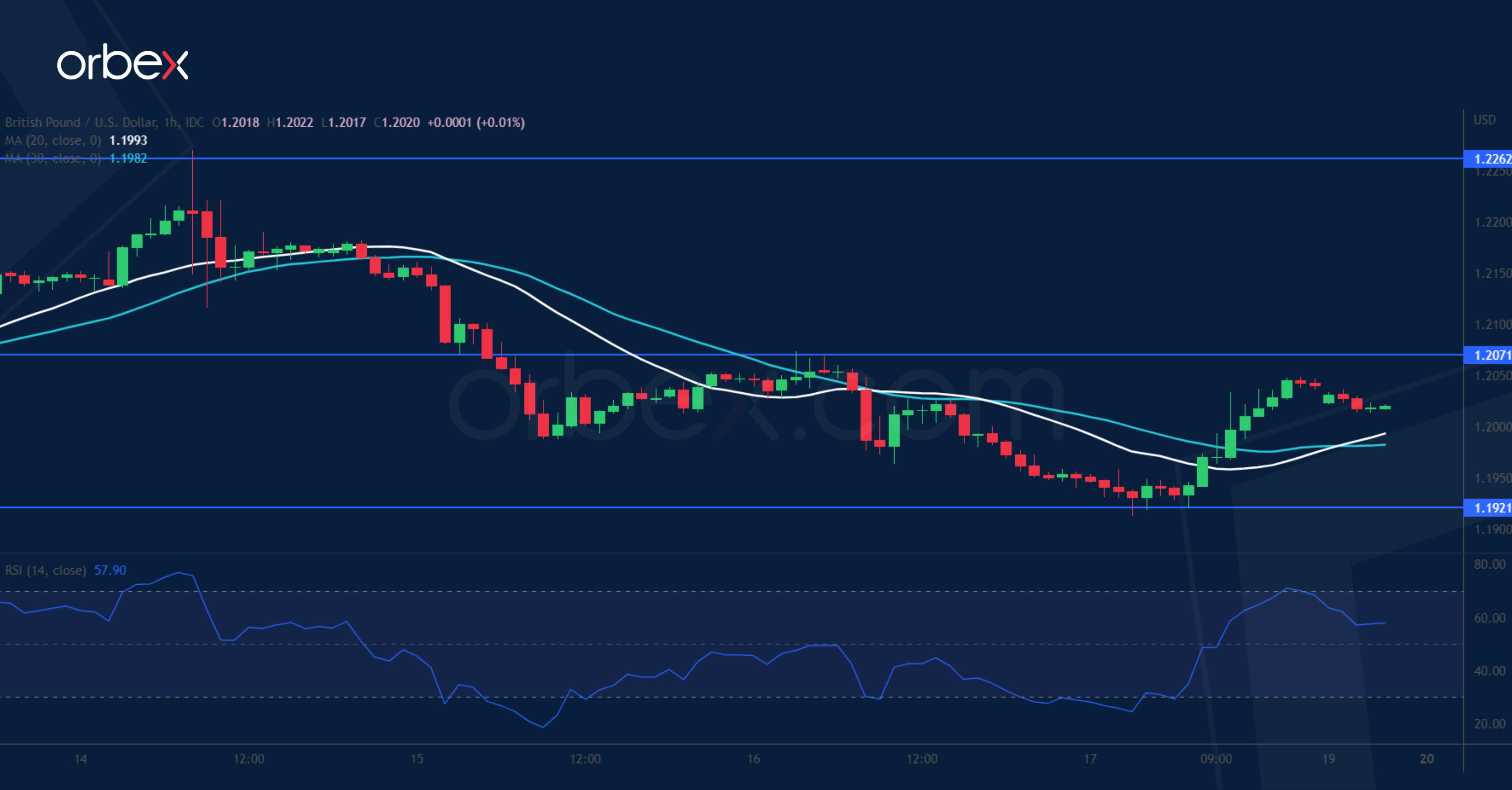
The pound clawed back some losses after January’s retail sales beat expectations. A fall below 1.1970 has invalidated the rebound and put buyers under renewed pressure. As the cable tests the demand zone above this year’s low of 1.1850, the RSI’s double dip into the oversold area attracted some bargain hunters near 1.1920. 1.2070 is the immediate resistance and stiff selling could be expected around 1.2200-1.2260 as sentiment remains downbeat. A return to the critical level of 1.1850 could trigger a deeper correction.
Chart

XAG/USD tests major support

Silver struggles as the US dollar nears a six-week peak. The price is drifting to last November’s low of 20.90, a daily support at the origin of a bullish breakout. Buying interest or a lack of in this important zone would dictate the metal’s outlook in the weeks to come. Intraday-wise, the RSI’s oversold condition has triggered a ‘buy-the-dips’ behaviour. A combination of profit-taking and fresh buying may drive the short-term price up. 22.00 is the closest resistance and the bulls will need to lift 22.60 before a recovery could happen.

Chart

Dax 40 finds support

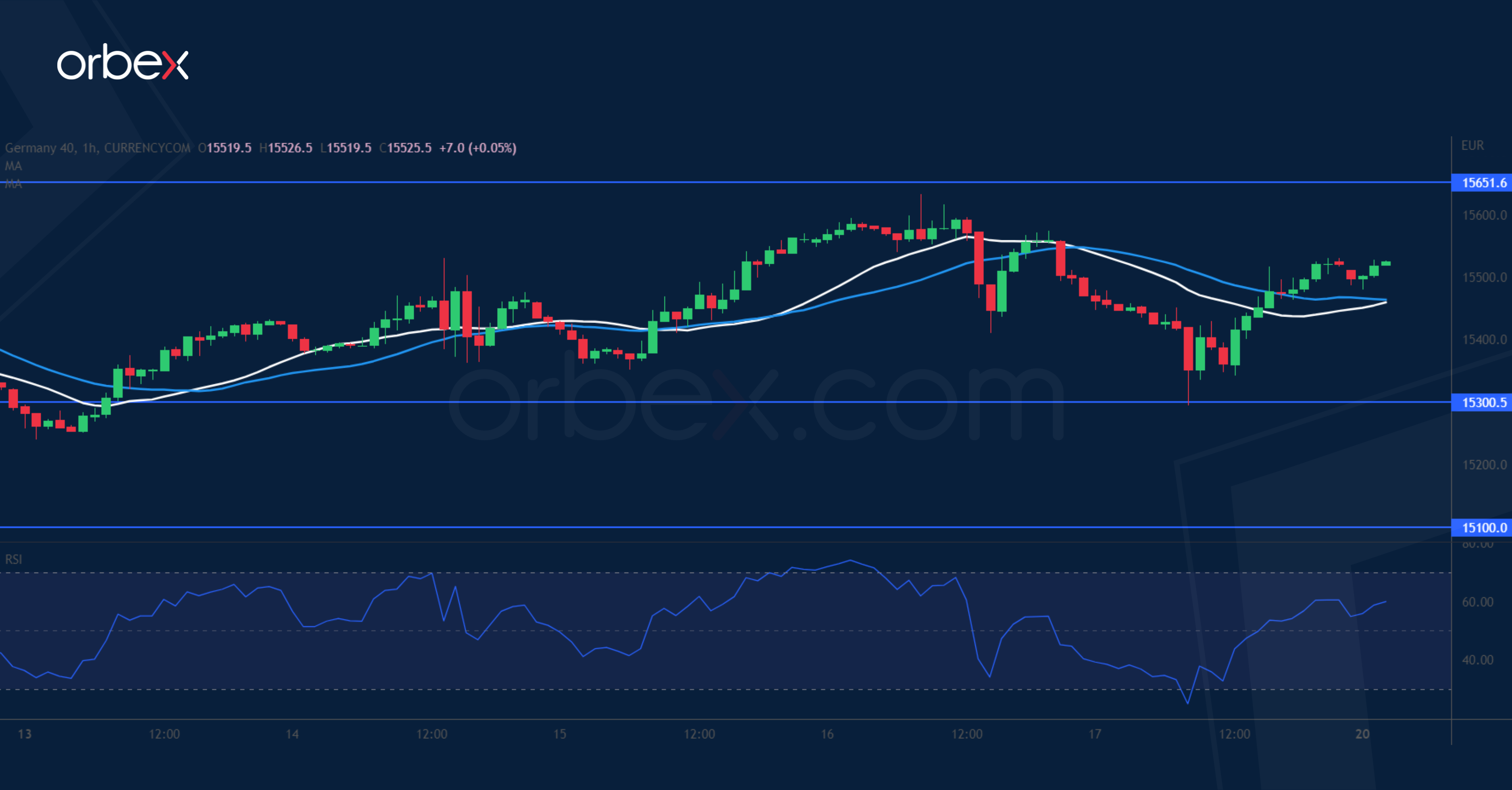
The Dax 40 whipsaws on concerns about more interest rate hikes. The price action previously failed to clear the high of 15650, forming a double top as it pulls below 15380. A bounce off 15300 right above the swing low of 15250 on the 30-day SMA, suggests a strong enough follow-through to keep the short-term bullish momentum intact. A close back above 15650 would nip the selling in the bud and resume the uptrend while a bearish breakout would cause a correction to the previous consolidation range above 15000.
Chart

Author

Jing Ren

Jing-Ren has extensive experience in currency and commodities trading. He began his career in metal sales and trading at Societe Generale in London.


More from Jing Ren
Share:

Editor's Picks

AUD/USD falls to near 0.7100 after slipping below 50-day EMA

AUD/USD depreciates after registering minor gains in the previous day, trading around 0.7120 during the Asian hours. The technical analysis of the daily chart shows the pair consolidating sideways within a rectangle pattern, as neither bulls nor bears gain control. The AUD/USD pair is holding a slight bearish tone however as it sits beneath both the nine-day and 50-day EMAs.

Japanese Yen edges up but remains close to the 160.00 intervention threshold

The Japanese Yen edges up against the US Dollar on Friday, but the USD/JPY pair remains above 159.90 at the time of writing, unable to put a significant distance from the 160.00 level, considered the limit of tolerable JPY weakness for Japanese authorities.

Gold returns to the red, awaits US NFP

Gold price is looking to test the weekly lows, while in the red near $4,450 in the early European session on Friday. The precious metal remains vulnerable amid ongoing geopolitical turmoil. Traders will closely monitor the developments surrounding the US-Iran peace deal and the US May employment report later on Friday.


Arthur Hayes' “Holy Trinity” is dead: Exits Zcash after Orchard Pool exploit

Arthur Hayes has entirely dumped his “Holy Trinity” holdings by offloading his Zcash holdings on Friday. The privacy coin is down 13% so far on Friday, extending Thursday’s 26% decline after an Orchard Shielded Pool audit revealed a critical vulnerability that allowed the undetectable minting of fake coins. Hayes continues to hold Worldcoin ahead of the upcoming SpaceX Initial Public Offering, on the chance of a “high-beta proxy” rally.

Nonfarm Payrolls set to show stable labor market in May as markets digest Fed hawkish shift

The United States Bureau of Labor Statistics will release the Nonfarm Payrolls data for May on Friday at 12:30 GMT. Investors expect NFP to rise by 85K following the surprisingly strong 185K and 115K increases recorded in March and April, respectively.

Recession on paper: What really moves the Canadian Loonie now?

Statistics Canada handed the headline writers a gift and the analysts a headache. Real GDP shrank 0.1% on an annualized basis in the first quarter, and with the fourth quarter of 2025 revised down to a 1.0% contraction, that is two negative quarters in a row, the textbook definition of a technical recession and Canada's first since the pandemic.















