|

Technical analysis: Will the USD/JPY price rebound resume?

USD/JPY technical analysis summary

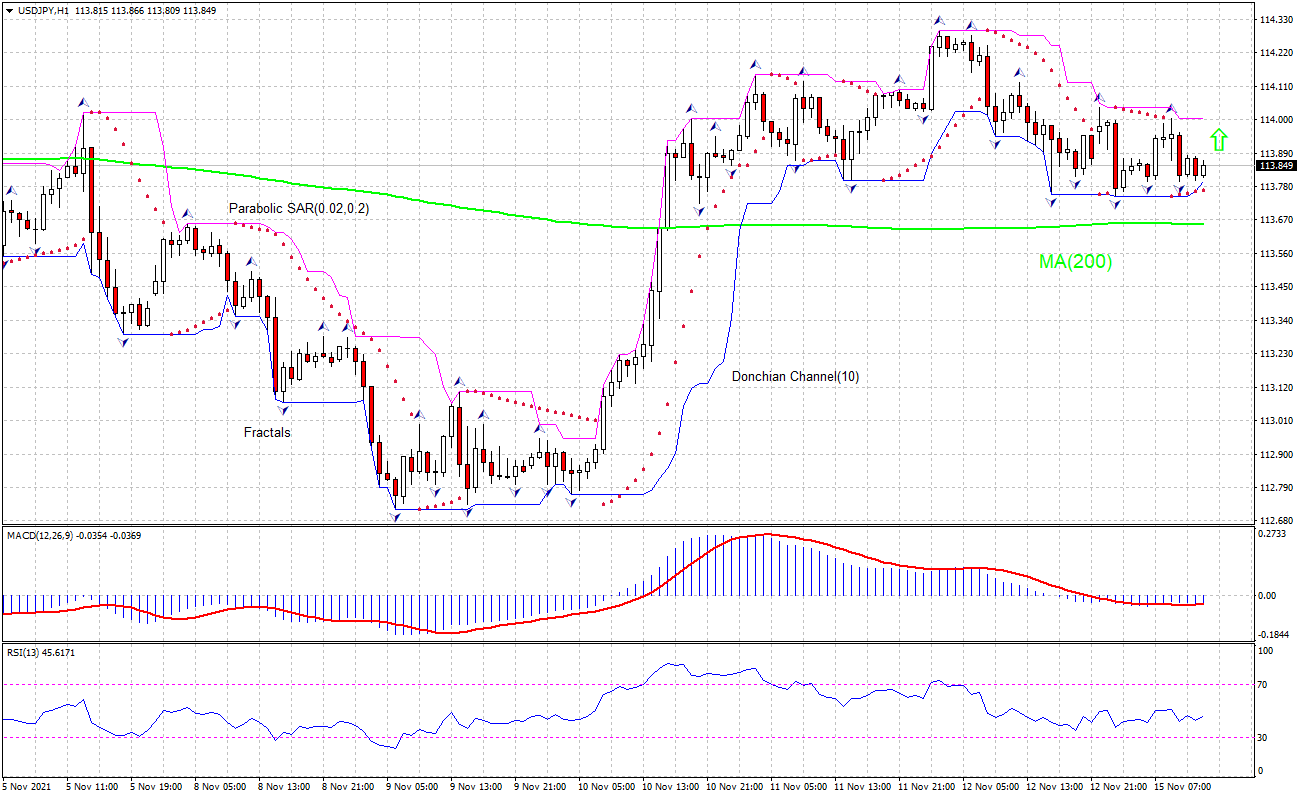
Buy Stop։ Above 114.01

Stop Loss։ Below 113.79

IndicatorSignal
RSINeutral
MACDNeutral
Donchian ChannelBuy
MA(200)Buy
FractalsNeutral
Parabolic SARBuy

USD/JPY chart analysis

USDJPY

The technical analysis of the USDJPY price chart on 1-hour timeframe shows USDJPY: H1 is attempting to retrace up above the 200-period moving average MA(200). The price reversed its rising after hitting a weekly high a day ago. We believe the bullish movement will resume after the price breaches above the upper bound of the Donchian channel at 114.01. A level above this can be used as an entry point for placing a pending order to buy. The stop loss can be placed below 113.79. After placing the order, the stop loss is to be moved to the next fractal low indicator, following Parabolic signals. Thus, we are changing the expected profit/loss ratio to the breakeven point. If the price meets the stop loss level without reaching the order, we recommend cancelling the order: the market has undergone internal changes which were not taken into account.

Fundamental Analysis of Forex - USD/JPY

Japan’s economic contraction was bigger than expected in the third quarter. Will the USDJPY price rebound resume?

Japan’s economy contraction was bigger than expected in the third quarter: the Cabinet Office reported the Q3 gross domestic product (GDP) declined 0.8% over quarter following 0.5% growth in Q2, when an 0.2% decrease was forecast. This is bullish for USDJPY.


Want to get more free analytics? Open Demo Account now to get daily news and analytical materials.


Want to get more free analytics? Open Demo Account now to get daily news and analytical materials.

Author

Dmitry  Lukashov

Dmitry Lukashov

IFC Markets

Dimtry Lukashov is the senior analyst of IFC Markets. He started his professional career in the financial market as a trader interested in stocks and obligations.


More from Dmitry Lukashov
Share:

Editor's Picks

AUD/USD falls to near 0.7100 after slipping below 50-day EMA

AUD/USD depreciates after registering minor gains in the previous day, trading around 0.7120 during the Asian hours. The technical analysis of the daily chart shows the pair consolidating sideways within a rectangle pattern, as neither bulls nor bears gain control. The AUD/USD pair is holding a slight bearish tone however as it sits beneath both the nine-day and 50-day EMAs.

160.00: USD/JPY back near intervention territory after upbeat US jobs report

US Nonfarm Payrolls beat expectations by a wide margin in May, with 172K jobs added. The US Dollar rebounds after the release, helping USD/JPY recover from its intraday lows. Warnings from Japanese authorities continue to limit upside potential near the 160.00 threshold.

Gold targets $4,300 amid stronger Dollar

Gold faces increasing selling interest and navigates the area of three-month lows near the $4,300 mark per troy ounce on Friday. The precious metal’s decline comes as traders assess the stronger-than-expected NFP, while the bid bias in the Greenback and higher US Treasury yields also collaborate with the retracement.

Cardano hits five-year low even as Hoskinson clarifies "break" isn't an exit

Cardano (ADA) price is down 10% at press time on Friday, extending losses over 30% so far this week amid Charles Hoskinson's clarification that "break" isn't an exit.

Week ahead – Fed countdown begins amid US inflation data and geopolitical risks

Fed Chair Warsh’s first meeting approaches as key US inflation data could reshape expectations. Oil prices remain elevated as US-Iran talks continue; tariffs also return to the spotlight. ECB is expected to hike; will it be a one-off move or is July live?

The US economy defies the rules: 100 days into the Oil shock and the recession signal is still missing

More than three months after the start of the Iran war and the resulting disruption to global energy markets, the US economy continues to display remarkable resilience. The conflict has triggered a sharp rise in Oil prices, reignited inflationary pressures and fueled widespread concerns about a potential economic slowdown.