USD/CAD Weekly Forecast: The Fed and the Bank of Canada play leap-frog
- Canadian dollar moves higher with WTI and the ebbing safe-haven trade.
- Fed rate increase mooted by expected Bank of Canada hikes.
- Canadian sovereign rates edge ahead of US yields.
- FXStreet Forecast Poll sees a near-term drop below 1.2600.

The Canadian dollar reverted to the oil trade this week, reversing the path of the world’s premier commodity as it dipped to its low on Tuesday and then rallied to Friday’s close.
A retreat of the US dollar safety-trade removed one of the greenbacks' supports and the Federal Reserve's adoption of an official tightening policy only parried the Bank of Canada’s (BoC) own aggressive outlook.
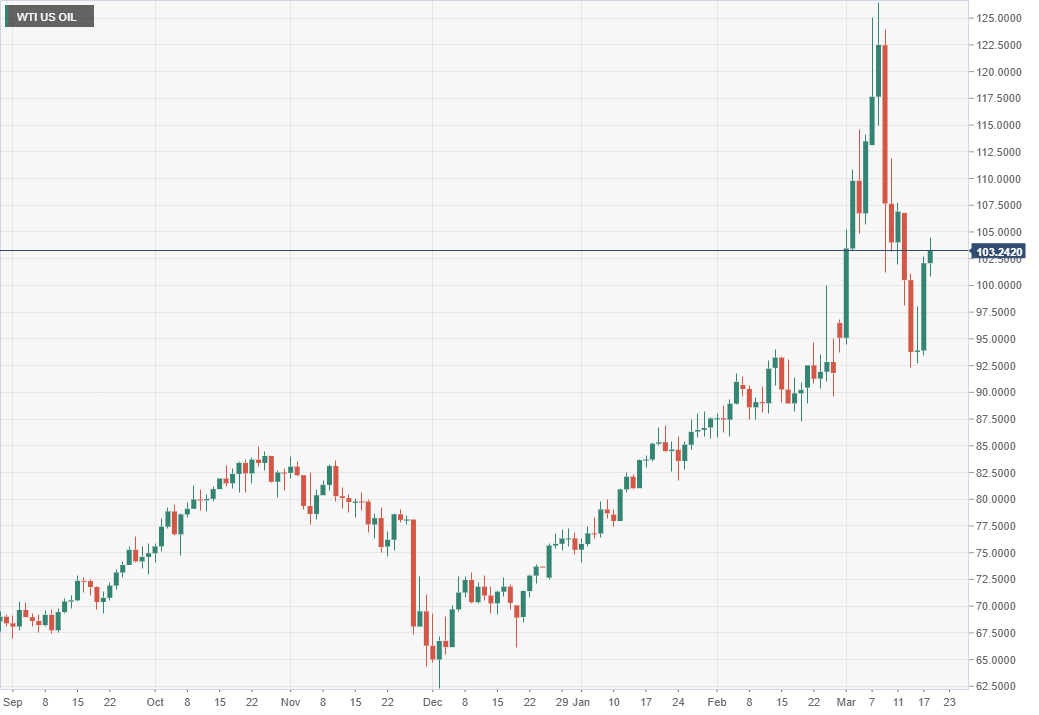
West Texas Intermediate (WTI) ran more than 10% round trip this week. Opening at $106.78 on Monday, oil fell 12.2% to Tuesday's close and the week’s low at $93.78. Prices marked time on Wednesday to $93.92, took off on Thursday to $102.08 and finished the week at $103.24.
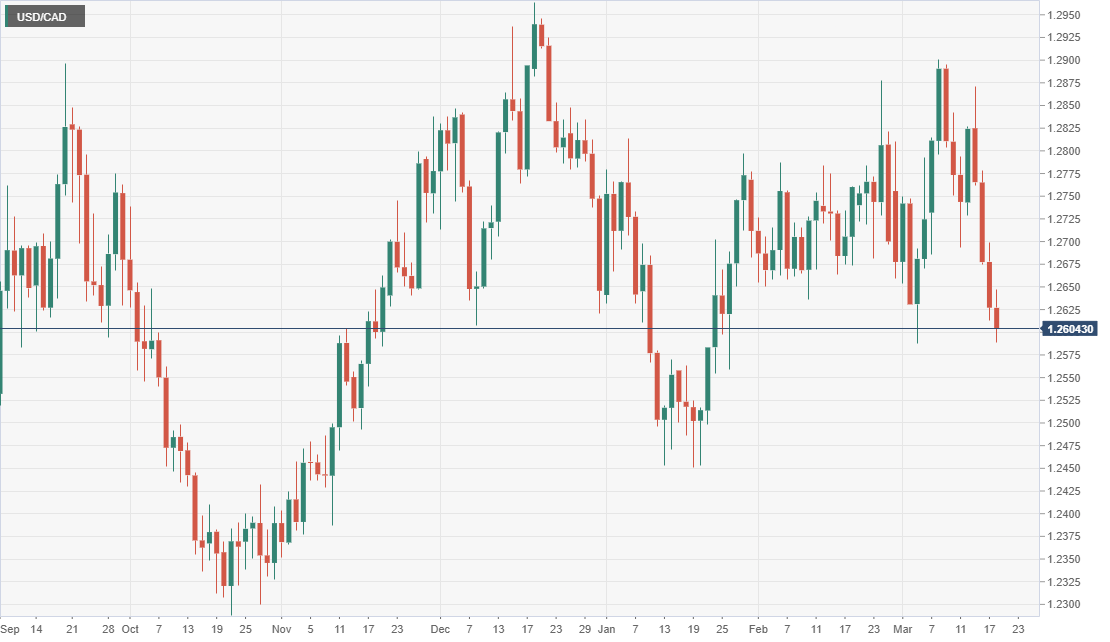
The trading was not exactly parallel as USD/CAD closed at the week’s high of 1.2824 on Monday even though WTI lost 5.9% that day to a $100.50 close. But by the end of the week the USD/CAD had dropped 1.6% from its high close of 1.2824 to 1.2604 and WTI had climbed to $103.24, 10.7% from its low finish of $93.78.
The Federal Reserve’s first rate hike in three years, while universally anticipated, was still noteworthy as the official end of the bank’s pandemic response. After two years of zero rates, a doubling of the Fed’s balance sheet to $9 trillion and record low Treasury yields helped to produce the highest inflation in 40 years, the governors finally wrote finis to monetary stimulation, without acknowledging their own role in sparking record price increases.
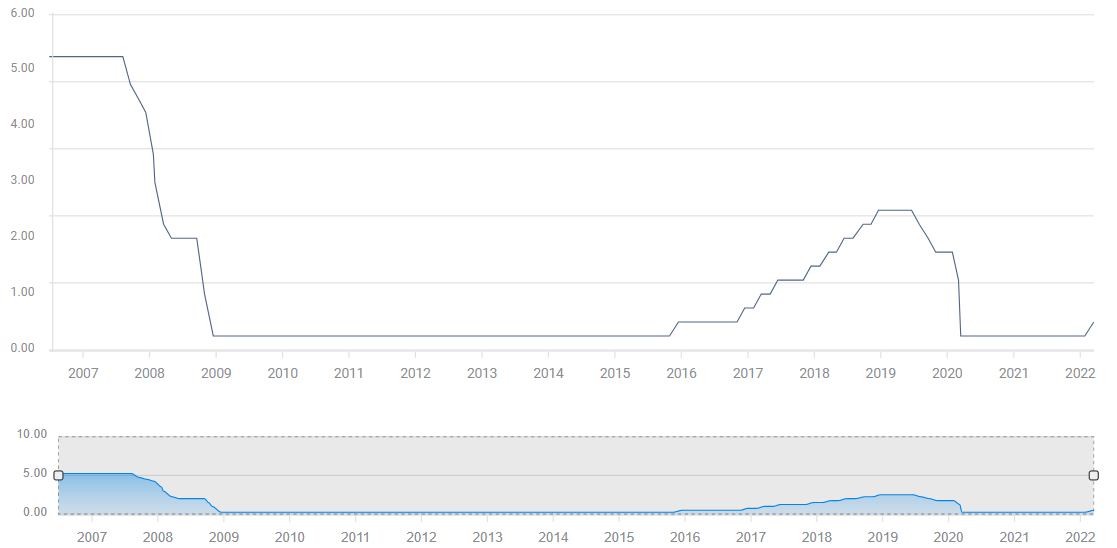
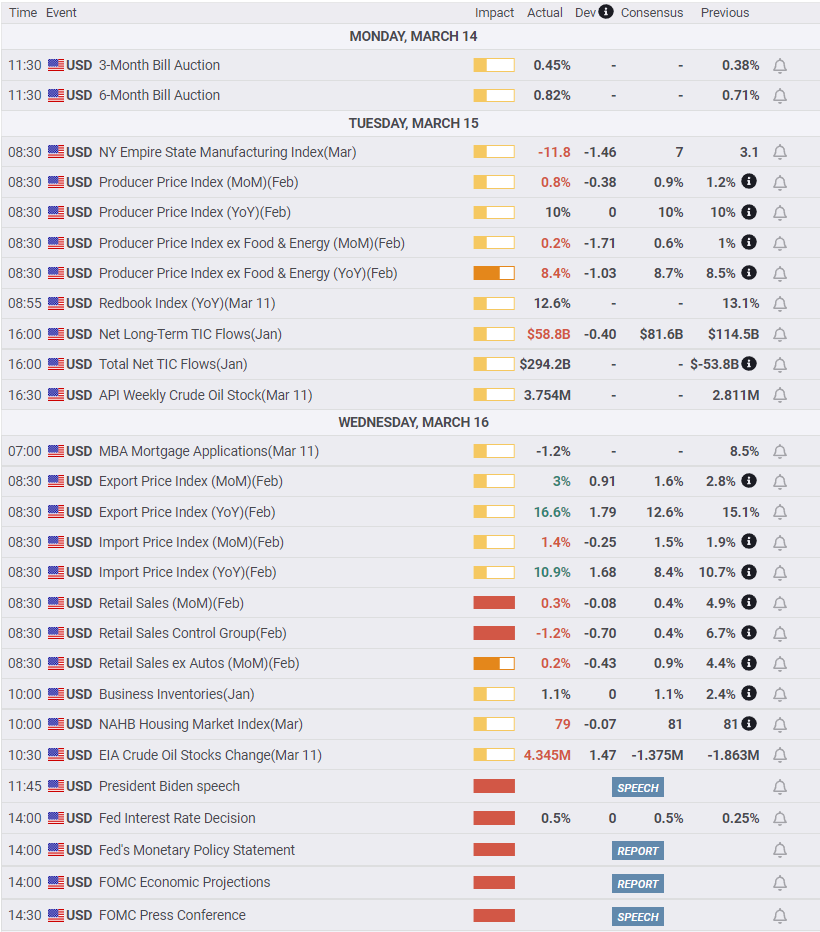
The Federal Open Market Committee (FOMC) increased the fed funds upper target 0.25% to 0.5%. In the FOMC statement, the committee said it expected to begin reducing the bank’s $9 trillion balance sheet at a coming meeting. The vote was 8 to 1 with James Bullard, President of the St Louis Fed backing a 0.5% increase.
Fed funds rate
Federal Reserve Chair Jerome Powell said in the press conference following the meeting, that the plans for the balance sheet were well advanced and the reduction could start soon, perhaps at the next FOMC meeting in May.
In addition to the rate increase, the bank's quarterly Projection Materials anticipated six more rate increases this year with a median estimate for a 1.9% base rate at year-end. The December 2021 projections had three hikes to the end of the year and a 0.9% fed funds rate.
Rate policies in Canada and the US are working in tandem, generating minimal impact on the USD/CAD and leaving the pair open to other influences, primarily oil prices.
Bank of Canada base rate
FXStreet
Government bond rates rose in Canada and the US. The yield on the Canadian 10-year note rose 20 basis points to 2.193% for the week while the US equivalent added 16 points to 2.153%.
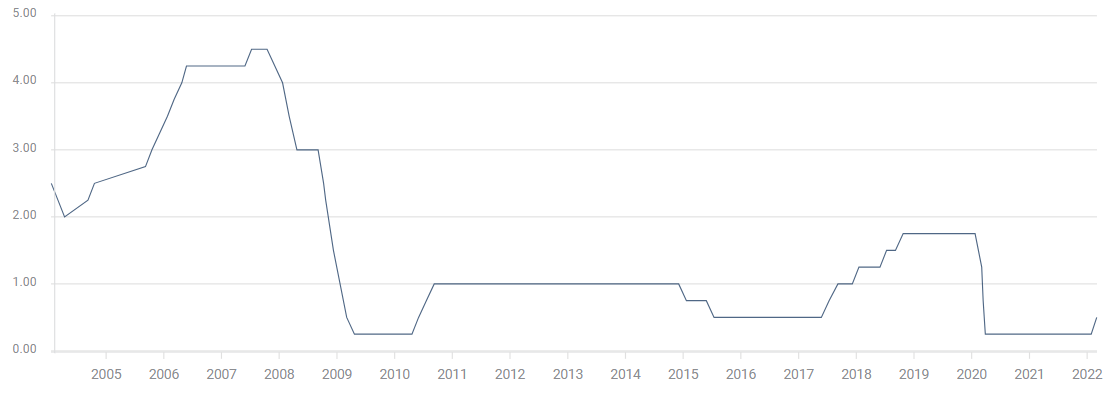
The Fed’s quarter-point increase came two weeks after the Bank of Canada (BoC) hiked its own base rate by the same amount to the same goal, 0.25% to 0.5%. The next BoC meeting is on April 13, three weeks before the Fed's get-together on May 4. Leap-frog is not a dignified game for central bankers, but Fed and the BoC will be playing for the rest of the year.
Inflation in both countries will keep the pressure on policy makers for the next several quarters.
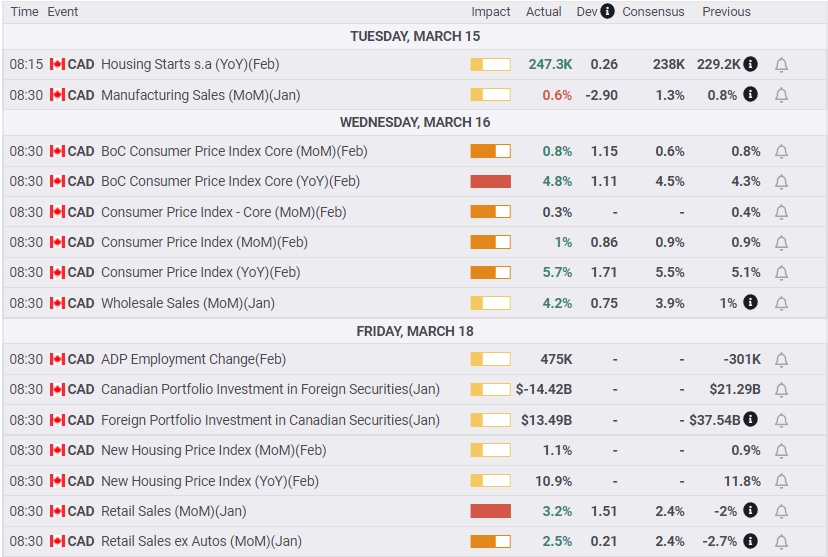
Canadian inflation was stronger than anticipated in February. The headline Consumer Price Index accelerated to 5.7% for the year from 5.1% in January. Core CPI from the BoC jumped to 4.8% last month from 4.3%.
Private payrolls from Automatic Data Processing (ADP) added 475,000 workers in February, mirroring the excellent government figures. Retail Sales were stronger than predicted in January at 3.2% on a 2.4% prediction and after December's 2% decline.
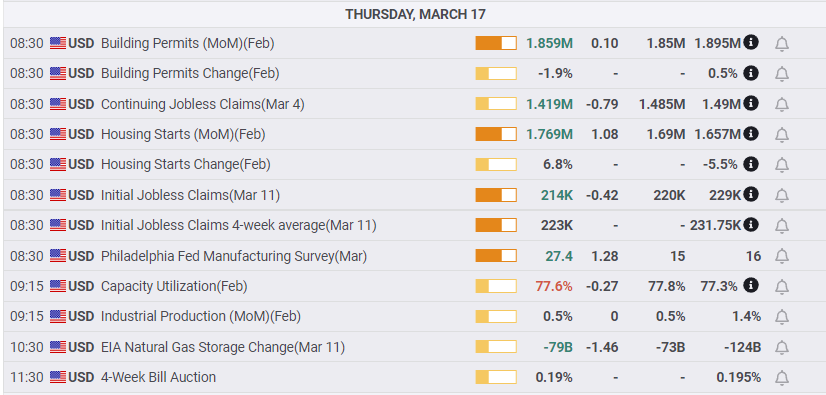
In the US inflation continued its upward march. Annual producer prices rose a record 10% for the second month in a row in February, ensuring further consumer increases. Retail Sales in February at 0.3% were a bit below the 0.4% forecast but January's performance was sharply upgraded to 4.9% from 3.8%. The Control Group, which mimics the consumption component of GDP, fell 1.2%, much worse than the 0.4% estimate, but here also, the January revision to 6.7% from 4.8% more than covered the difference. Jobless Claims dropped to 214,000 in the March 11 week with the four-week moving average at 223,000, indicating an exceptionally tight labor market.
Canadian and US economic growth, inflation and central bank policies are likely to be mirror images of each other for the immediate future.
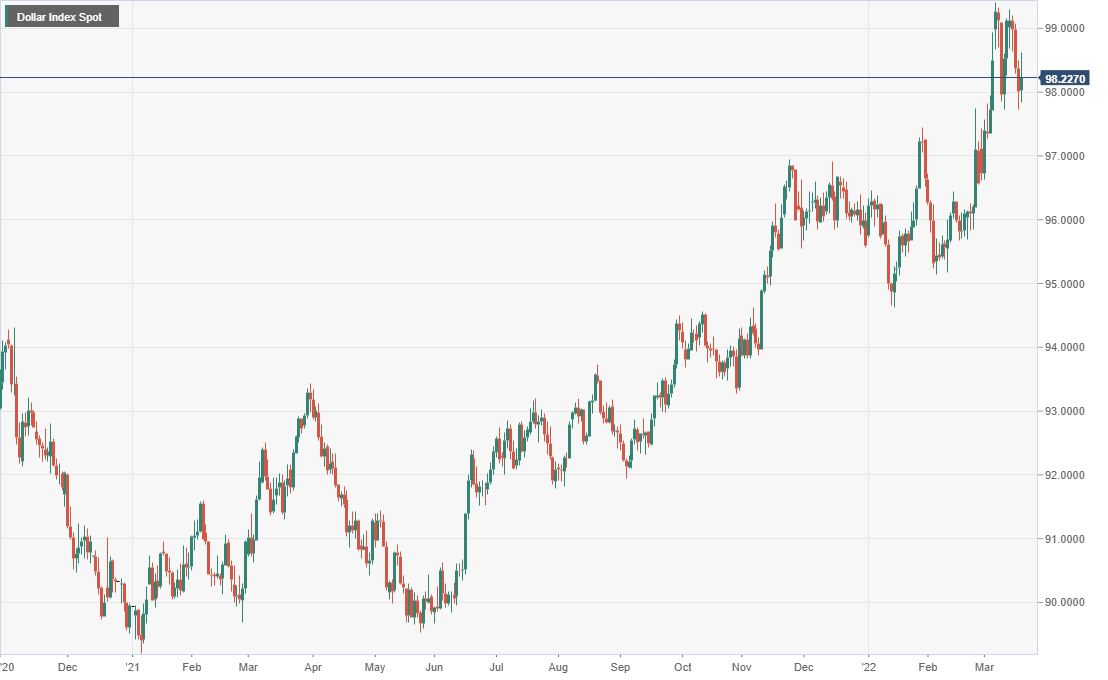
As noted above, economic conditions and rate policies have left oil prices, unusually volatile since Russian invasion of Ukraine, but on a steady upward slant for 17 months, as the main determinant of USD/CAD values. About 10% of the Canadian economy revolves around the oil and energy industries. Rising energy prices are a direct revenue addition to industries whose costs are largely fixed. The benefits to the Canadian economy and dollar are plain in a comparison of the USD/CAD and US Dollar index over the past year. From March 18, 2021 to Friday's close the USDCAD rose 1.6%, from 1.2404 to 1.2604. In comparison, the US Dollar Index, which tracks the greenback against a basket of currencies climbed 7.4%.
FXStreet
USD/CAD outlook
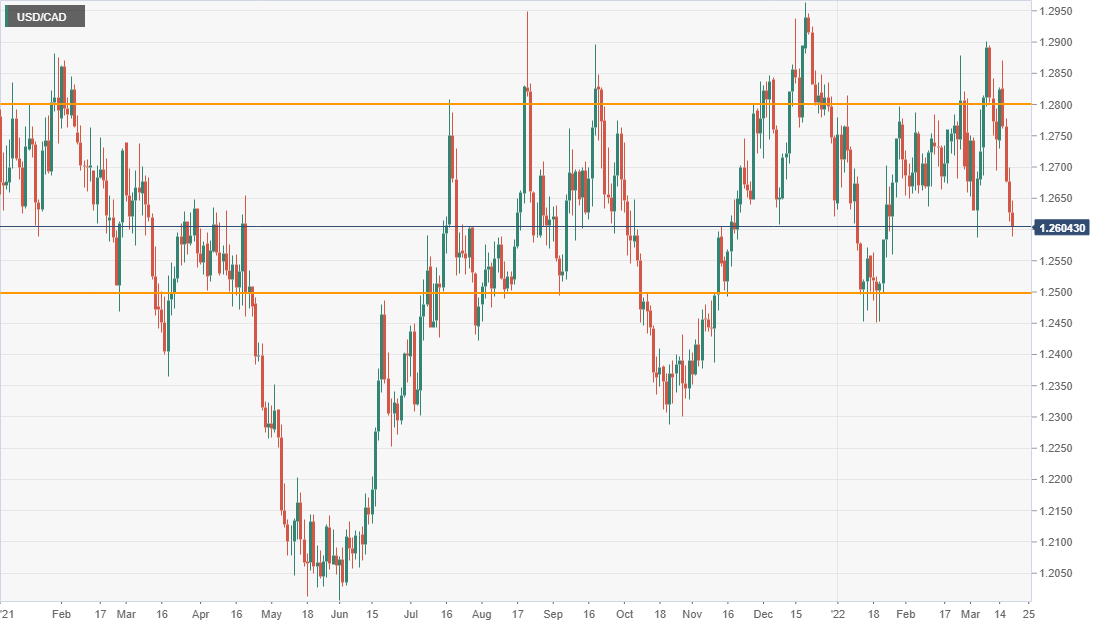
Rising energy prices have successfully inveighed against the US dollar side of the USD/CAD for more than a year, keeping the bulk of the trading between 1.2500 and 1.2800, limiting the pair’s rise to a fraction of the increase in the Dollar Index.
FXStreet
The immediate future of energy prices is the future of the USD/CAD. In the short term, or as long as the conflict is alive, the Ukraine war will be the source of volatility and direction for energy prices.
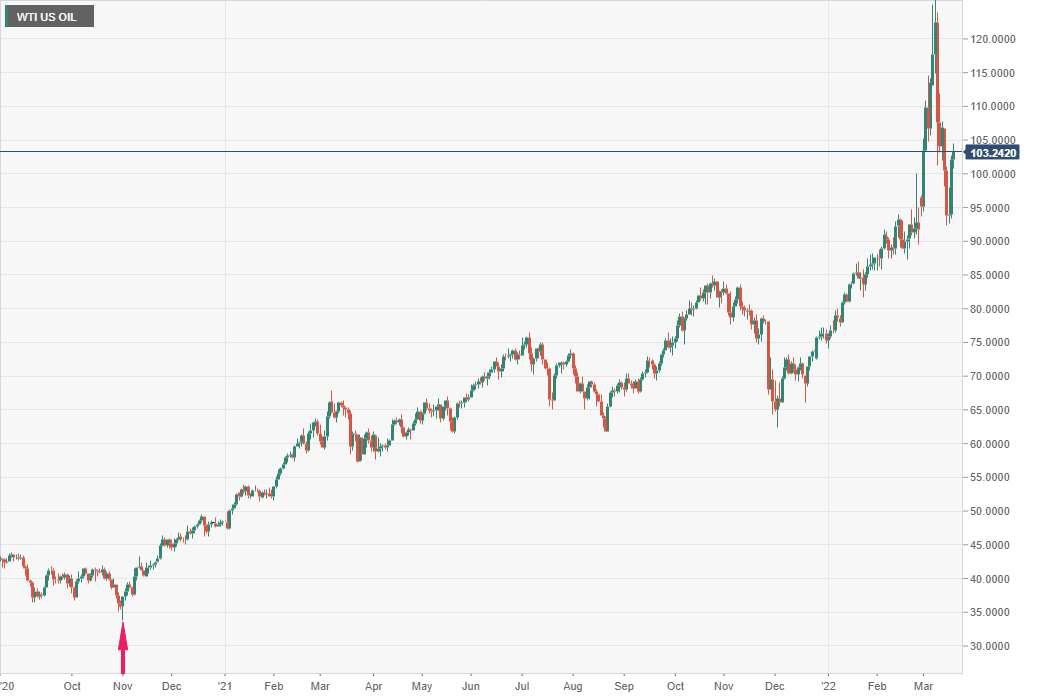
The rise in oil prices has been a constant for 17 months. The last period of relative stability for WTI was from June to November 2020 around $40. Since the open on November 2, 2020 at $35.90, WTI has soared 187%, the majority of that increase,156% to $91.92, came before the Russian invasion of Ukraine.
FXStreet
Two factors are behind the increase. As the global economy revived following the lockdowns and restrictions of 2020 and 2021, the demand for energy rose steadily, as did the anticipation for future gains which drove the futures markets.
In 2019 and 2020 the US became the world’s leading supplier of energy, primarily oil and natural gas. Although that remains true, the restrictive policies of the Biden administration have inhibited the natural increase in US production that would have met rising demand. Alternative major producers, Russia and OPEC have been unwilling to boost production, preferring the fiscal reward from soaring energy costs.
The upward pressure on oil and natural gas prices is unlikely to retreat as long as demand stays strong and supplies are tight.
This long disquisition on energy provides the rationale for the continued strength of the Canadian dollar. The loonie’s resilience is based on this one factor as the potential comparisons, economic growth and central bank policy for the US and Canada are canceling.
The USD/CAD outlook is neutral to lower, trading with the appreciation and decline of energy prices.
Canada statistics March 14–March 18
FXStreet
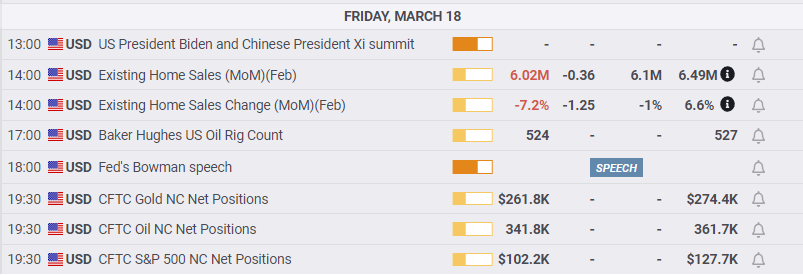
US statistics March 14–March 18
FXStreet
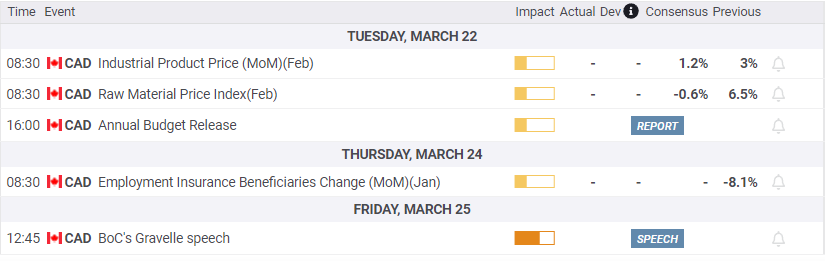
Canada statistics March 21–March 25
FXStreet
US statistics March 21–March 25
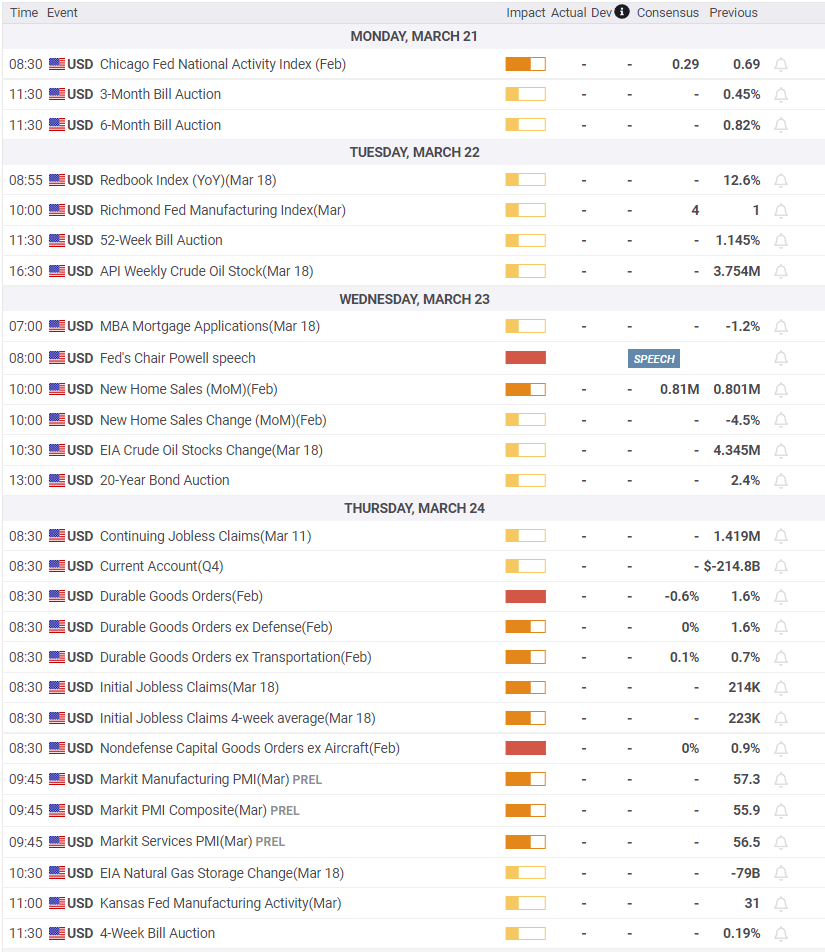
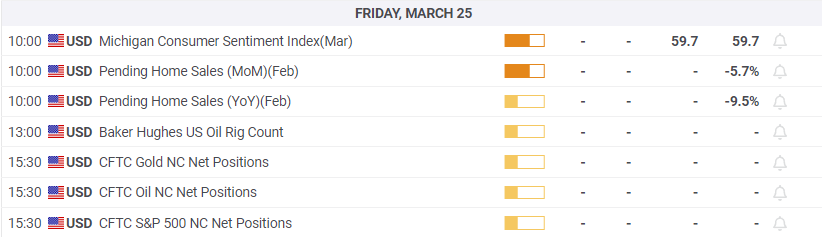
USD/CAD technical outlook
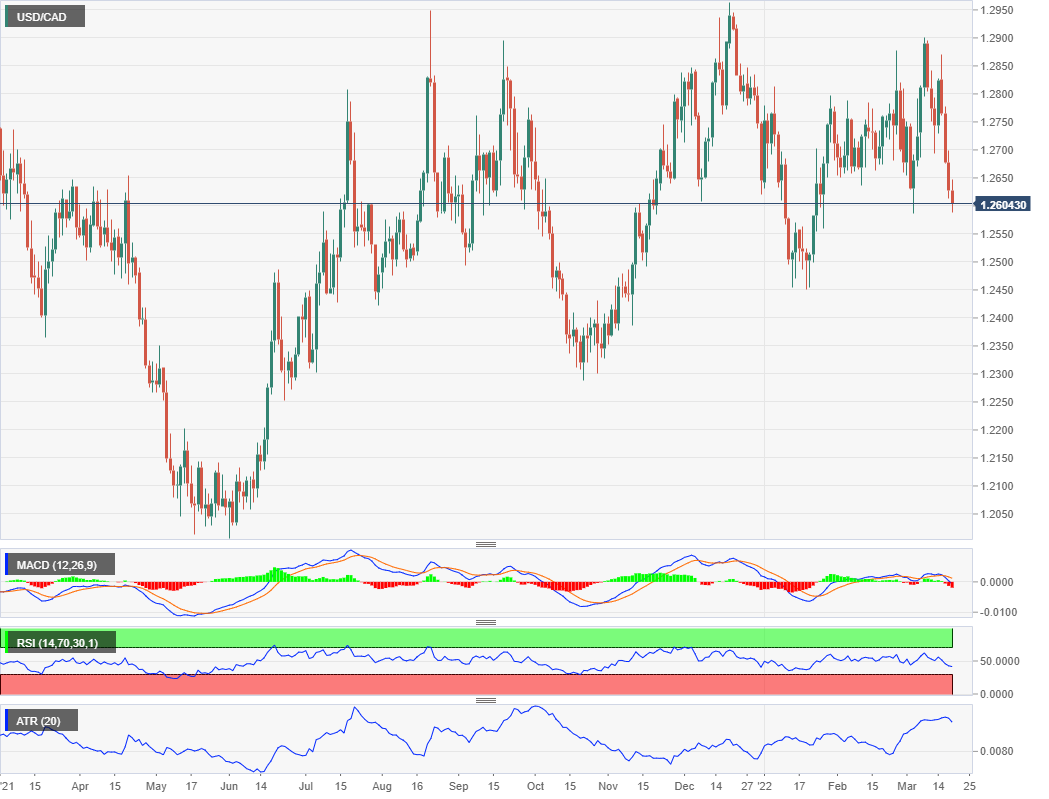
The MACD (Moving Average Convergence Divergence) price line crossed the signal line of Tuesday with its first major divergence since early February. The Relative Strength Index (RSI) dropped below neutral at the same time, providing a double technical sell indication. Average True Range (ATR) descended from its six-month high, but remains active enough to anticipate volatility if the USD/CAD breaches major support levels. Technical indicators for the USD/CAD are, for the moment, secondary to developments in the price of oil.
FXStreet Forecast Poll
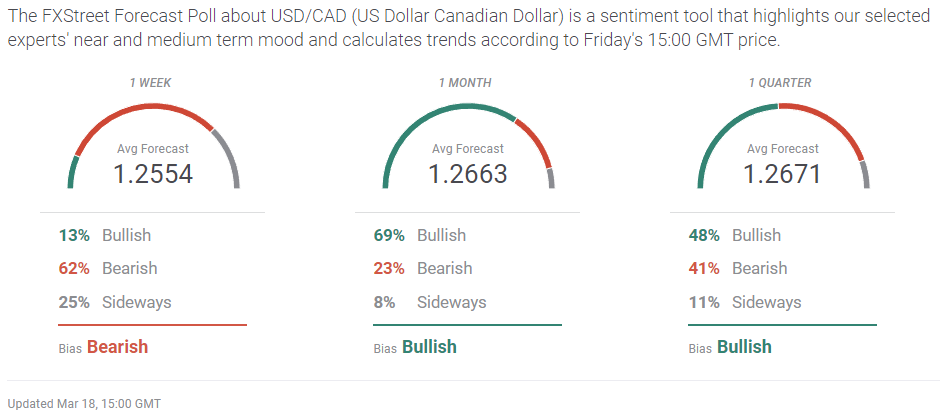
The immediate weakness in USD/CAD is technical, beyond that the FXStreet Forecast Poll reflects the pair's relative neutrality.
Author

Joseph Trevisani
FXStreet
Joseph Trevisani began his thirty-year career in the financial markets at Credit Suisse in New York and Singapore where he worked for 12 years as an interbank currency trader and trading desk manager.