Trump meets Xi: Why markets are watching this summit so closely
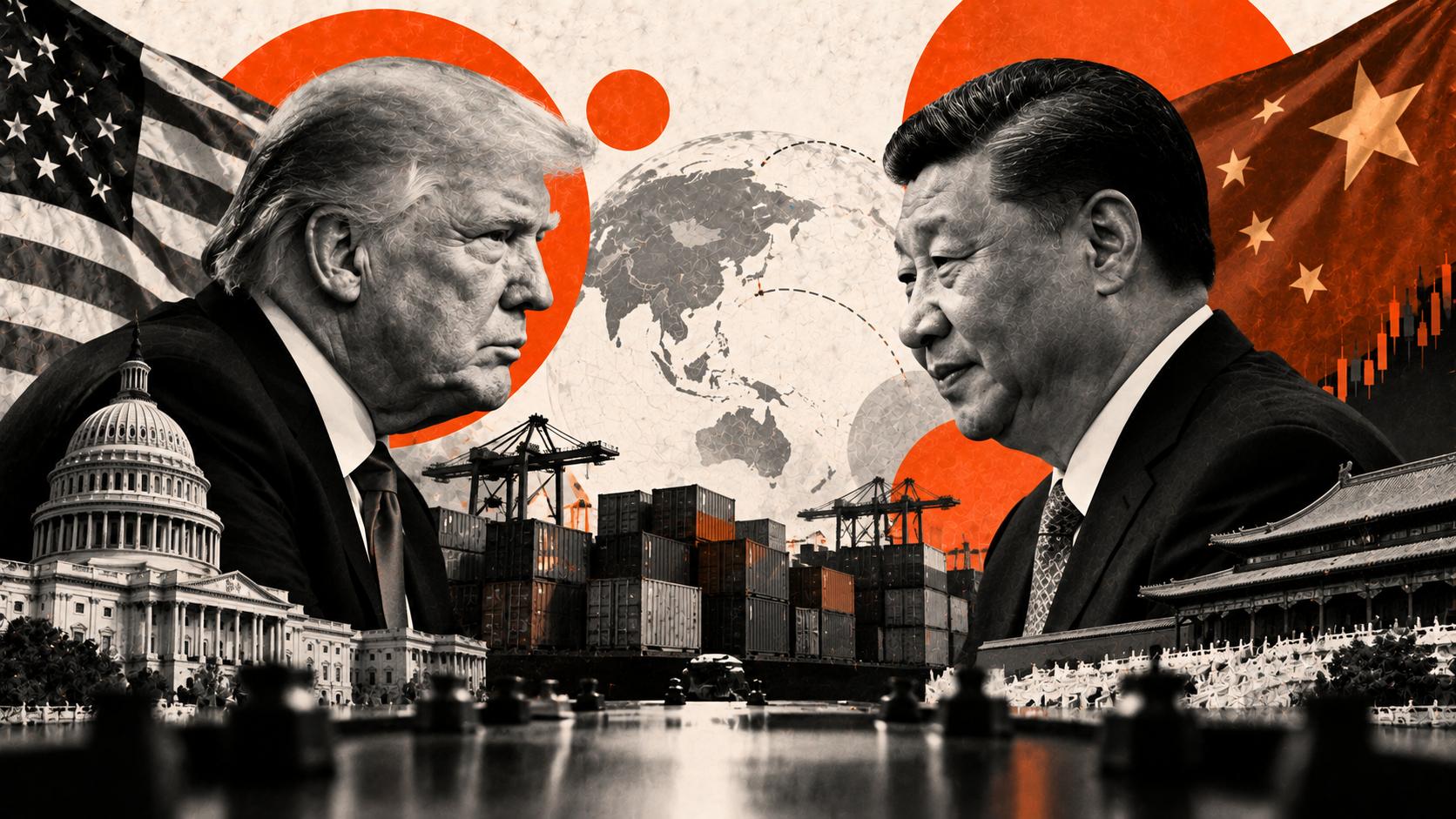
United States (US) President Donald Trump and Chinese President Xi Jinping are set to meet in Washington on Thursday for a summit closely watched by markets. After several months of easing trade tensions between the US and China, the meeting could determine whether the world's two largest economies extend their truce or enter a new period of uncertainty.
Expectations, however, remain relatively modest. Several sources close to the discussions and analysts suggest that a comprehensive trade agreement is unlikely. The baseline scenario instead centers on preserving the status quo, potentially accompanied by a few concessions that would allow both leaders to present the meeting as progress.
A trade truce neither side seems eager to break
The immediate priority concerns the trade truce between the US and China, which is currently due to expire on November 10. Washington appears to favor a relatively short extension, while Beijing is seeking greater visibility over its duration.
An extension of around one year could therefore provide a compromise, as US Treasury Secretary Scott Bessent has expressed optimism about the possibility of maintaining the truce, while describing the preparatory talks as “successful”, according to the BBC. Scott Kennedy, Senior Adviser at the US Center for Strategic and International Studies (CSIS), sees a one-year extension as a possible middle ground between Beijing's preference for a longer arrangement and Washington's preference for a shorter one.
The summit could also produce some tariff concessions. Kennedy sees reciprocal tariff reductions covering goods worth around $30 billion on each side as one possible outcome.
The direct economic impact would remain limited compared with the overall scale of US-China trade, but such an announcement would carry symbolic significance. It would confirm that Washington and Beijing are currently more focused on stabilizing their relationship than on restarting a trade escalation.
China could also commit to new purchases of US agricultural products or Boeing aircraft. Such announcements would provide Donald Trump with clearly identifiable commercial outcomes without requiring Xi Jinping to accept a fundamental overhaul of China's economic policies.
China arrives in Washington with leverage
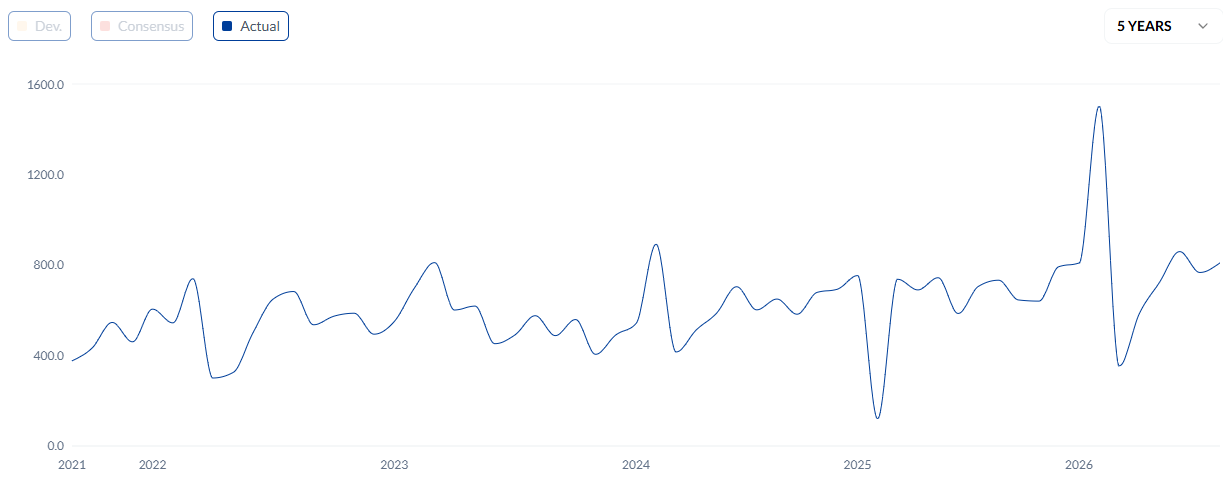
This time, however, Beijing arrives at the negotiating table with several important cards in hand. Despite US tariffs, Chinese exports remain resilient, and the country's trade surplus is on track to exceed $1 trillion for a second consecutive year, according to data reported by Reuters. This performance allows China to partly offset weak domestic demand and persistent difficulties in its property sector.
More importantly, rare earths give Beijing significant leverage in the negotiations. China holds a dominant position in the processing of several critical minerals essential to the technology, automotive and defense industries.
Chinese restrictions on rare earth exports have already shown Washington how vulnerable some US supply chains remain. The US is seeking to reduce this dependence, but building new extraction and refining capacity takes time.
This interdependence partly explains why both sides have an interest in maintaining the truce. China retains leverage over critical minerals, while another sharp increase in US tariffs could further weaken a Chinese economy already facing disappointing domestic consumption.
Artificial Intelligence becomes a new battleground
Artificial Intelligence (AI) is also expected to occupy an unusually prominent place in the discussions. The technological competition between the two countries is intensifying as Chinese models advance rapidly despite US restrictions on access to the most sophisticated semiconductors. Trump has himself summarized the strategic importance of the race in particularly stark terms, saying that “whoever wins AI wins.”
A significant easing of US export controls appears unlikely. However, Washington and Beijing have discussed a possible notification mechanism for AI-related incidents. The idea would be to maintain a communication channel when an incident involving Artificial Intelligence systems presents a significant risk, particularly in areas such as cybersecurity, biology or loss of control over a model.
Such a mechanism would obviously not end the technological competition between the two countries. It could nevertheless represent a first attempt to establish some guardrails in a field that is gradually becoming as strategically important as trade or semiconductors.
Geopolitical flashpoints add pressure to the Trump-Xi summit
Taiwan remains, however, the issue most capable of generating significant tensions. Beijing considers the issue a matter of sovereignty and closely monitors US arms sales to the island. A roughly $14 billion US arms package for Taiwan also hangs over the talks. Trump has described the package as a “negotiating chip,” according to Reuters.
US partners in Asia will therefore pay particularly close attention to Donald Trump's language following his meeting with Xi Jinping. Even in the absence of a concrete agreement on Taiwan, any apparent shift in the US position could be closely scrutinized by markets and governments across the region.
Iran and Ukraine are also expected to be discussed. Washington is seeking greater Chinese cooperation on several geopolitical issues, but the information available ahead of the summit does not suggest that Beijing is prepared to fundamentally alter its position.
These issues broaden the scope of the meeting well beyond trade. However, they also make a comprehensive agreement harder to achieve, as Washington and Beijing continue to have different strategic interests on several major international issues.
Why Trump and Xi both have reasons to buy time
Despite their differences, neither side appears to have a strong incentive to trigger another immediate confrontation. For Washington, a renewed tariff escalation could increase uncertainty for businesses and consumers while potentially adding to inflationary pressures.
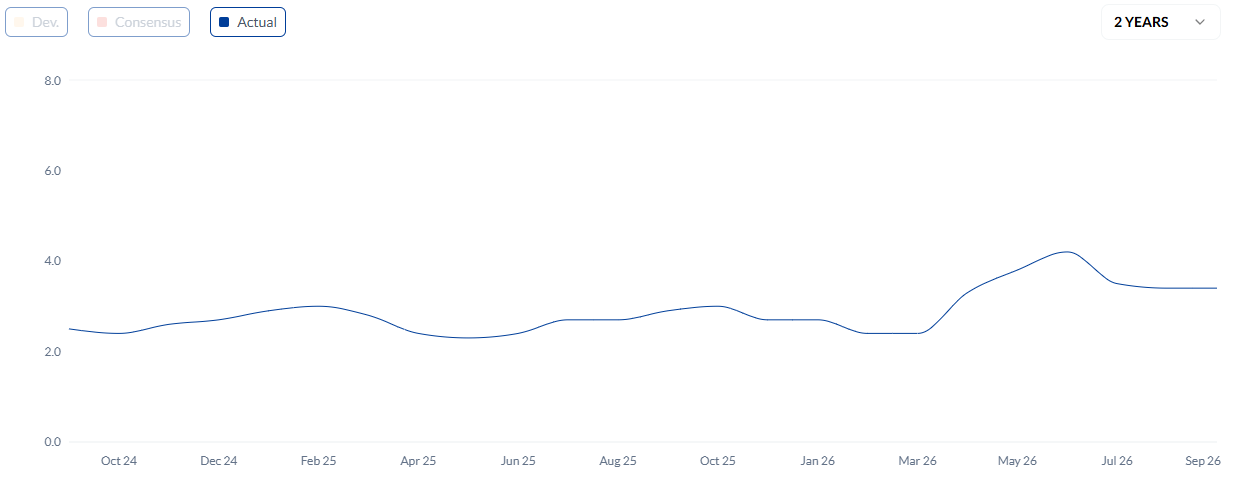
For Beijing, additional US trade restrictions would come at a time when domestic consumption remains weak and the property sector continues to weigh on the economy.
At the same time, both countries are trying to reduce strategic dependencies. The US is developing alternative critical-mineral supply chains, while China continues to strengthen its technological capabilities and diversify its export markets.
Maintaining a period of relative stability therefore gives both sides something valuable: Time.
What markets can expect from the summit
For investors, the most favorable outcome for risk assets is therefore not necessarily a major agreement between Donald Trump and Xi Jinping. A simple extension of the trade truce, combined with some tariff reductions, Chinese commitments regarding rare earths and continued dialogue, could be enough to reduce some of the uncertainty weighing on markets.
Such a scenario could benefit Asian equities and currencies sensitive to global growth. The Chinese Yuan (CNY), Australian Dollar (AUD) and New Zealand Dollar (NZD) could notably benefit from an improvement in risk sentiment, although the magnitude of any move would depend on the concessions actually announced.
The implications for the US Dollar (USD) are more complex. Initially, a constructive summit could weigh on demand for the Greenback as a safe-haven asset. A reduced risk of additional trade barriers would also favor cyclical and emerging-market currencies.
Further tariff reductions could also ease some inflationary pressures in the US. All else being equal, lower inflation would reduce the need for the Federal Reserve (Fed) to maintain restrictive monetary policy, potentially putting downward pressure on US yields and the US Dollar.
However, this relationship is not automatic. If an agreement significantly improves the US growth outlook or supports US Treasury yields, the US Dollar could retain some of its appeal.
The asymmetric risk for markets could instead come from a negative surprise. A summit that ends without an extension of the truce, or with renewed threats involving tariffs and rare earths, would quickly put the trade war back in the spotlight. Equities and currencies sensitive to global growth would then likely come under pressure.
In this scenario, the US Dollar could initially benefit from its safe-haven status, while the Swiss Franc (CHF), Japanese Yen (JPY) and Gold (XAU/USD) could also attract investors.
Over the longer term, however, the reaction would become more difficult to anticipate. A renewed trade war could simultaneously fuel US inflation and weaken economic growth, leaving the Fed facing an environment resembling stagflation.
This is precisely why the summit matters for markets despite relatively low expectations. Donald Trump and Xi Jinping probably do not need to announce a historic agreement to reassure investors. An extension of the truce, a few trade concessions and the preservation of communication channels could already be enough to maintain the current fragile balance.
Conversely, the real shock would be discovering that Washington and Beijing are no longer able to preserve that status quo.
Author

Ghiles Guezout
FXStreet
Ghiles Guezout is a Market Analyst with a strong background in stock market investments, trading, and cryptocurrencies. He combines fundamental and technical analysis skills to identify market opportunities.