USD/CAD slides after the strong Canadian jobs numbers

The US dollar rose against most currencies as US bond yields rose after falling for the past few days. It rose by 0.15% against the euro, 0.45% against the Japanese yen, and 0.25% against the Swedish krona. The 10-year bond yield rose to 1.66%, which is still lower than this week’s high of 0.73%. This performance is mostly because the market expects the American economy to recover faster than other countries.
The Canadian dollar rose slightly after the positive jobs numbers from the country. According to Statistics Canada, the country created more than 303,000 jobs in March as the country continued to reopen. The unemployment rate declined to 87.5% from the previous 8.2% while the participation rate rose to 65.2% from the previous 64.70%. Recent numbers from Canada have been relatively strong. This week, Ivey Business School said that the manufacturing PMI increased to 72.9 in March. This trend will likely continue since Canada is one of the biggest US trading partners.
The euro declined against the US dollar after the relatively weak economic numbers from Europe. In Spain, industrial production declined by 2.1% in February after falling by 2.3% in January. In France, the production declined by 4.7% after rising by 3.2% in January. Meanwhile, in Germany, exports rose by 0.9% in February, a decline from 1.6% in January. In the same period, imports rose by 3.6% while the trade surplus narrowed from 21.2 billion euros to 19.1 billion. Its industrial production declined by 1.6%. This performance in Europe was mostly because of the lockdowns imposed to curb the pandemic.
EUR/USD
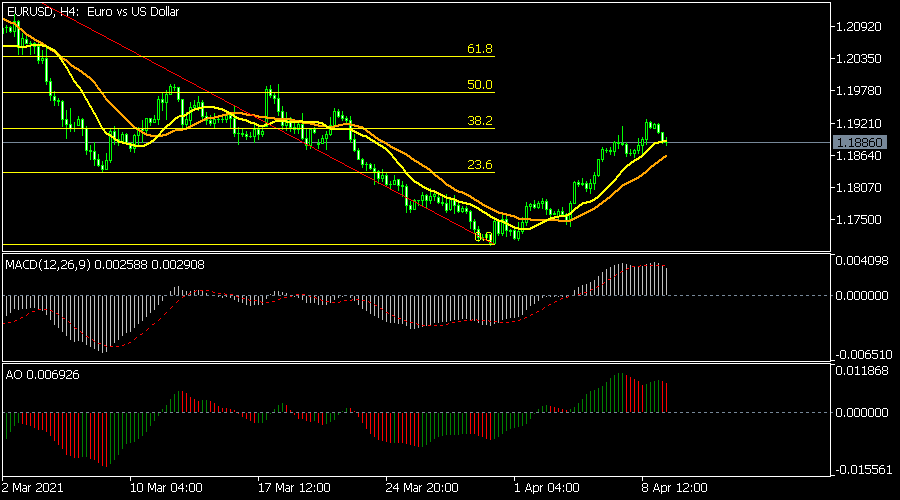
The EUR/USD pair declined to 1.1882 because of the weak European data and the rising US bond yields. On the four-hour chart, the pair has moved below the 38.2% Fibonacci retracement level. It has also declined below the 15-day moving average. The signal line of the MACD is also forming a bearish crossover while the awesome oscillator is also declining. Therefore, the pair may continue falling and test the 23.6% Fibonacci retracement level at 1.1830 and then resume the upward trend.
GBP/USD
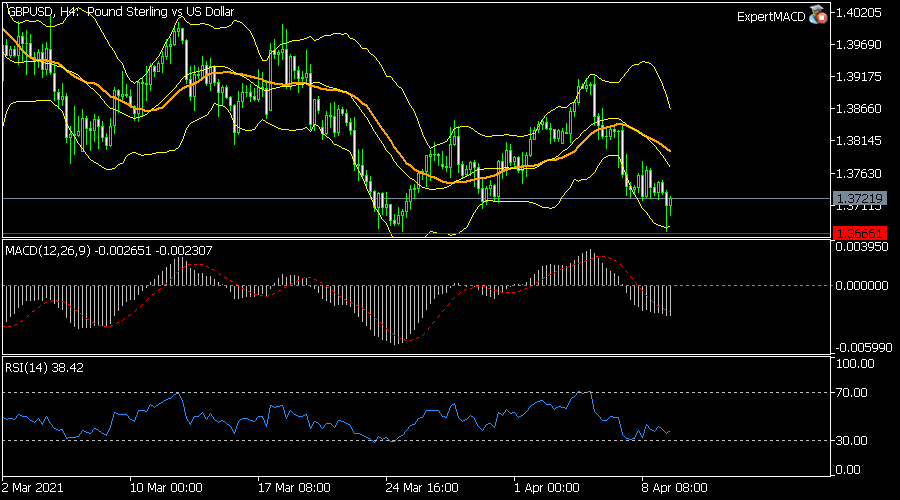
The GBP/USD pair declined to a low of 1.3666, which was the lowest level since March 25. On the four-hour chart, the pair has formed a double bottom pattern, which is usually a bullish sign. It is also between the lower and middle lines of the Bollinger Bands. The MACD is below the neutral line while the Relative Strength Index (RSI) is approaching the oversold level. Therefore, the pair may keep falling to 1.3600 if bears manage to move below today’s low of 1.366.
USD/CAD
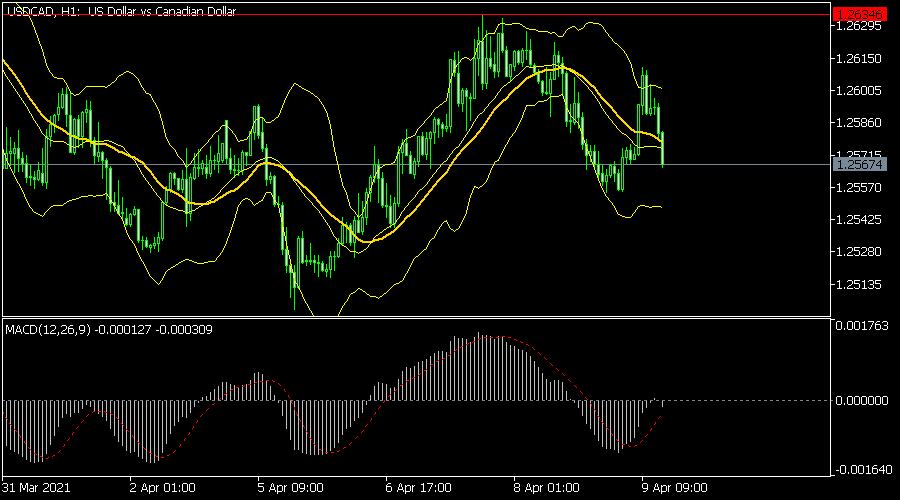
The USD/CAD pair declined slightly today after the Canadian jobs data. On the hourly chart, the price has moved below this week’s high of 1.2634. The price has moved below the 25-day and 15-day exponential moving averages. It has also moved below the middle line of the Bollinger Bands while the MACD is below the neutral level. Therefore, the pair may keep falling, with the next target being 1.2600.
Author
OctaFx Analyst Team
OctaFX
OctaFX is a market-leading forex broker, providing personalised forex brokerage services to customers in over 100 countries worldwide.