US stocks wobble as focus shifts to inflation

US stocks are wobbling as the market continues to reflect on last Friday’s weak US employment numbers. Futures tied to the Dow Jones are up by about 0.20% while those tied to the Nasdaq 100 and S&P 500 index have dropped by 0.28% and 0.45%, respectively. The weak jobs numbers have pushed more investors to increase their expectations that the Federal Reserve will not start to tighten conditions in the near term. Still, there are signs that consumer prices will push the Fed to tighten. For one, some of the most important commodity prices like iron ore and copper have risen to an all-time high. Others like lumber and crude oil have more than doubled in the past few months. The US will publish its inflation numbers on Wednesday this week.
The British pound jumped today after Halifax released the relatively strong house price index (HPI) data. The numbers revealed that house prices continued to rise in April. They rose from 1.1% to 1.4% on a month-on-month basis and from 6.5% to 8.2% on a year-on-year basis, respectively. The housing sector in the UK has been relatively strong because of low interest rates and the decision by the government to remove stamp duty on acquisitions. That has seen many house builders like Taylor Wimpey and Persimmon report strong results. However, there are concerns about whether this growth will remain.
The Australian dollar rose as the market reacted to the strong commodity prices. The price of iron ore rose to an all-time high of $230 per ton while copper rose to a record. The Bloomberg Commodity Index rose by more than 0.30%. This is important because Australia is endowed with vast commodities. In fact, the ASX 200 index also rose to a record high, helped by miners like BHP and Rio Tinto. The currency also rose because of the relatively weaker US dollar as the market reacted to the weak jobs data. It rose even after the relatively weak retail sales numbers.
AUD/USD
The AUD/USD pair rose to 0.7878, which was the highest level since February 25. On the four-hour chart, the pair managed to move above the important resistance level at 0.7817. It is also approaching the 61.8% Fibonacci retracement level. Also, the price has moved above the 25-day and 15-day moving averages while the Relative Strength Index (RSI) has moved above the overbought level of 70. Therefore, the pair is likely to continue rising as bulls target the next resistance at 0.7900.

EUR/USD
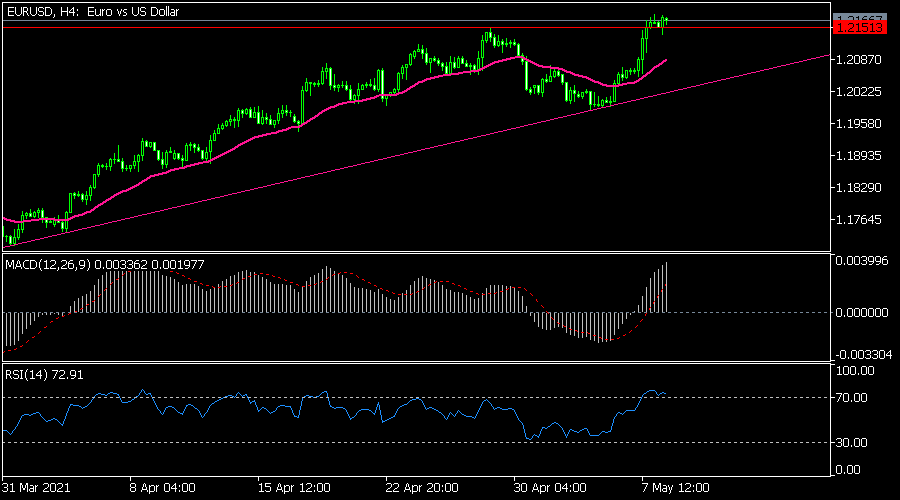
The EUR/USD pair has been in a consolidation mode after rising sharply on Friday. The pair is trading at 1.2167, which is the highest level since February 24. It has moved above the important resistance at 1.2150. It has also moved above the ascending trendline that is shown in pink. Further, the MACD and Relative Strength Index (RSI) have also risen. Therefore, the pair may keep rising as traders start targeting the next key resistance level at 1.2244, which is the highest level since February 24.
USD/CHF
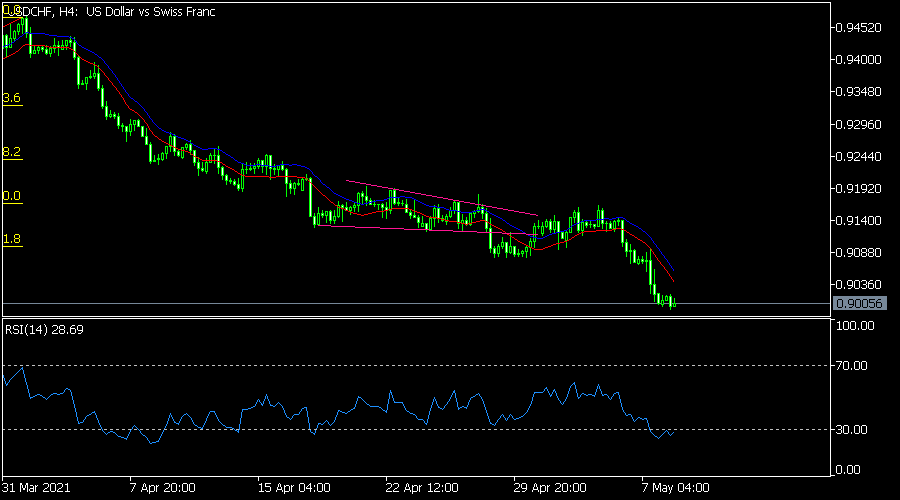
The USD/CHF tumbled to the lowest level since February 23 because of the relatively weaker US dollar. On the four-hour chart, the pair has moved below all moving averages. It is also at the 78.2% Fibonacci retracement level and below the envelopes indicator. The Relative Strength Index (RSI) also dropped below the oversold level of 28. Therefore, the pair will likely continue dropping as bears target the next support at 0.8950.
Author
OctaFx Analyst Team
OctaFX
OctaFX is a market-leading forex broker, providing personalised forex brokerage services to customers in over 100 countries worldwide.

















