US Retail Sales soar in April, consumer recession fears fade
- Retail Sales climb 0.9%, March revised to 1.4% from 0.5%.
- Recession fears fade on strong consumer spending despite inflation.
- Equity futures, Treasury yields jump, dollar falls.

The US consumer may be depressed, at least according to recorded sentiment, but that is not stopping a surge of spending that ignored some of the highest prices in four decades.
Retail Sales jumped 0.9% in April, beating the consensus estimate of 0.7% and the March result nearly tripled to 1.4% from 0.5% upon revision. Sales ex-Autos rose 0.6%, double their forecast, and March was adjusted to 2.1% from 1.1%. Core sales, also known as the Control Group, which excludes cars, gasoline, building materials and food services and mimics the consumer spending component of the gross domestic production, climbed 1% in April, twice its projection. The March figure followed the broader categories of spending higher to 1% from the initial -0.1% release.
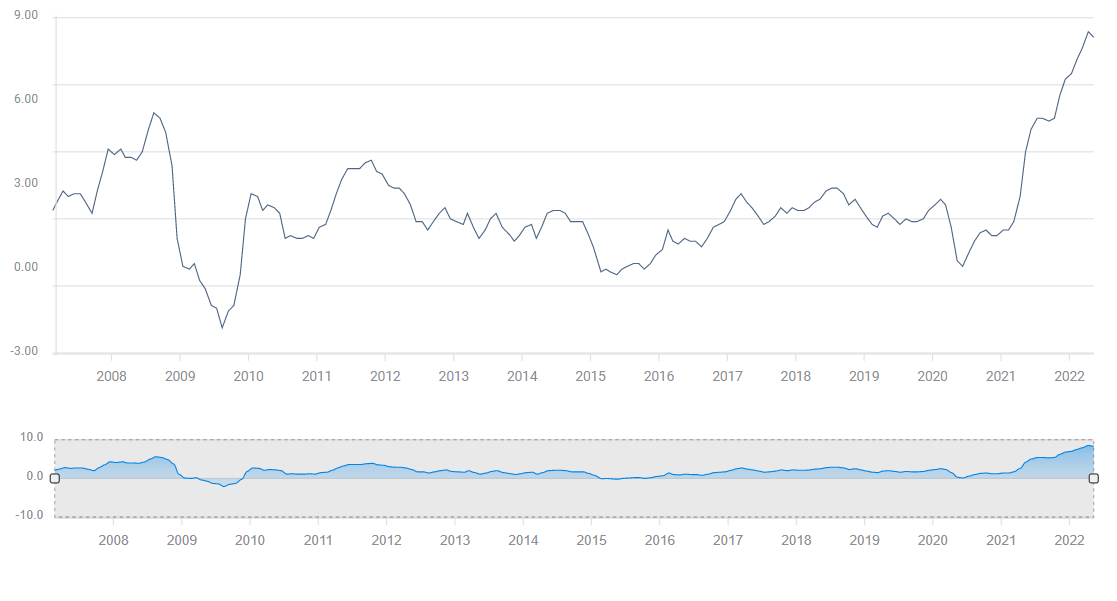
Annual inflation had ebbed slightly in April, with the rate dropping to 8.3% from 8.5%, a 40 year record, with the monthly increase falling to 0.3% from 1.2%.
CPI
Retail Sales figures are uncorrected for inflation, meaning that some portion of the increase stems from higher prices not a greater volume of purchases.
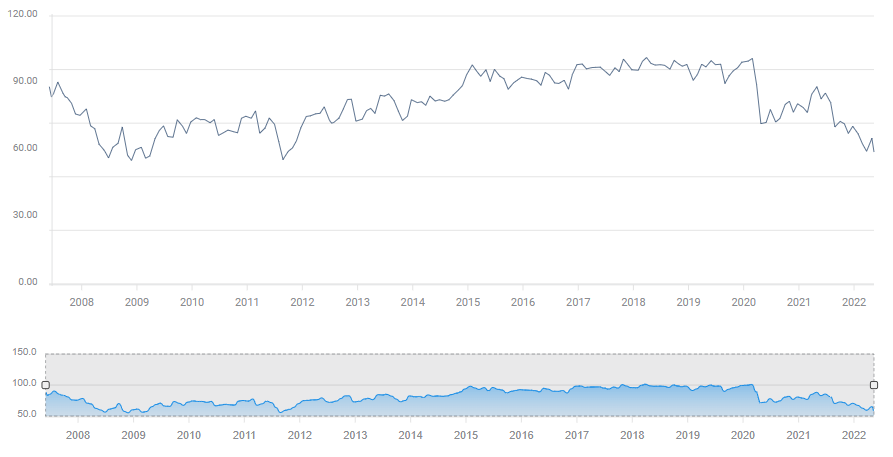
Consumer sentiment unexpectedly fell in May to 59.1 in the Michigan Survey from 65.2. The index had plunged to 70.3 last August from 81.2 and has trended steadily down since. May’s score was the weakest in over a decade.
Michigan Consumer Sentiment
Declining purchasing power may be one of the reasons for consumer discontent. Real Average Hourly Earnings fell 0.1% in April and were down 2.6% on the year and 2.7% in March.
Equites and Treasury yields climbed on the sales release, the US dollar fell.
In early New York trading the Dow was up over 300 points, the S&P 500 almost 50 points and the NASDAQ 175 points. The yield on the 10-year Treasury had added 8.9 basis points to 2.968% and the 2-year was higher by 9.1 points at 2.661%.
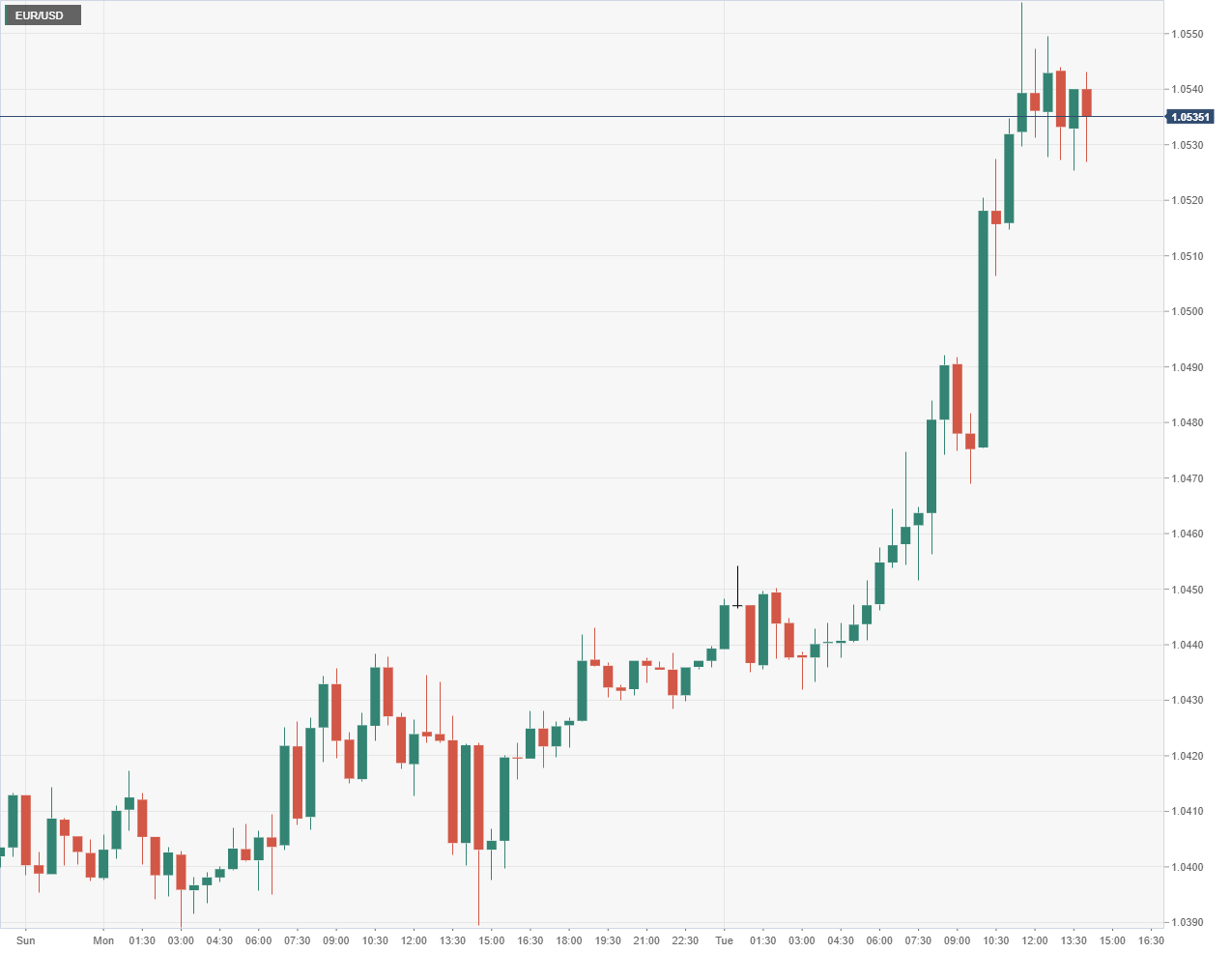
The dollar was lower versus the euro, sterling and all majors except the yen.
Author

Joseph Trevisani
FXStreet
Joseph Trevisani began his thirty-year career in the financial markets at Credit Suisse in New York and Singapore where he worked for 12 years as an interbank currency trader and trading desk manager.