US PCE Inflation Preview: Can the US Dollar turn bullish for good?
- US Personal Consumption Expenditures Price Index is foreseen at 4.9% YoY in January.
- The FOMC Meeting Minutes hint at more monetary tightening ahead.
- US Dollar could enter a long-lasting bullish trend following PCE figures.

The US Bureau of Economic Analysis will release the Personal Consumption Expenditures (PCE) Price Index data for January on Friday at 13:30 GMT. The figure used to have a limited impact on the US Dollar, despite being the United States Federal Reserve's (Fed) preferred inflation gauge. However, and as price pressures skyrocketed, the data caught speculators’ eyes, becoming more and more relevant in the past year.
The PCE Price Index is expected to have risen by 4.9% YoY in January, easing from the previous 5%, while the more relevant core PCE Price Index is foreseen at 4.3%, after printing 4.4% in December.
Inflation, as measured by the Consumer Price Index (PCI), rose at an annualized pace of 6.4% YoY in January, improving from the previous 6.5% and further easing from the multi-decade high hit mid-2022 of 9.1%. However, financial markets were expecting the CPI to ease at a faster pace, with most analysts anticipating an increase of only 6.2% YoY.
Inflation and the Federal Reserve
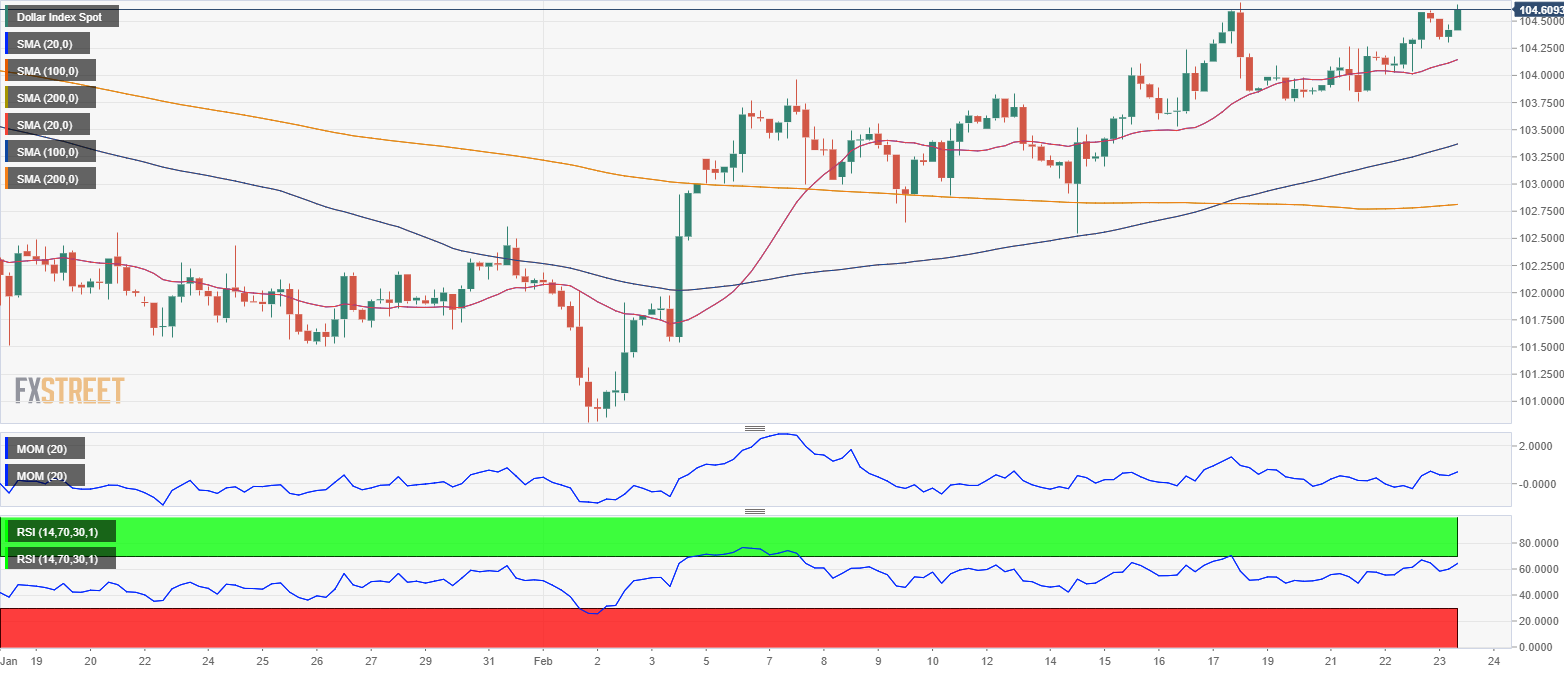
The CPI began easing in the last quarter of 2022, fueling speculation the US Federal Reserve will slow its aggressive monetary policy and even pivot. The US central bank has warned investors against such speculation, but market players continued to bet against the Fed. As a result, stock markets soared while the USD fell to fresh multi-month lows against most of its major rivals.
Nevertheless, US Fed officials maintained their hawkish rhetoric and warned about persistent upward risks to inflation, keeping them on the tightening path. Still-elevated CPI figures came as a cold shower, clearly suggesting it is no time to pivot.
The FOMC Meeting Minutes released on Wednesday confirmed US policymakers will continue hiking rates until they are confident inflation will fall to 2%. Furthermore, the document showed a few participants favored a 50 bps rate hike in the latest meeting, higher than the 25 bps finally delivered. Finally, some participants saw increased chances of a recession in 2023. Stocks dipped, and the US Dollar soared amid prospects of continued monetary tightening.
Possible US Dollar reactions
Given the current backdrop, the PCE Price Index could be a make-it-or-break-it for the American currency. A reading in-line with expectations should confirm inflation is easing, although at a slower-than-anticipated pace. It would be enough to maintain the US Dollar on the winning side, although it would hardly trigger a sharp market reaction.
An upward surprise should further support the idea of an aggressive Federal Reserve and fuel demand for the American currency in a risk-averse scenario. Market players may finally give up on evidence a monetary policy pivot would not take place in 2023.
Finally, lower-than-anticipated price pressures could put back on the table bets of a pivot, fueling demand for high-yielding equities to the detriment of the Greenback. Still, and given the current US Dollar strength, its decline could be short-lived, with USD bulls taking their chances at better levels.
Author

Valeria Bednarik
FXStreet
Valeria Bednarik was born and lives in Buenos Aires, Argentina. Her passion for math and numbers pushed her into studying economics in her younger years.














