US payrolls rocket higher, wages gains return to form
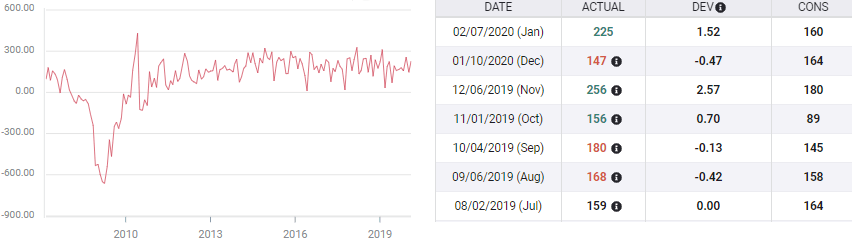
- US economy creates 225,000 jobs in January far above the 160,000 forecast.
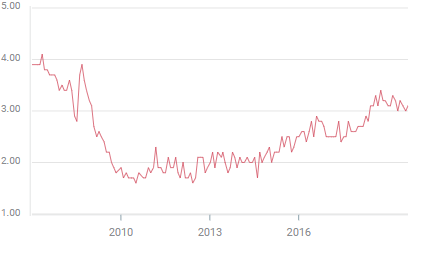
- Average hourly earnings rise 3.1% in January and December revised up to 3%.
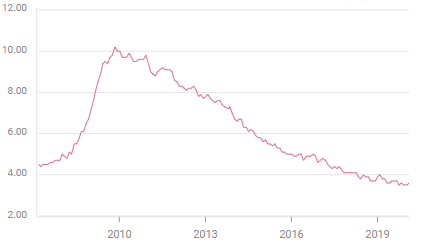
- Unemployment rate to 3.6% as more people join labor force.

The US economy began the New Year in fine fashion creating far more employment in January than forecast and bringing wages to their longest string of gains since the financial crisis.
Non-farm payrolls added 225,000 new positions, well beyond the 160,000 median estimate with warm weather in much of the country enabling 44,000 construction jobs, more than double last year’s monthly average of 12,000, according to Labor Department data on Friday. Revisions for November’s totals added 5,000 to 256,000 and December 2,000 to 147,000.
Non-Farm Payrolls
Unemployment edged 0.1% higher to 3.6% as more people from the labor sidelines sought work but it remains near its 50 year low. The labor force participation rate rose 0.2% to 63.4% is highest level since June 2013. For folks in their prime working years ages 25 to 54 the participation rate was at an 11-year high in January.
US Unemployment Rate, U-3
FXStreet
The dollar initially moved higher on the release gaining about 15 points to 1.0955 against the euro, a four-month high before going to ground at 1.0960 in mid-morning in New York. Treasury yields rose slightly at the 8:30 am issue but reversed with the 10-year down six points to 1.59% and the 2-year off three to 1.41%, (10:29 am EST).
Federal Reserve policy which moved to neutral in October on its view that the US labor economy remained healthy received a welcome endorsement.
The so-called real or underemployment rate rose to 6.9% from 6.7% in December which had been the lowest in the history of the series. This measure includes discouraged workers who had looked for work any time in the past year rather than the stricter one month definition of the standard unemployment rate. Many analysts consider this a more accurate measure of joblessness.
Manufacturing employment which had been expected to benefit from the US-China trade accord signed in January lost 12,000 jobs, almost exclusively in the automobile industry. Boeing’s 737 Max problems, which have cut into the aircraft makers production has likely has had a negative impact as well. China’s viral health crisis may be delaying implementation of the terms of the pact.
In another good sign for the US economy in the 11th record year of expansion, average hourly earnings were 3.1% higher on the year and the December gain was revised up to 3% from 2.9%, extending the run of 3% or higher increases to 18 months, the longest since the recession.
Average Hourly Earnings, Y/Y
FXStreet
The Labor Department benchmark revisions, which reconcile the estimated job creation from new firms with tax and regulatory confirmed employment numbers, showed a drop of 514,000 in total payrolls to the year ending in March 2019. The forecast had been for a decrease of 500,000.
Private payrolls added 206,000 workers and government employment at all levels rose 19,000. Education and health service workers rose 72,000, leisure and hospitality added 36,000, and transportation and warehousing 28,300. Retail employment fell 8.300.
The average work week was unchanged at 34.3 hours.
Author

Joseph Trevisani
FXStreet
Joseph Trevisani began his thirty-year career in the financial markets at Credit Suisse in New York and Singapore where he worked for 12 years as an interbank currency trader and trading desk manager.
















