US Michigan Consumer Sentiment March Preview: Where will consumers lead?
- March sentiment expected to fall but remain healthy.
- Michigan Survey first to include virus impact.
- Financial market turmoil may color consumer outlook.

The University of Michigan will release its preliminary Survey of Consumers for March on Friday March 13th at 14:00 GMT 10:00 EST
Forecast
The Consumer Sentiment Index is expected to drop to 95 in March from 101 in February and 99.8 in January.
Michigan Consumer Sentiment

Although the February reading of 101 was the highest since March 2018 and the second best since the financial crisis and recession only one subject will matter for the March reading. What will be the impact of the Coronavirus crisis on the spending habits of the American consumer?
The US economy and social life has so far avoided large scale closures and quarantines that have been instituted in China, Korea, Italy and elsewhere to slow the spread and in China and Korea seem to have arrested the dissemination.
While the immediate future of the infection in the US is unknown, what is sure is that if consumers begin a substantial pullback in spending and consumption the effects will redound throughout the economy. The state of mind of the consumer has become of paramount importance.
The vast majority of Americans remain unaffected by the virus but that does not mean changes are not taking place beneath the surface.
Sentiment and the labor market
Non-farm payrolls have averaged a remarkable 231,000 new jobs over the last three months. Purchasing managers’ employment indexes in services and manufacturing rose in February and unemployment, wages, planned layoffs and Thursday’s initial jobless claims for the first week of March at 211,000 all indicate continuing strength in hiring.
The March NFP report will not be released until April 3rd and markets will be actively seeking clues whether US employers are pulling back on payrolls. If sentiment figures indicate that consumption will likely be affected employers could become wary of taking on new workers, a development that would circle back to consumers.
Conclusion and the dollar
Equity markets have priced in a large economic impact in the US and around the world for the Coronavirus. Major American stock averages have fallen more than 20% from their highs, ending the longest bull market in history. Companies have anticipated substantial drops in profits and sales. The estimates for economic damage will become more severe if the US consumer becomes defensive.
Over the past two week the dollar moved sharply lower propelled by the funding needs of a massive global run into US Treasuries. With Treasury yields relatively stable on Thursday the pressure on the dollar eased and it rallied against the euro and the yen.
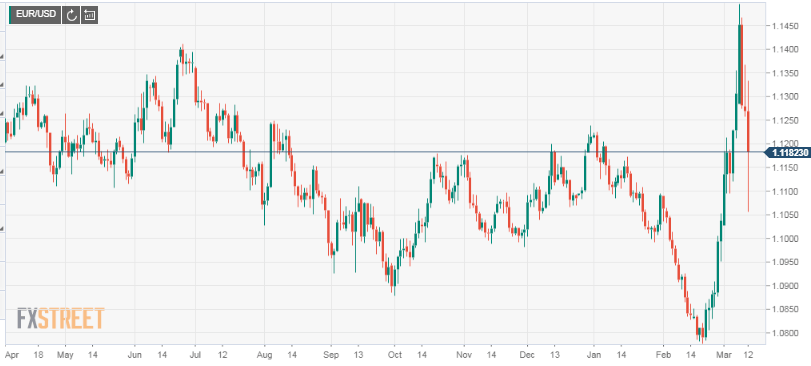
If US consumers can retain a good portion of their normal optimism it will reinforce the dollar’s role in adversity as currency of first resort.
Author

Joseph Trevisani
FXStreet
Joseph Trevisani began his thirty-year career in the financial markets at Credit Suisse in New York and Singapore where he worked for 12 years as an interbank currency trader and trading desk manager.















