US ISM Non-Manufacturing PMI January Preview: Manufacturing to the fore
- PMI for services forecast to be unchanged in January.
- Manufacturing PMI rebounded unexpectedly last month.
- US-China trade agreement bolsters factor sector.

The Institute for Supply Management (ISM) will release its Non-Manufacturing Purchasing Managers' Index (PMI) for January at 15:00 GMT, 10:00 EST, Wednesday February 5th.
Forecast
Services PMI is predicted to rise to 55.1 in January from 55.00 in December. Employment is expected to be unchanged at 55.2. New orders are predicted to rise to 58 in January from 54.9 in December. Prices paid is projected to increase to 53.3 from 51.7.
ISM business sentiment
Business confidence has been falling for over a year in the surveys from the Institute for Supply Management (ISM).
The overall purchasing managers’ index (PMI) in the service sector fell from 59.7 in February to 52.6 in September and 53.9 in November but rose to 55 in December and is forecast to be 55.1 when the January figures are issued on Wednesday.
Employment and new orders PMIs bottomed at 51.7 in September and 47.2 in November. Each has recovered in December, employment to 55.2 and new orders to 54.9. The new orders recovery is projected to continue in January.
Even though the impact of the China trade dispute was greater in the smaller manufacturing sector, about 12% of US GDP, sentiment there climbed in January.
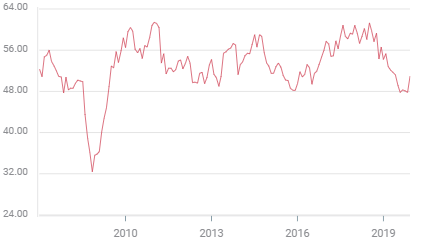
Overall manufacturing PMI had slipped below the 50 division between expansion and contraction in August. It stayed there for five months and had been forecast to rise slightly to 48.5 in January.
In reality sentiment bounced above the 50 demarcation to 50.9 in January. Employment PMI which had been negative for the same period rose to 46.6 and new orders jumped to 52 from 47.6, a rise to 50.8 had been forecast. The production index soared 9.5 points to 54.3 and new export orders added 6 points to 53.3.
Manufacturing PMI
FXStreet
January’s return to positive in factory manager sentiment likely stemmed from the signing of the long anticipated and much delayed US-China trade pact and the consequent reduction in trade tensions between the nations.
As the survey said, ““Comments from the panel were positive, with sentiment improving compared to December. The PMI® returned to expansion territory for the first time since July 2019.” In previous surveys execuitives had repeatedly voiced their concerns over the trade war.
The January ISM survey was conducted throughout the month with the questionnaires sent early and often returned late.
China’s health crisis has been in evidence since the beginning of the year but has not as yet had an appreciable impact on sentiment. It is possible that will change as the impact of the crisis on the Chinese economy, the US and the globe becomes clear.
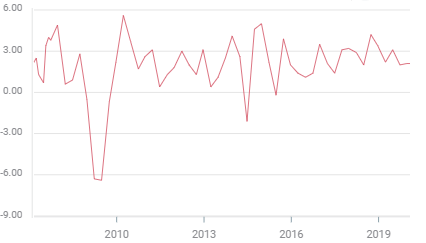
With the US economy expanding at a steady 2% pace since the first quarter it was the actual and feared impact of the China trade dispute that had brought business spending to a near standstill.
US GDP, consumers and the labor market
Economic growth in the US waned somewhat in 2019 expanding 2.3%, the slowest pace in three years following 2.9% in 2018. After 3.1% in the first three months growth was unchanging for the next three quarters, 2.1% in the second, 2.0% in the third and 2.1% again in the fourth. The US is in its record 11th straight year of growth the longest span in its history.
US GDP, Annualized
Consumer spending has continued to be the main support of the economy backed by a strong labor market and rising wages. The retail sales control group which is the consumption component of the Bureau of Economic Analysis’ GDP calculation averaged a 0.33% monthly gain from February to December.
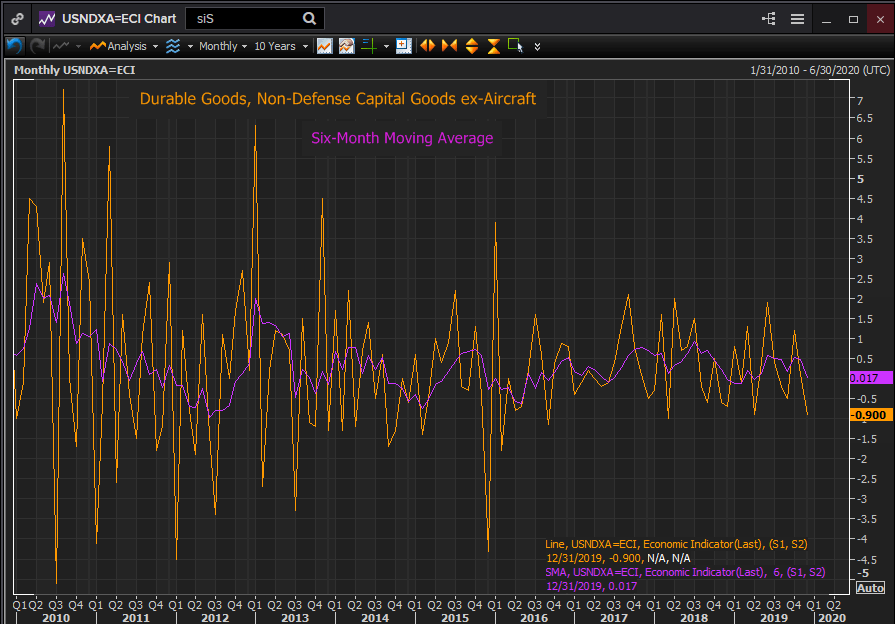
Business spending has declined sharply in the second half of the year as the collapse in sentiment took its toll on planning and the willingness to undertake risk.
The durable goods grouping non-defense capital goods excluding aircraft, a standard proxy for business investment, declined from a .567% monthly average in June to 0.017% in December. Overall business investment shrank for the three quarters to the end of the year, the worst investment performance since 2009.
Reuters
Job creation moderated in 2019 from its exceptional performance the prior year. Non-farm payrolls fell 26% from 235,000 in the 12-month moving average in January to 174,000 by year’s end. Yet hiring easily remained strong enough to keep wages rising. December’s 2.9% annual gain was the first below 3% in 15 months.
Conclusion and the dollar
The unexpected rise in manufacturing PMI in January bodes well for the larger services sector, which, at any rate, was never as deeply affected by the China trade war as was its smaller confederate.
If the trade agreement lives up to its press and helps to restore confidence and spending in the business sector, then adding that to the still expansive consumer should produce a return to 3% annual GDP and a further improvement in business sentiment.
The dollar would be the direct beneficiary as economic comparison returns to mediate direction in the currency markets.
For the moment the China health crisis, as difficult as it may be, has not generated commensurate difficulties for the US or global economies.
Author

Joseph Trevisani
FXStreet
Joseph Trevisani began his thirty-year career in the financial markets at Credit Suisse in New York and Singapore where he worked for 12 years as an interbank currency trader and trading desk manager.