US economy slouches toward recession
- Atlanta Fed GDPNow second quarter estimate sinks to 0.9%.
- GDP contracted 1.5% in Q1, two consecutive quarters is the traditional recession definition.
- Fed determined to add 100 basis points to the base rate before a potential slowdown.

Federal Reserve governors don’t need another reason to raise interest rates, but fading US economic growth is adding a note of urgency to inflation’s inescapable logic. Hike rates before the public outcry from a recession brings policy to a shuddering halt.
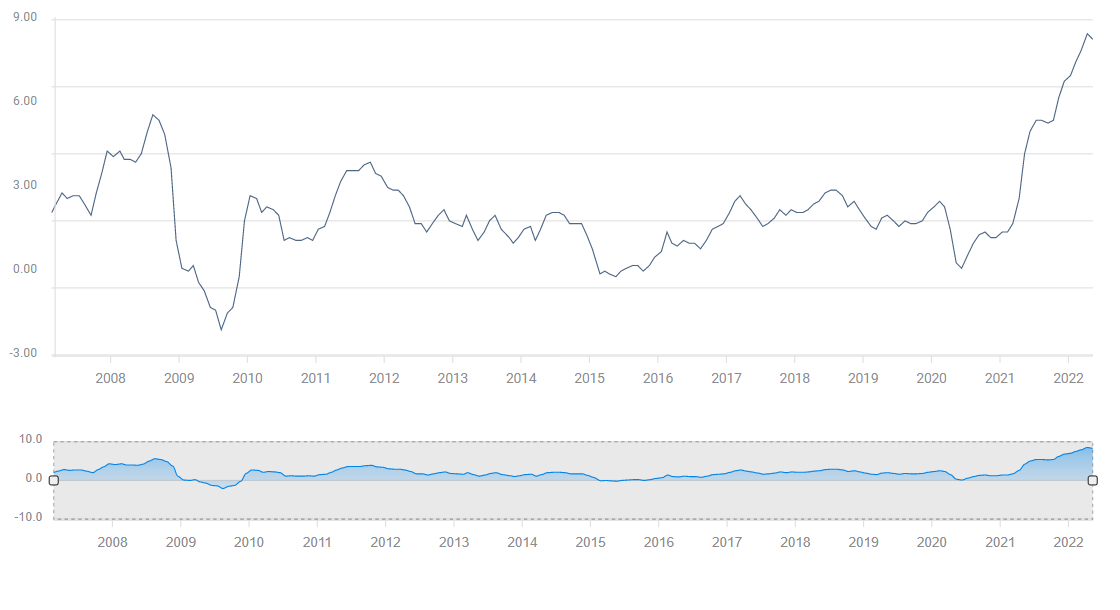
Inflation's threat is plain. Annual consumer prices rocketed 8.3% in April, core prices rose 6.2%. Personal Consumption Expenditures (PCE) prices, the central bank’s preferred gauge, were up 6.3% and core expenses rose 4.9%.
CPI
FXStreet
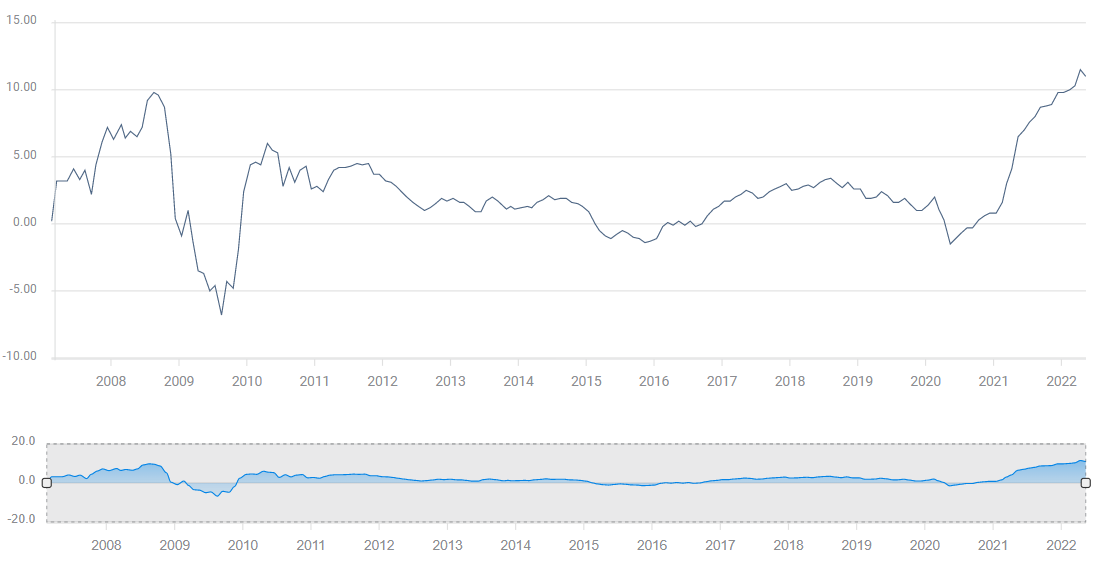
Despite the slight decline in April’s consumer price averages, factories paid ever higher costs for their materials that month. The Producer Price Index (PPI), jumped 11% and the core index climbed 8.8%. These expenses are sure to be passed on to retail consumers in May.
PPI
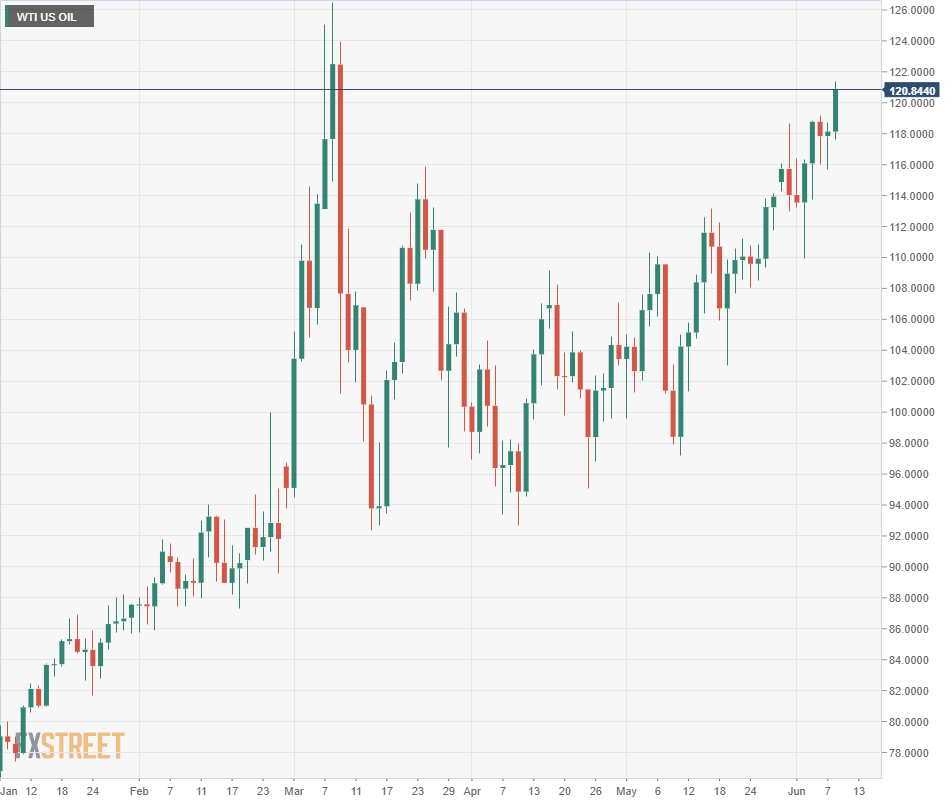
Finally, the average price of crude oil, the industrial world’s basic commodity, rose 7.0%% in May from April and has added another 8.5% in the first week of June. Oil prices affect nearly every good and service produced anywhere in the world.
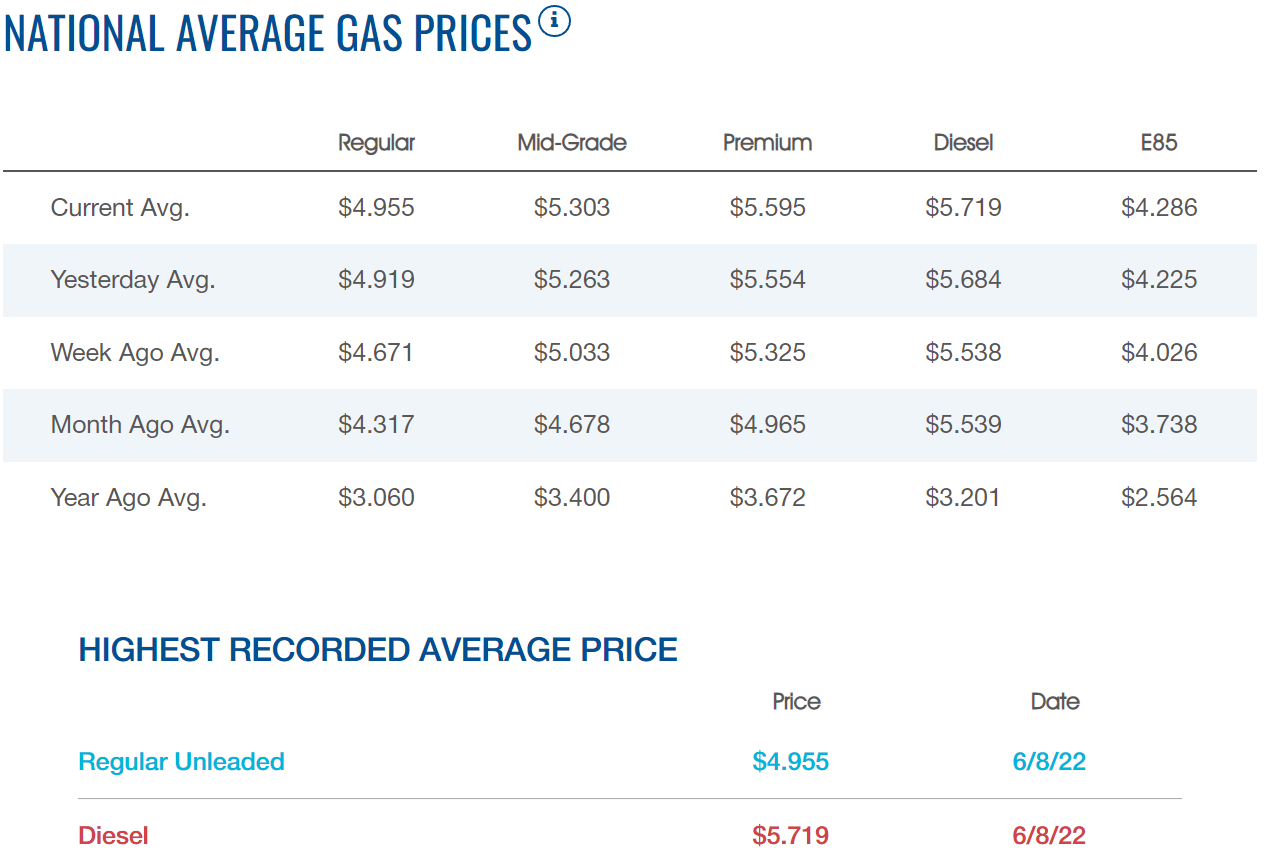
How long can consumers, the famed 70% of US economic activity, continue to spend when family budgets are eroded by inflation every month. Even though the overall consumer price index (CPI) has been at a four-decade high for months, the price of necessities like food and gasoline have risen even faster. Gasoline alone has jumped 62%, to its highest ever national average, in the past year.
American Automobile Association
Disposable income and Real PCE
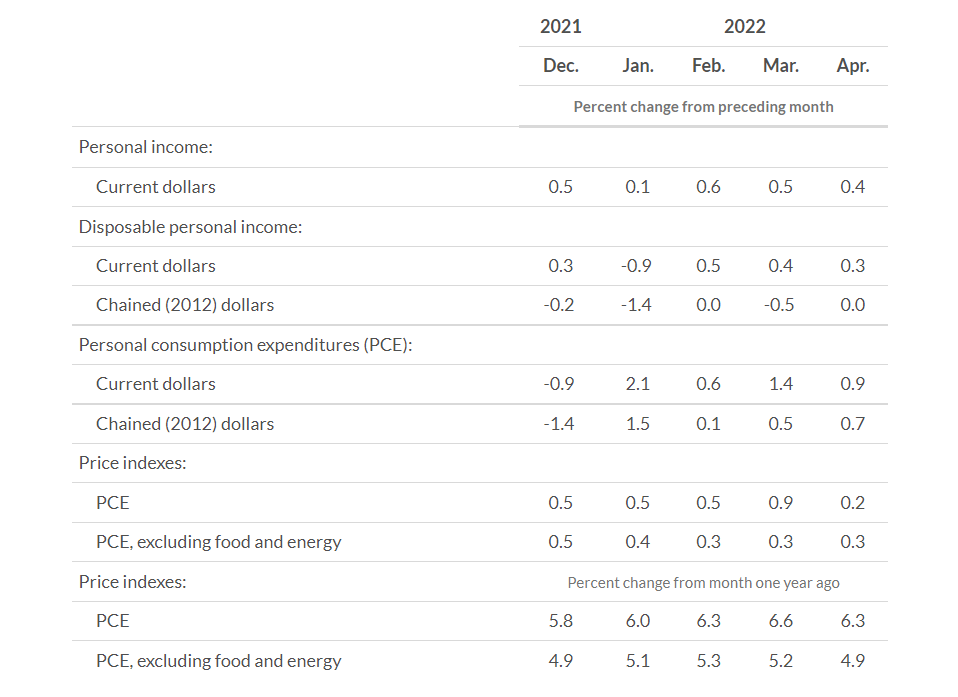
Inflation’s impact on household spending is stark in the inflation adjusted income and spending series from the Bureau of Economic Analysis (BEA).
Disposable income, a wider category than Average Hourly Earnings (AHE) from the Bureau of Labor Statistics (BLS), as it includes several kinds of non-wage funds, has averaged a 0.12% monthly gain for the five months through April. Real disposable income, corrected for inflation, measured -0.42% for the same period.
Consumer spending has a similar disparity. Unadjusted PCE averaged 0.82% from December to April. Real PCE was just 0.28%.
Disposable Income and PCE
BEA
While the headline personal spending data appears to show a healthy rate of consumerism, the actual increases flowing to businesses and retailers are not far from contraction. The economy they depict mirror the weak growth in the GDPNow figures.
GDPNow
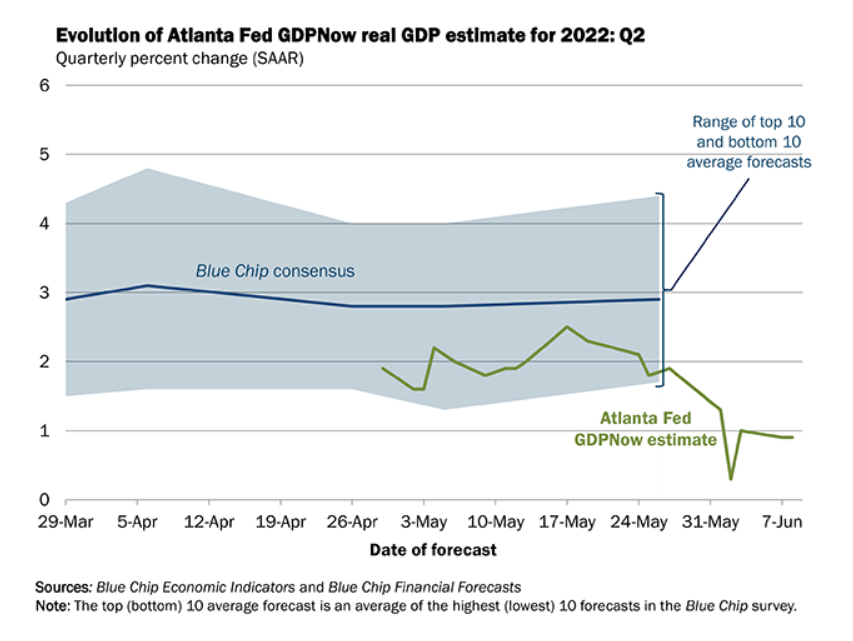
The Atlanta Fed GDPNow model incorporates real time economic data to estimate growth rates. Wednesday’s unchanged update at 0.9% from the prior 1.3%, included wholesale inventories, international trade numbers and other recent releases. Over the past six weeks the second quarter projections have been as high as 2.5% on May 17 and as low as 0.3% on June 2.
The final GDPNow forecast for the first quarter had been 0.4%. The first release was -1.4% since revised to -1.5%.
Federal Reserve schedule
The Federal Open Market Committee (FOMC), the central bank’s policy making board, meets twice more before the first second quarter GDP figures are released on Thursday July 28.
Both meetings are widely expected to produce 50 basis point increases in the fed funds rate.
Treasury futures have the odds for a half-point increase at the June 15 FOMC at 92.9% with the balance for a three-quarter point hike. At the July 27 conclave the odds are 83.7% for a second half-point raise with 15.6% favoring three-quarters and 0.7% expecting a full point.

CME
Fed policy and recession
Federal Reserve policy is a very public endeavor. Chair Jerome Powell is required by law to testify several times a year in Congress to explain the bank’s policies and intentions. To the public and the press the traditional standard of two consecutive quarters of economic contraction defines a recession.
While the official onset and duration of recessions are determined long-after the fact by the National Bureau of Economic Research (NBER), a private non-profit organization, "committed to undertaking and disseminating unbiased economic research among public policymakers, business professionals, and the academic community,” according to its website, in political and economic reality, the two-quarter standard rules.
The expected 100 basis points of rate increases at the next two FOMC meetings will only bring the fed funds rate to 2.0%. That will not be enough to quell inflation nor to change higher price expectations that are fast cementing into certainty.
In the early 1980s then Fed Chairman Paul Volcker pushed the fed funds rate briefly over 20% to quell embedded inflation.
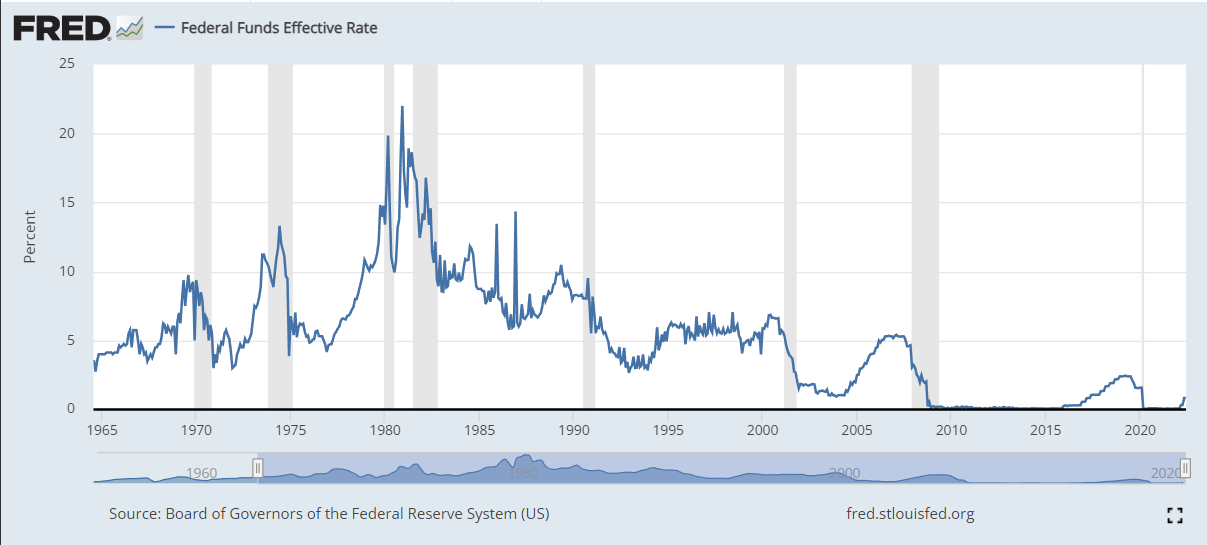
Prices in the decade before Volker’s appointment in 1979 by President Jimmy Carter, were the product of a long series of government funding decisions that choose deficits and printing money rather than responsible budgeting. By the time CPI reached 14.6% in April 1980, inflationary psychology was so firmly entrenched that the Fed felt it had no choice but to apply the drastic remedy of a double digit fed funds rate and two-deep recessions to end the price spiral.
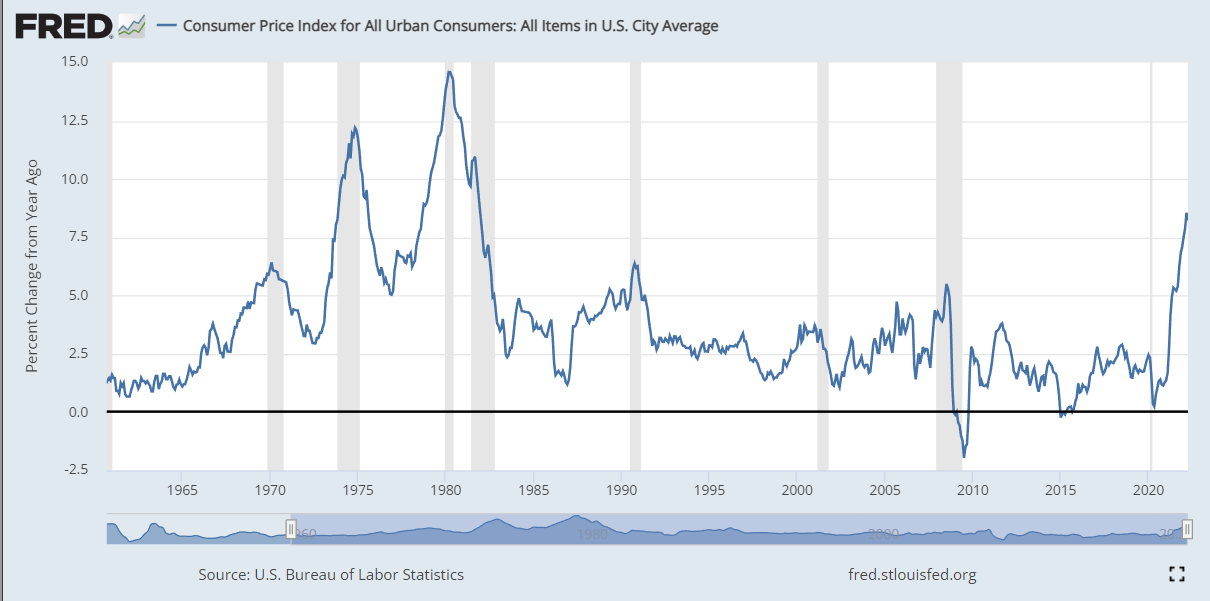
Fed Chair Jerome Powell thinks a soft-landing, lower inflation without recession, is possible but difficult. He is correct but that is not the pertinent question.
What will the FOMC do if a second quarter contraction and recession surfaces on July 28?
The Fed’s March 16 economic and rate projections, due to be updated on June 15, had the fed funds rate at 1.9% at the end of 2022. What was sufficient in March is now woefully out of date, but any increase in the year-end fed funds rate projection implies hikes from the three remaining 2022 FOMC meetings.
If the economy stays out of recession, no matter how trivial US economic growth, the Fed will continue its rate program. Inflation seems sure to continue at a dangerous pace for the rest of the year.
Fed governors have not tried to implement a difficult and unpopular but necessary policy in more than a generation are they about to be tested?
Author

Joseph Trevisani
FXStreet
Joseph Trevisani began his thirty-year career in the financial markets at Credit Suisse in New York and Singapore where he worked for 12 years as an interbank currency trader and trading desk manager.