Why hawkish Bank of Japan expectations aren't enough to sustain the Japanese Yen rally

The Japanese Yen (JPY) experienced a sudden burst higher after falling back below the 160.00 psychological mark against the US Dollar (USD) earlier this week amid a more hawkish repricing of Bank of Japan (BoJ) rate hike expectations. The USD/JPY pair drops back closer to the August monthly swing low, touched in reaction to a joint US-Japan currency market intervention in late July.
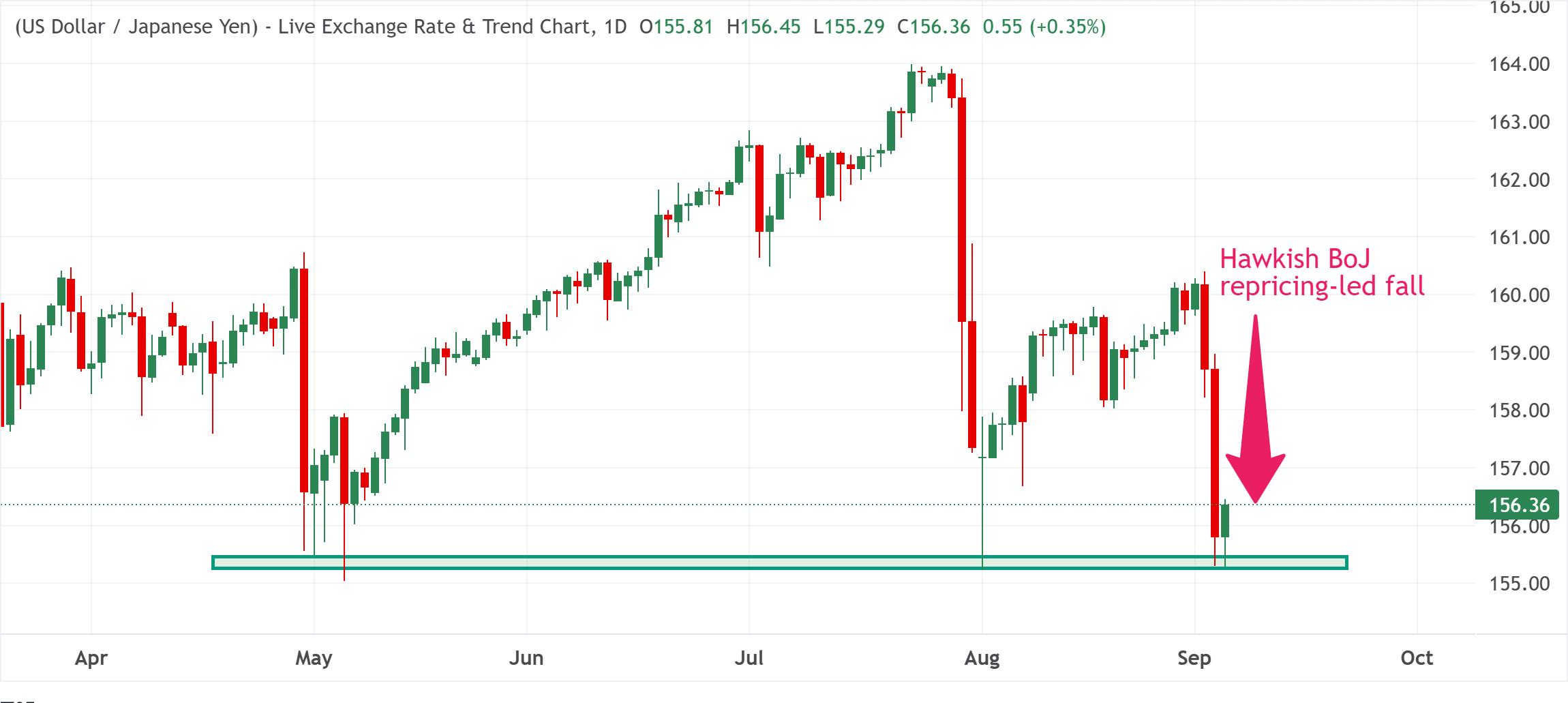
However, structural forces like Japan's massive debt pile and the wide interest rate gap should keep a lid on any further Yen appreciation.
Aggressive BoJ repricing boosts Yen
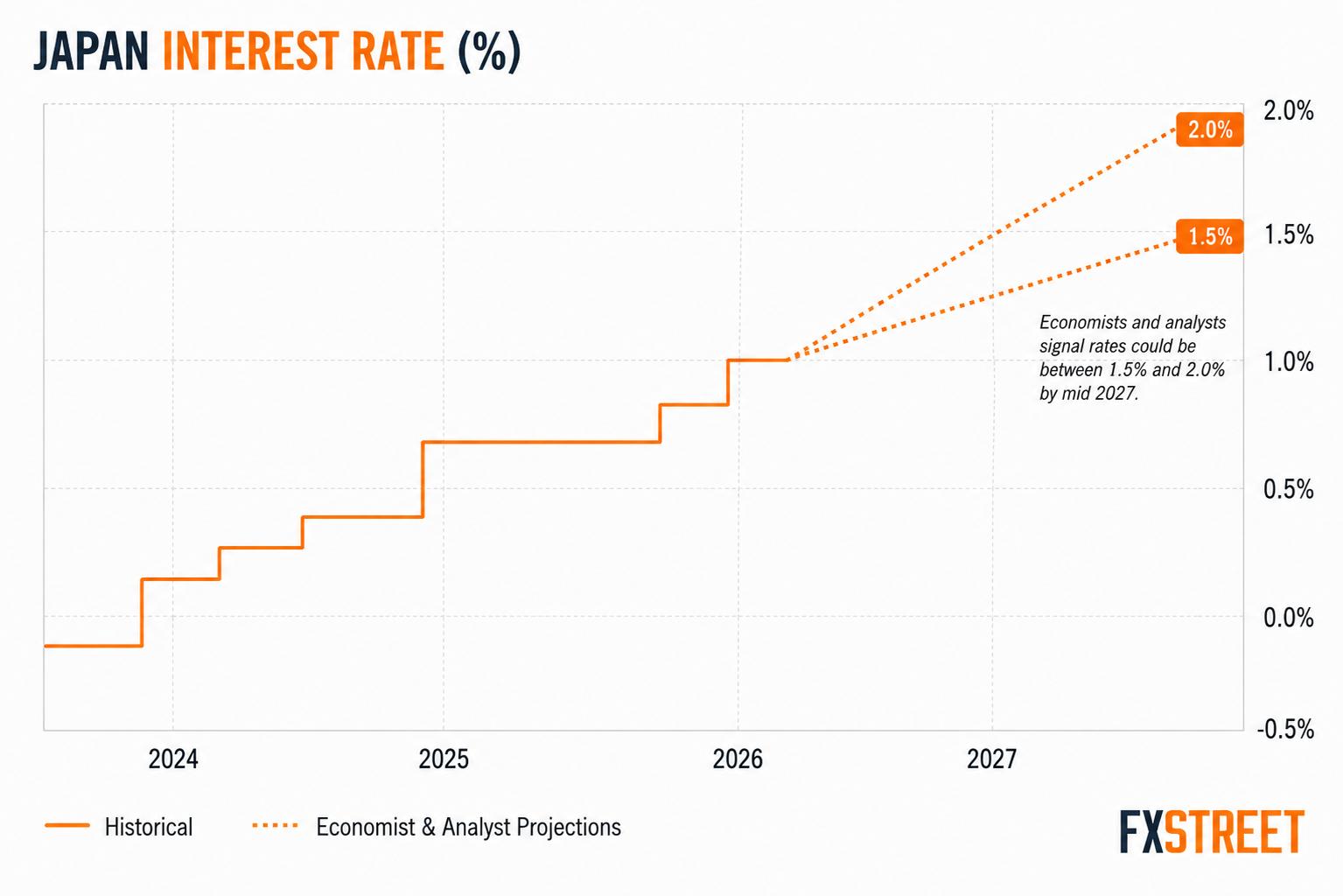
Speaking on the sidelines of the G20 meeting, US Treasury Secretary Scott Bessent recently urged BoJ Governor Kazuo Ueda to take decisive monetary action to anchor inflation expectations and avoid excessive Yen volatility. Moreover, BoJ board member Hajime Takata said that the central bank should conduct rate hikes nimbly to counter intensifying inflationary pressures, rather than adhere to a fixed semi-annual pace anticipated by markets. This reinforced expectations that the Japanese central bank will abandon its slow pace of policy tightening and potentially shift toward more aggressive rate hikes.
Financial markets have largely priced in a 25-basis-point rate hike for the September 17–18 BoJ policy meeting and a potential follow-up move in December. Some analysts, however, see the risk of a jumbo hike to anchor rising inflation expectations, cap long-end yields and ultimately support the Yen. On September 1, the yield on the benchmark 10-year Japanese Government Bond (JGB) shot to the historic 3% milestone for the first time since 1996 amid mounting oil-driven inflation fears. Moreover, persistent concern about Japan's worsening fiscal health further fueled a sell-off in the bond market.
Japan's fiscal woes remain in play
In fact, Japan's initial general-account budget requests are estimated to total around ¥143 trillion (about $894 billion), marking a record high for the fourth consecutive year. The rise in JGB yields signals investor doubts about Prime Minister Sanae Takaichi's ability to balance fiscal responsibility amid her ambitious ¥370 trillion ($2.3 trillion) public-private growth strategy, aimed at aggressively injecting cash into 17 strategic sectors by fiscal 2040. The government also approved in early August a cut to the consumption tax rate on food and beverages from 8% to 1% for a temporary two-year period starting in April 2027 to help consumers reeling from inflation.
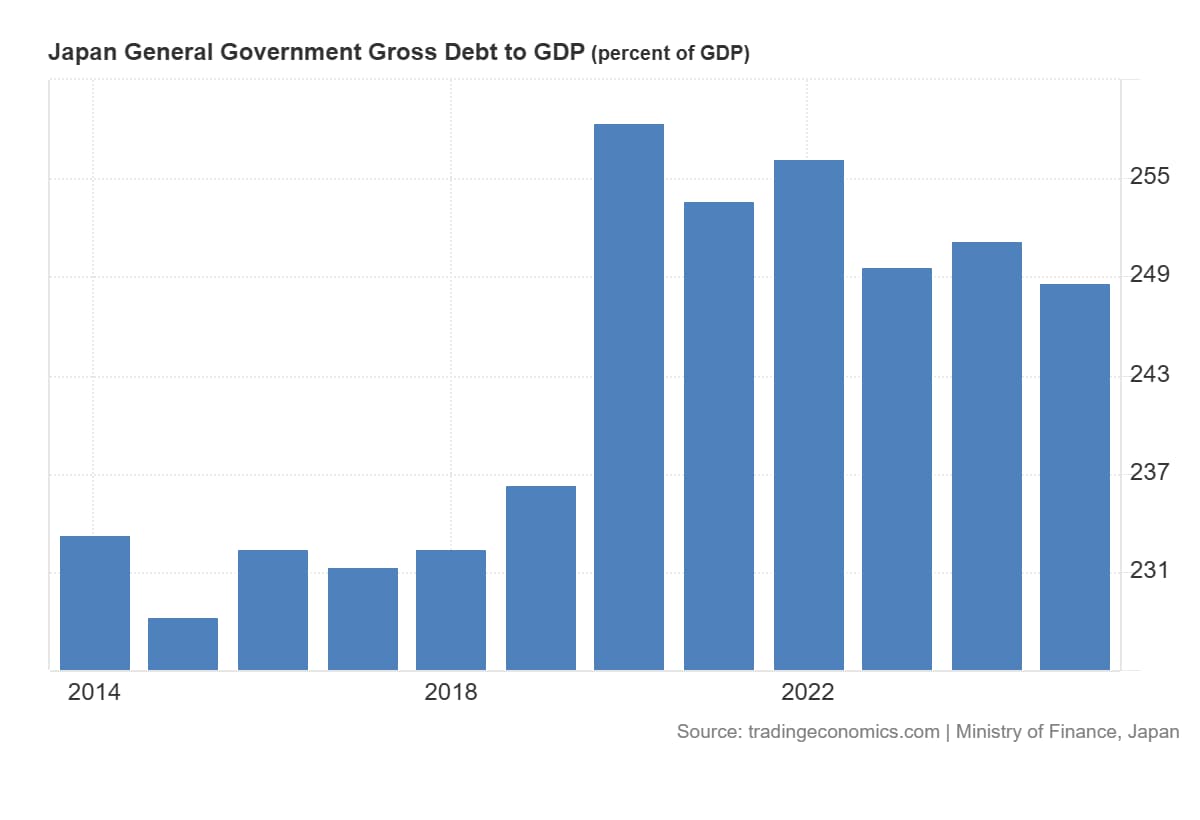
Without clear alternative funding sources, the large-scale spending could worsen Japan's public finances and continue to push JGB yields even higher. This will significantly increase Japan's debt-servicing costs, which are expected to rise to a record ¥36.64 trillion ($230 billion) for fiscal 2027 as the Finance Ministry plans to assume a 3.8% rate for calculating interest payments. Moreover, the primary risk is that rising yields-led higher financing costs could offset the government's extensive investment spending plans and fail to ignite sustainable economic growth.
US-Japan rate gap could also limit JPY gains
This, in turn, would not translate into an increase in tax revenues and would severely worsen Japan’s sovereign debt crisis amid a gross debt-to-GDP ratio of over 200%, the highest in the developed world. Meanwhile, elevated domestic fiscal risks, combined with interest-rate differentials, remain one of the biggest structural headwinds for the Yen. The US still offers substantially higher interest rates than Japan, encouraging investors to use the JPY as a funding currency for global carry trades. This should limit the currency's overall upside potential unless interest rate gaps narrow significantly.
Technical Analysis: Bearish bias builds below 158.28
On the weekly chart, the USD/JPY pair has retreated below the 23.6% Fibonacci retracement of the April 2025-July 2026 rise, which keeps the near‑term bias bearish. Moreover, momentum indicators suggest waning upside pressure and scope for further corrective weakness. In fact, the Relative Strength Index (14) eases to 43, and the Moving Average Convergence Divergence (MACD) histogram remains negative.
Initial support emerges at the 38.2% retracement at 154.74, ahead of a deeper Fibonacci cluster at 151.88 and 149.02, which would come into focus on an extended pullback. On the topside, the 23.6% retracement at 158.28 acts as immediate resistance, with a break above this level needed to ease the bearish tone and open the way toward the 164.00 anchor high as the next major barrier.
(The technical analysis of this story was written with the help of an AI tool. Know more.)
Author

Haresh Menghani
FXStreet
Haresh Menghani is a detail-oriented professional with 10+ years of extensive experience in analysing the global financial markets.
















