Diesel’s record $100 warning: The oil shock hiding in plain sight

The Oil market may look calmer than it did a few months ago, but diesel is sending a very different message.
The US diesel crack spread, the premium of ultra-low sulphur diesel futures over West Texas Intermediate crude (WTI), recently surged above $100 per barrel for the first time, reaching an intraday record of just over $102.00. That is not the price of diesel itself. It is the margin that shows how much more valuable diesel has become compared to the crude Oil used to produce it.
That distinction matters. Brent and WTI still capture the price of crude, but the diesel crack captures something more specific: the market’s ability to turn crude into usable fuel. And right now, that ability looks severely constrained.
The problem is no longer just crude oil
In a classic Oil shock, investors focus on crude supply: if fewer barrels are available, Oil prices rise, inflation expectations move higher and consumers eventually feel the squeeze at the pump.
This time, the signal is more complicated.
Crude Oil prices remain elevated, but they have not fully matched the stress visible in refined products. Diesel margins, gasoline cracks and other refining indicators are flashing a stronger warning than benchmark crude prices alone. Latest data have pointed to elevated refining margins and diesel futures across the US, Europe and Asia as signs of persistent shortages in refined products, even when crude supply itself is not the only constraint.
In other words, the bottleneck has moved downstream.
The issue is not only whether the world has enough crude Oil. It is whether the world has enough working refinery capacity, enough suitable crude grades and enough secure shipping routes to produce and move diesel, jet fuel and gasoline where they are needed.
Why diesel matters more than gasoline
Diesel is not just another fuel. It is the fuel of freight, farming, construction, mining, shipping and parts of heavy industry.
That is why a diesel shock can travel through the economy in a very different way from a simple move in crude. Higher diesel costs can raise trucking rates, agricultural costs, construction expenses and logistics bills. Those increases can then feed into the prices of goods, food and broader inflation.
This is why the diesel crack matters for macro.
A high diesel margin tells us that refiners receive an unusually large premium to produce diesel. That usually happens when inventories are tight, demand is strong, supply is disrupted, or all three are happening at the same time.
At the moment, the market appears to be dealing with all three.
A supply crunch with geopolitical roots
The diesel squeeze has been worsened by disruptions linked to conflict in the Middle East and Ukraine. The record high for US diesel margins was driven by global supply disruptions affecting Middle Eastern and Russian diesel supplies, while US distillate inventories fell to their lowest August level since 1996 despite increased US refinery output.
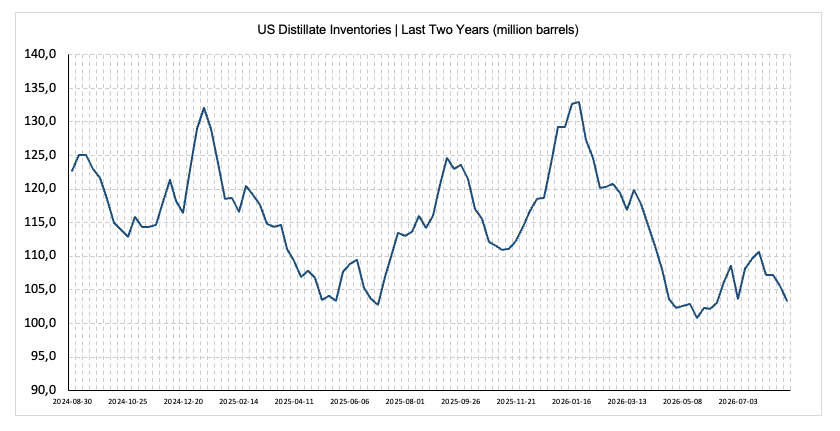
That is the uncomfortable part of the story.
US refiners have had every incentive to produce more fuel because margins are extremely attractive. But if domestic inventories are still tight while refineries are running hard, the problem is not a lack of profit incentive. It is a shortage of available supply somewhere else in the chain.
The market is effectively saying, "Crude is expensive, but refined fuel is scarcer.”
The chart investors should watch
That is why the diesel crack chart is so important.
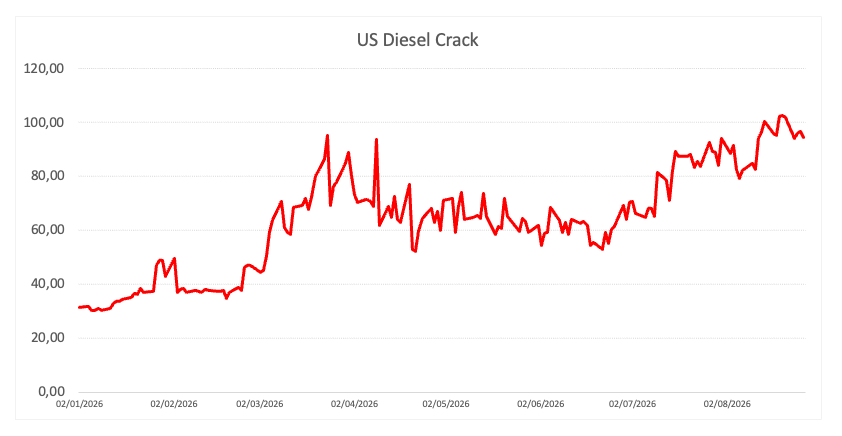
A move above $100 per barrel is not just a technical milestone. It shows that diesel has become extraordinarily expensive relative to crude. Before this year, the diesel crack had reportedly never risen above the high-$80s, with the previous record linked to the energy shock that followed Russia’s invasion of Ukraine.
That makes the latest spike more than a refinery story. It is a macro warning.
If diesel margins remain elevated, crude prices may understate the inflation pressure still moving through the global economy. Central banks could look at softer Oil prices and conclude that energy inflation is fading, while freight, farming and transport costs continue to tell a less comfortable story.
What it means for markets
For refiners, the surge in diesel cracks is a powerful earnings tailwind. High margins mean refiners can buy crude, process it and sell diesel at unusually profitable levels.
For the rest of the economy, the picture is less friendly.
Transport-heavy companies face higher fuel bills. Farmers face higher operating costs. Consumers may eventually see the effect through delivery charges, food prices and goods inflation. And policymakers may have to deal with a more stubborn type of energy inflation, one driven less by crude oil itself and more by a shortage of refined products.
That is the central message from the diesel market: the energy shock has not disappeared. It has changed shape.
Crude Oil prices still matter, but the bigger warning may now be coming from the refining system. Diesel margins above $100 suggest pressure has moved from the Oil well to the refinery gate, and from there, it can spread quickly through the real economy.
Author

Pablo Piovano
FXStreet
Born and bred in Argentina, Pablo has been carrying on with his passion for FX markets and trading since his first college years.
















