US Durable Goods Orders rebound in May, business spending ebbs
- Overall goods orders rise, April's total revised higher.
- Business spending slips, inhibited by product and material shortages.
- Manufacturing output scarcity, restrictions contribute to inflation.


Business orders dipped in May as component shortages bedeviled manufacturers but shipments of these goods kept the capital equipment spending component of gross domestic product healthy.
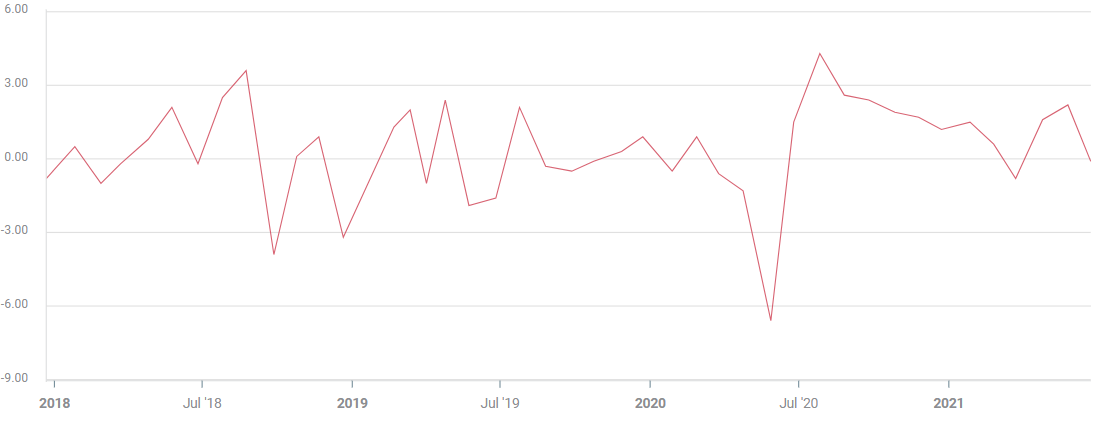
Non-defense Capital Goods Orders, a well-known proxy for business investment, slipped 0.1% in May, according to US Census data on Thursday, after a 2.2% gain in April. These core capital goods had been forecast to rise 0.6%. Orders were 16.3% higher on the year.
Shipments of these goods increased 0.9% in May following a 1% gain in April.
Business investment has had a good half year, averaging 0.8% a month, and an even better year, growing 1.6%.
Nondefense Capital Goods ex-Aircraft
The recovery from last year’s lockdowns, and the drop in consumption has prompted a shift to manufacturing and goods purchases. Government assistance and stimulus programs aimed directly at the consumer have helped spending rebound.
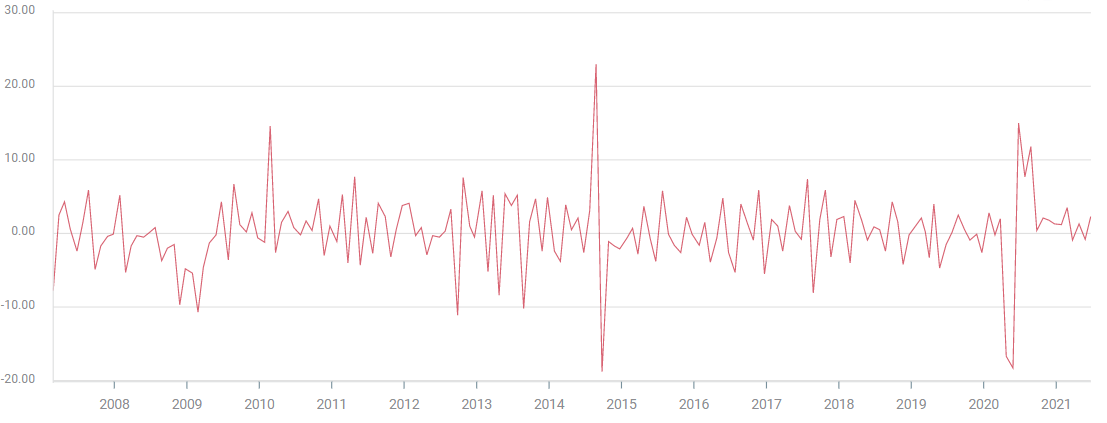
Overall demand for Durable Goods rose 2.3% in May, a bit under the 2.7% forecast. April’s total was adjusted to- 0.8% from -1.3%. These orders were boosted by a 7.6% rise in transportation sector purchases.
Durable Goods Orders
Manufacturing disruption
Households have more than $2 trillion in savings and with consumption soaring and many product inventories low after 16 months of disruptions, manufacturers will likely continue investing in plant and equipment to boost production. A widespread shortage of workers, probably exacerbated by the extended unemployment benefits from the Biden administration, is also contributing to manufacturing shortfalls.
A worldwide shortage of computer chips is contributing to the scarcity of new cars and trucks and many other products and is expected to last for most of the year.
Factory output accounts for about 12% of US GDP. Manufacturing output has been hit with labor, component and raw materials shortages in the aftermath of last year’s lockdown, which are adding to the sharp rise in inflation this year.
Durable Goods orders excluding the transportation sector rose 0.3%, missing the 0.7% forecast. April’s placements were revised to 1.7% from 1%. Orders ex-Defense rose 1.7% and the prior set was adjusted to 0.5% from flat.
Sales of cars and trucks rose 2.1% in May, partially reversing the 8.1% drop in April. Commercial aircraft orders jumped 27.4% in May. Boeing Company of Chicago, which accounts for the bulk of US aircraft business, said it received 73 new orders in May, almost three times the 23 in April. Government accounting for GDP adds Boeing's orders in the month they are placed rather than over the extended delivery schedule.
Three of the four categories for Durable Goods Orders were revised substantially higher in April. This mimics the results in April’s Retail Sales figures, released on June 15. Overall sales rose to 0.9% from flat, Sales ex Autos climbed to flat from -0.9% and the Control Group jumped to -0.4% from -1.5%.
Markets had little reaction to the goods orders as they restate the Retail Sales data released two weeks ago. The dollar was generally higher after the Bank of England issued a dovish Monetary Policy Committee statement which contrasted to the Federal Reserve outlook on June 16.
Premium
You have reached your limit of 3 free articles for this month.
Start your subscription and get access to all our original articles.
Author
Joseph Trevisani
FXStreet
Joseph Trevisani began his thirty-year career in the financial markets at Credit Suisse in New York and Singapore where he worked for 12 years as an interbank currency trader and trading desk manager.