US Dollar Weekly Forecast: Enter Jackson, mind the (budget) Hole
- The US Dollar has plummeted to fresh three-month lows on Friday.
- The US Treasury’s buyback undermined the sentiment around the buck.
- Investors will now gear up for the usual Jackson Hole Symposium.

The week that was
It was not geopolitics, the US-Japan joint FX intervention to support the beleaguered Japanese currency or the omnipresent bets on what the Federal Reserve (Fed) might do in the second half of the year that kept the US Dollar (USD) well on the back foot over the past five days. The new kid on the block this time is the US bond market, a new player who has been growing in importance and simmering on the back burner.
Indeed, following Wednesday’s announcement by the US Treasury Secretary Scott Bessent that the Treasury will buy back larger amounts of older, less-liquid long-dated government bonds, the Greenback has deepened its retracement, breaching below the 99.00 support level, and eventually extending that move to the vicinity of the 98.50 zone for the first time since mid-May in the second half of the week.
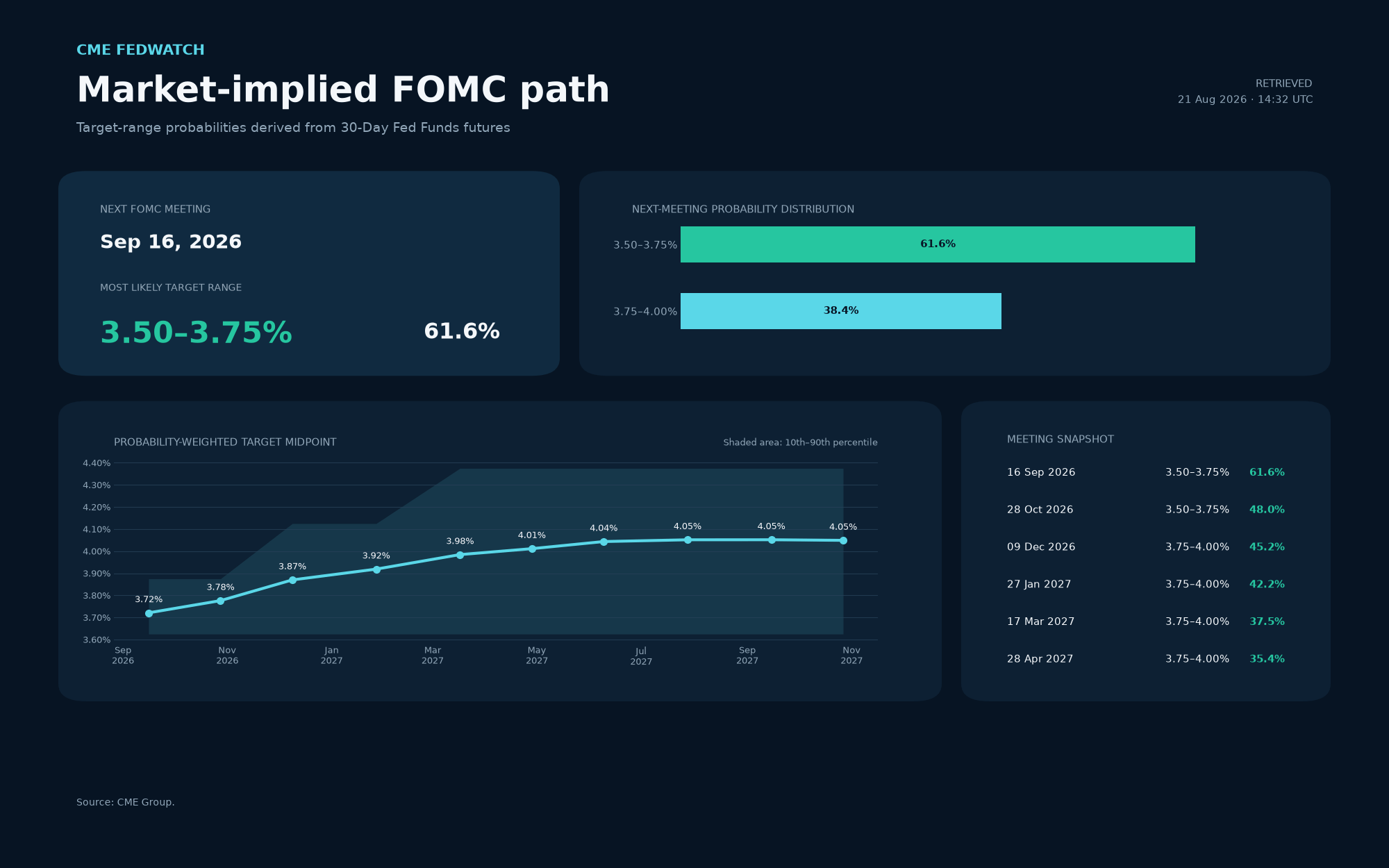
Furthermore, cautious comments from Fed rate setters and the widely anticipated hawkish bias in the FOMC Minutes of the Fed’s July 28-29 meeting did nothing to mitigate the selling fervour hurting the buck, which remained at the mercy of renewed fiscal concerns.
The Treasury’s bond-market band-aid
The US Treasury is set to increase the size of its buyback operations for older, less-liquid long-dated government bonds.
The aim is to improve market liquidity. By purchasing ‘off-the-run’ securities that trade less frequently than newer issues, the Treasury can make it easier for dealers and investors to trade them, reducing the risk of market dislocations.
It is important, however, not to confuse the operation with quantitative easing. Treasury is buying back existing securities to improve market functioning and manage its debt profile; the Federal Reserve is not expanding the monetary base by purchasing bonds.
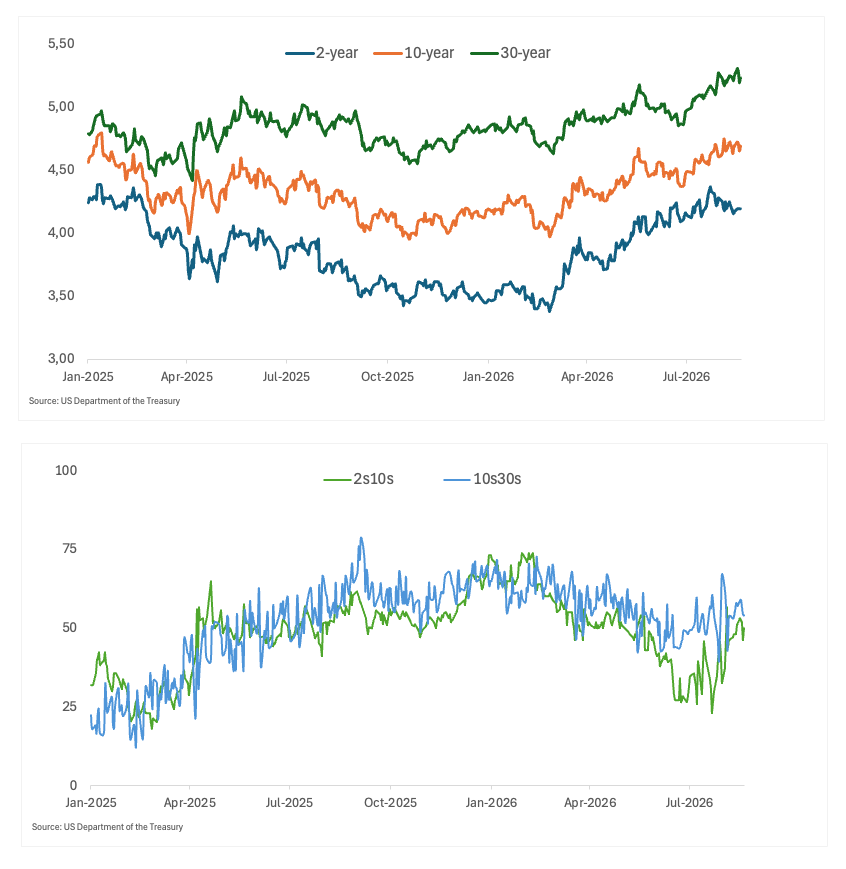
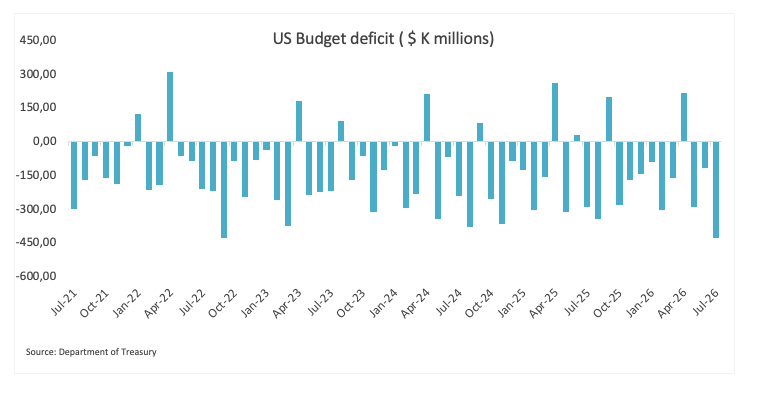
The announcement came against a challenging fiscal backdrop. Large and recurring deficits keep Treasury issuance elevated, adding to concerns about the supply of long-dated debt and the compensation investors demand to hold it.
From a market perspective, larger buybacks are modestly supportive for long-dated Treasuries. They may narrow liquidity premiums and temporarily ease upward pressure on long-term yields. That was the initial reaction: demand for longer-dated bonds increased, yields fell and the US Dollar lost ground.
That said, the impact on the Greenback was indirect, working through the bond market and investor sentiment rather than through any form of currency intervention. Lower long-term yields reduced the yield advantage of US assets, while the decision also revived concerns about fiscal pressure and the authorities’ discomfort with disorderly conditions in the Treasury market.
The broader yield-curve reaction will also matter. If long-term yields rise because of fiscal or inflation concerns while front-end yields remain relatively stable, the result would be a bear steepener. That can be negative for the US Dollar when higher long-term yields reflect rising risk premia rather than stronger expectations for Fed tightening.
Fed officials deliver a mixed but broadly cautious message
Fed officials Mary Daly (San Francisco) and Alberto Musalem (St Louis) offered different emphases on Thursday, although both agreed that inflation remains above target and that policy must remain focused on restoring price stability.
Musalem struck a hawkish tone, arguing that underlying inflation remains between 2.5% and 3% and is still too high. He said current interest rates imply a lower probability of returning inflation to 2%, suggesting that an earlier rate hike could prevent the need for more aggressive action later. He also pointed to strong growth, investment and elevated input costs as factors influencing the bond market, while declining to pre-judge the September FOMC meeting.
Daly was more measured. She said that recent jobs and inflation data had not materially changed her outlook and that the labour market was stable, with no clear signs of deterioration or evidence that it was fuelling inflation. She supported July’s rate hold and said policy was in a good place to watch the data, while noting that higher long-term yields partly reflected global forces and therefore offered a less clear signal for the Fed.
Both officials rejected concerns about the Fed’s credibility and stressed the importance of maintaining monetary-policy independence from fiscal policy. Overall, the remarks were mixed but leaned cautiously hawkish: Musalem favoured vigilance against persistent inflation, while Daly appeared comfortable waiting for further evidence before changing policy.
FOMC Minutes reveal a stronger hawkish undercurrent
Most participants supported keeping interest rates unchanged at the July 28–29 meeting, although several favoured an increase. The discussion nevertheless revealed broad concern that policy might not be restrictive enough to bring inflation back to the 2% target.
Many participants said higher rates would probably be necessary if inflation failed to decline, while some argued that tighter financial conditions were already warranted given strong economic growth and expectations that the Fed would adopt a more restrictive stance. Several officials who supported a hike believed it could help prevent the need for larger increases later.
The Minutes also noted that recent price increases had been broad-based across goods and services. The Fed staff’s inflation outlook remained largely unchanged from June, although they described the economic outlook as slightly weaker.
Almost all officials supported retaining the commitment to deliver price stability. Chairman Kevin Warsh suggested that holding six meetings a year could allow more information to accumulate between decisions, but the minutes confirmed that no change to the 2026 meeting schedule had been agreed.
Overall, the Minutes carried a cautiously hawkish tone. While the majority still backed the July hold, the debate showed that a September hike remains firmly in play if inflation does not resume its decline.
Dollar longs retreat, but conviction remains
Non-commercial positioning in the US Dollar softened modestly in the week ending August 11, according to the latest report from the Commodity Futures Trading Commission (CFTC). That said, net speculative positioning fell by nearly 1.1K contracts to around 21.4K contracts, reversing part of the previous week’s increase, while the 4-week change eased to +8,230 contracts from +9,230 contracts.
Open interest also declined modestly to nearly 49.5K contracts. Since net positioning and participation decreased together, the move appears more consistent with some long liquidation or a general unwinding of exposure than with a significant wave of fresh USD shorts.
Speculative exposure was virtually unchanged at 43.21%, while the exposure percentile rose to 66.6, and the net-position percentile remained elevated at 73.9. This suggests that USD positioning is still historically supportive, although the latest weekly deterioration indicates that bullish momentum has become less forceful.
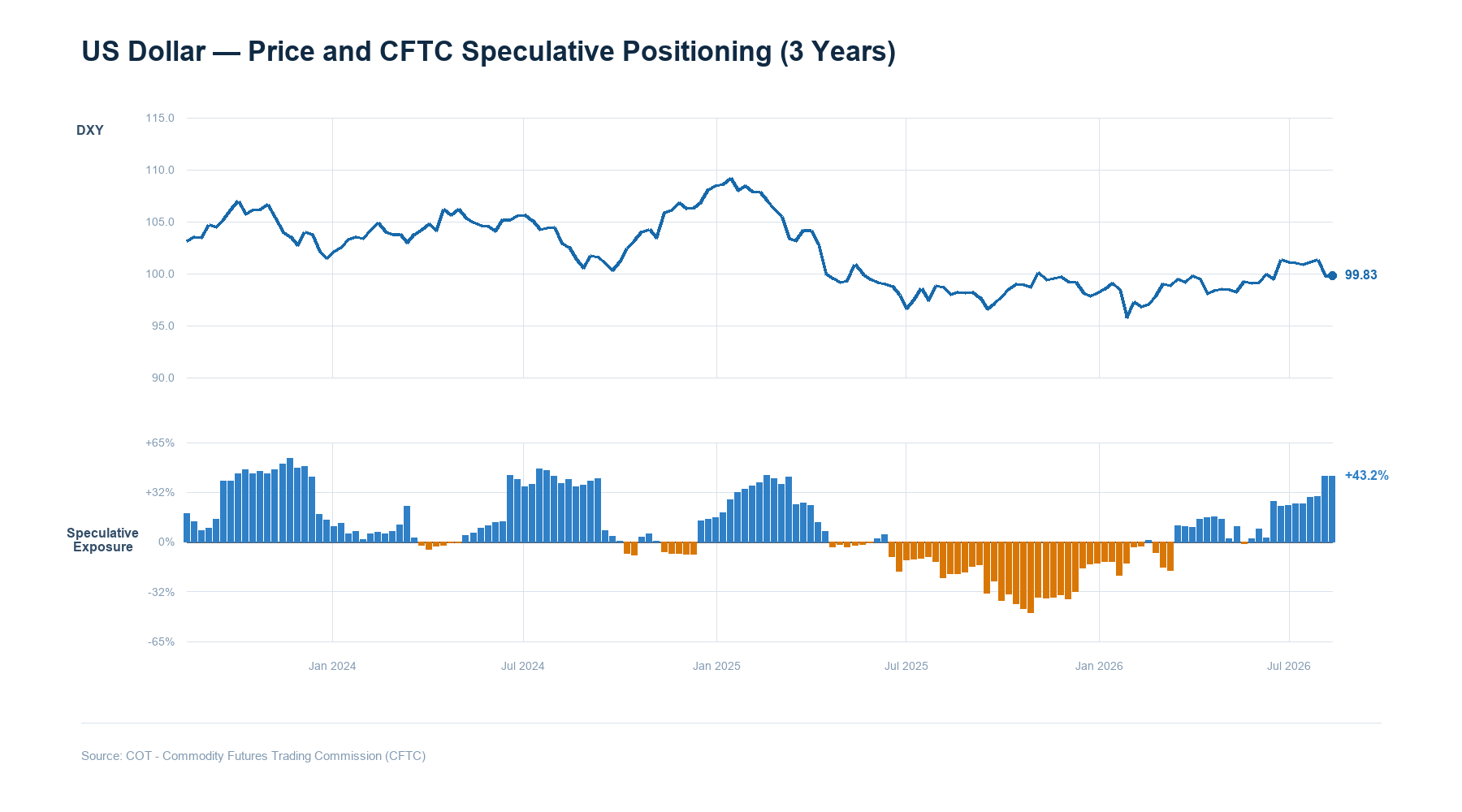
Overall, the broader USD positioning backdrop remains constructive, but the latest figures point to consolidation rather than renewed conviction. The Greenback still has a sizeable net-long position supporting it, but that support could weaken further if the recent liquidation morphs into a more sustained unwind.
Next on tap for the buck
Next week will focus on the Jackson Hole Symposium, although Chair Warsh is likely to deliver the same tone as he did at the latest FOMC meeting in late July.
Data-wise, the preliminary annual revision of Nonfarm Payrolls should take centre stage, while another estimate of the Q2 GDP Growth Rate and inflation tracked by the Fed’s preferred gauge, the Personal Consumption Expenditure (PCE), is expected to keep investors entertained.
The Dollar’s next test is fiscal, not monetary
The last few months have shown a common problem: it’s one thing to drive inflation down from its top, but it’s proving considerably more difficult to get it back all the way to goal.
That last phase of the disinflation process might turn out to be a key source of support for the US Dollar in the months ahead, especially if markets have been overly optimistic on how soon the remaining price pressures will disappear.
Underlying inflation remains sticky, and predictions that interest rates will stay higher for longer should continue to underpin the Greenback… but what about the fiscal side of the story?
US Dollar FAQs
The US Dollar (USD) is the official currency of the United States of America, and the ‘de facto’ currency of a significant number of other countries where it is found in circulation alongside local notes. It is the most heavily traded currency in the world, accounting for over 88% of all global foreign exchange turnover, or an average of $6.6 trillion in transactions per day, according to data from 2022. Following the second world war, the USD took over from the British Pound as the world’s reserve currency. For most of its history, the US Dollar was backed by Gold, until the Bretton Woods Agreement in 1971 when the Gold Standard went away.
The most important single factor impacting on the value of the US Dollar is monetary policy, which is shaped by the Federal Reserve (Fed). The Fed has two mandates: to achieve price stability (control inflation) and foster full employment. Its primary tool to achieve these two goals is by adjusting interest rates. When prices are rising too quickly and inflation is above the Fed’s 2% target, the Fed will raise rates, which helps the USD value. When inflation falls below 2% or the Unemployment Rate is too high, the Fed may lower interest rates, which weighs on the Greenback.
In extreme situations, the Federal Reserve can also print more Dollars and enact quantitative easing (QE). QE is the process by which the Fed substantially increases the flow of credit in a stuck financial system. It is a non-standard policy measure used when credit has dried up because banks will not lend to each other (out of the fear of counterparty default). It is a last resort when simply lowering interest rates is unlikely to achieve the necessary result. It was the Fed’s weapon of choice to combat the credit crunch that occurred during the Great Financial Crisis in 2008. It involves the Fed printing more Dollars and using them to buy US government bonds predominantly from financial institutions. QE usually leads to a weaker US Dollar.
Quantitative tightening (QT) is the reverse process whereby the Federal Reserve stops buying bonds from financial institutions and does not reinvest the principal from the bonds it holds maturing in new purchases. It is usually positive for the US Dollar.
Author

Pablo Piovano
FXStreet
Born and bred in Argentina, Pablo has been carrying on with his passion for FX markets and trading since his first college years.