US Dollar Weekly Forecast: Down for the week, but far from defeated
- The US Dollar traded on the back foot after four straight weeks of gains.
- US consumer and wholesale prices ran hotter in September.
- Investors now see the Fed keeping its rates unchanged in October.
The week that was
Despite hitting new highs earlier this week, the US Dollar (USD) lost some upside traction in the last couple of days, ending the week in the red for the first time after four advances in a row.
The Greenback’s correction does look more sentimental than fundamental.
Let’s see:
- The geopolitical landscape remained pretty much unchanged, even with rising tensions toward the end of the week.
- Crude Oil prices kept their march north unabated with December WTI futures trading within striking distance from the psychological $100/barrel mark.
- Expectation for extra tightening by the Federal Reserve in Q4 looks firm. NY Fed Williams’ comments seem to have dampened investors' expectations for a rate hike later this month, although inflation data remained well-aligned with those advocating for a tighter stance.
Against that backdrop, the US Dollar Index (DXY) has managed to trade at levels just shy of the 103.00 hurdle earlier this week, although the move fizzled out in the second half, leaving the index with decent losses for the week.
In addition, the Greenback found no support in the US money market, where Treasury yields navigated a downward trend in the last few days, correcting from tops recorded in late September and early October.
It is all about inflation
The release of US inflation figures gauged by the Consumer Price Index (CPI) was the salient event this week, and the September data surprised to the upside.
Indeed, the CPI ran hotter than expected last month, rising 3.6% from a year earlier and 2.6% vs. the same period in 2025 when excluding food and energy costs, the so-called core inflation.
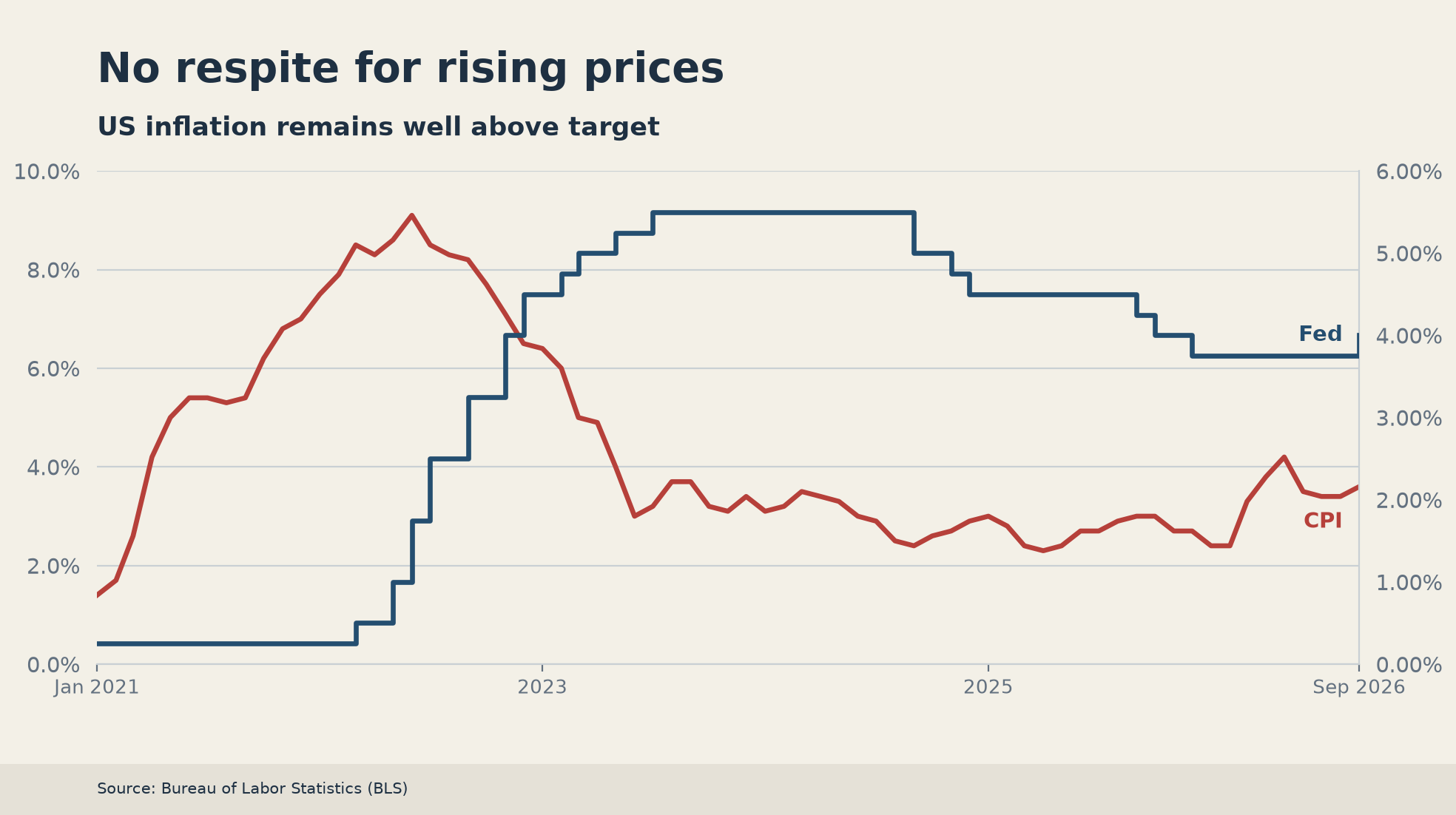
US consumer prices are currently running significantly above the Fed’s 2% target, and it appears that markets will require more than just a few months of apparent disinflationary pressure before considering a steady approach from the Fed, let alone the possibility of rate cuts.
Rate hikes are alive, but timing remains uncertain
Fed officials broadly maintained a tightening bias this week, arguing that inflation remains too high and financial conditions do not yet appear restrictive enough. However, the debate is increasingly about timing and pace: some policymakers favour relatively quick, incremental hikes, while others see no urgency and want more data before acting.
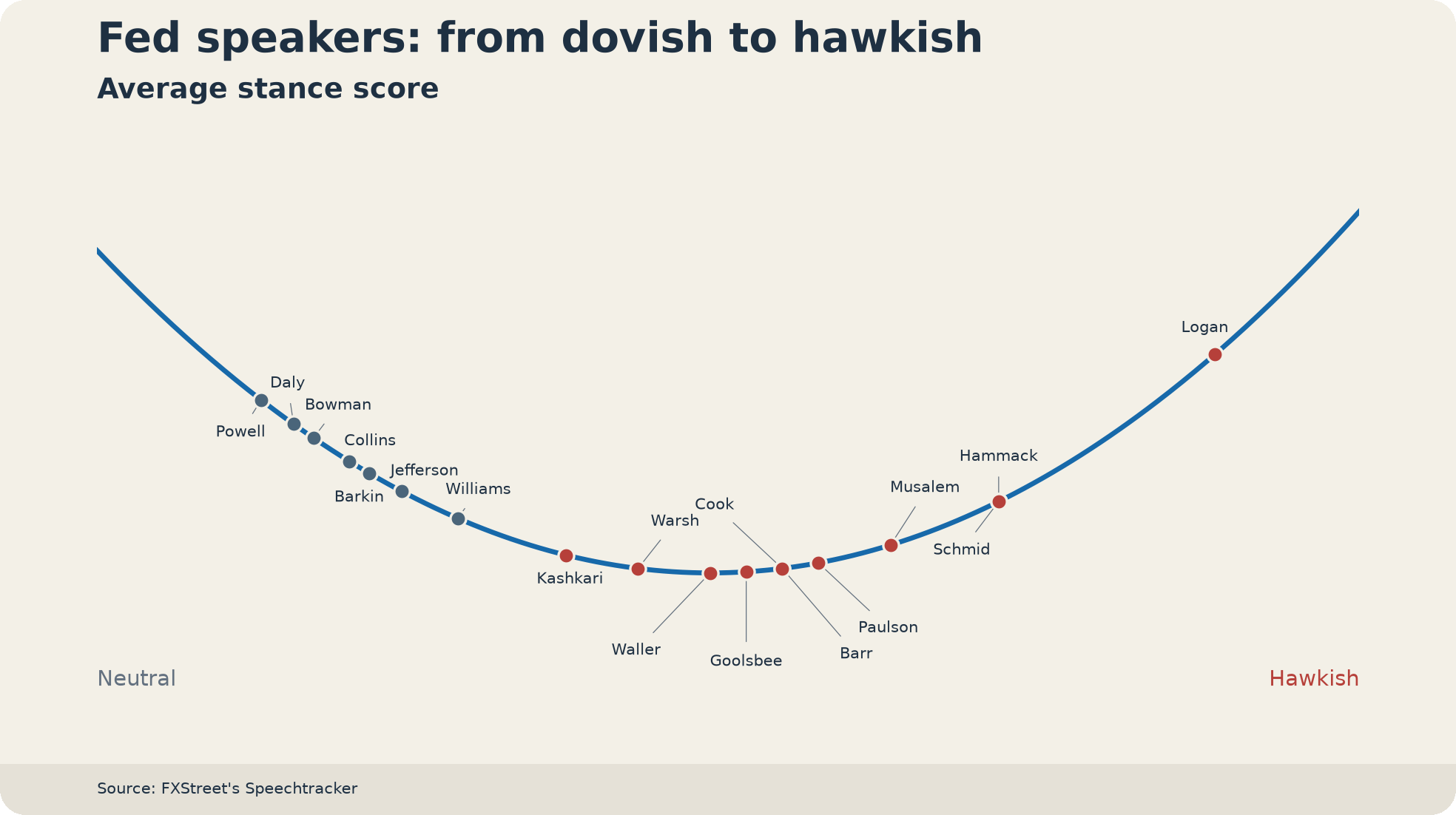
Beth Hammack (Cleveland) said broad-based inflation and continued growth require restrictive monetary policy, with trend inflation still in the mid-to-high 2% range. She favours smaller rate adjustments delivered relatively quickly and warned that businesses planning price increases beyond their input-cost pressures could signal an inflationary mindset. Hammack also said financial conditions did not appear restrictive at present.
In addition, Susan Collins (Boston) expects rates to rise “a bit further” by year-end, citing elevated risks of inflation remaining above 2%, high energy prices and pressure from data centre investment. Mary Daly (San Francisco) said further hikes were more likely than not, although she argued that the Fed was not in a position of urgency and should take time to make a careful decision. Alberto Musalem (St. Louis) likewise said more monetary-policy firming would be required.
Other officials struck a more measured tone. John Williams (New York) sees no need for a rate increase in 2027 and still expects inflation to slow significantly next year, while Austan Goolsbee (Chicago) said policymakers should focus on the trend rather than overreact to a single CPI report. Christopher Waller (Board of Governors) supported further hikes but said they did not need to come at consecutive meetings. Chair Kevin Warsh also refused to pre-judge the October or December decisions.
The overall signal is hawkish but flexible. Persistent services and core inflation, strong demand, energy pressures and AI-related investment are keeping further tightening on the table, but the Fed remains divided over how quickly to proceed. The next moves will depend on whether inflation begins to cool and whether higher bond yields are already delivering part of the required restraint.
Positioning holds steady as conviction remains limited
Following Commodity Futures Trading Commission (CFTC) data for the week ending October 6, USD bullish positioning was broadly unchanged. Indeed, non-commercial net longs increased to just over 12K contracts, while the four-week change shows they remain nearly 5.6K contracts below their level a month ago. So the bullish mood is no longer deteriorating sharply, but it has not yet been rebuilt either.
Additionally, open interest rose to almost 51.1K contracts. The much larger increase in participation compared with net positioning suggests broader activity in USD futures, but only marginal net buying. This points to cautious repositioning rather than a decisive return of bullish conviction.
Further data showed the speculative exposure eased to 23.51%, with its percentile falling to 43.6. The Net Position Percentile edged higher to 49, leaving both measures close to neutral historical levels. USD positioning remains net long, but it is neither crowded nor particularly supportive from a historical perspective.
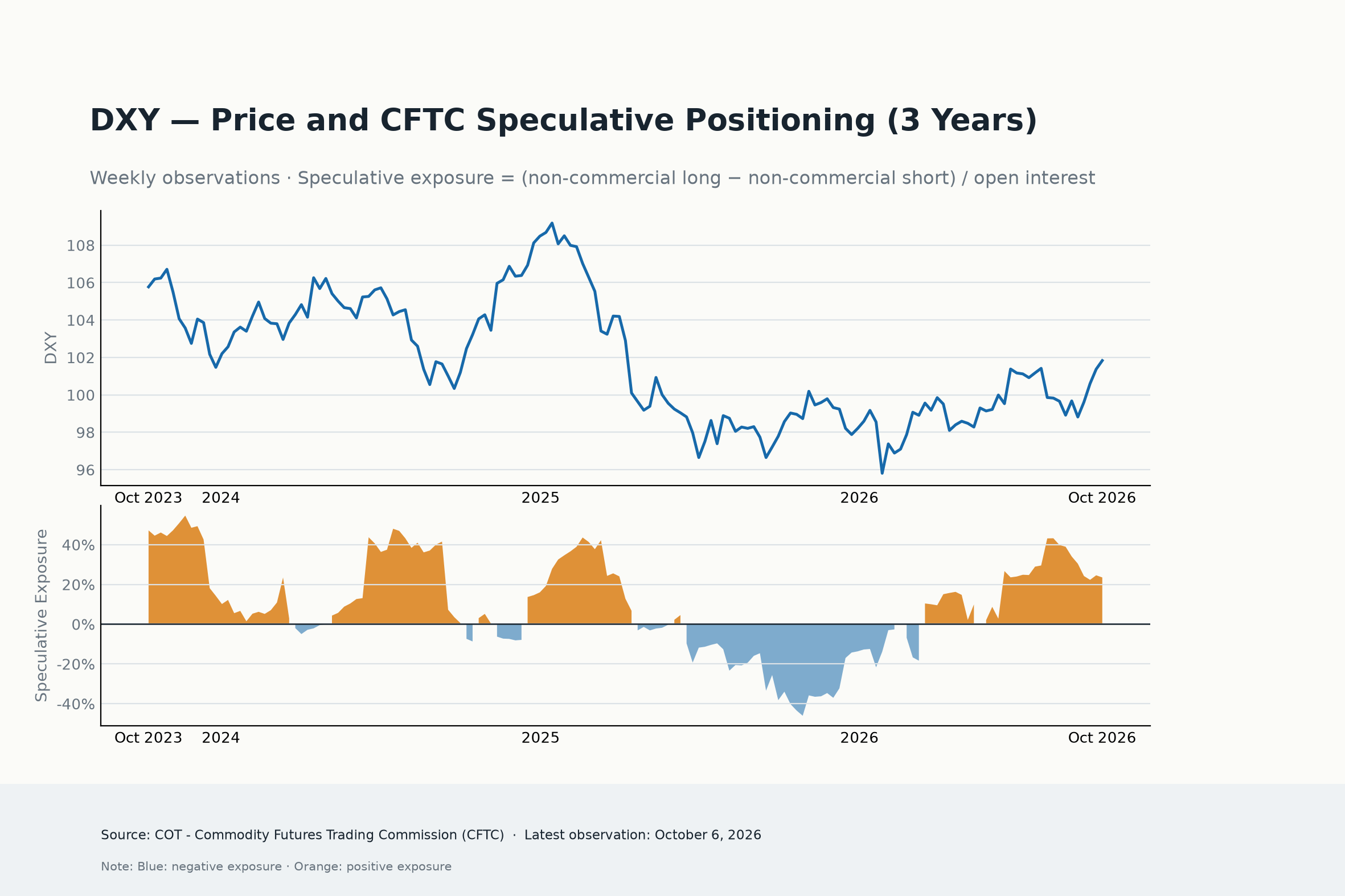
All in all, the Greenback’s positioning backdrop remains stable but unconvincing. Higher open interest suggests that interest in USD exposure is returning, yet the negligible weekly increase and still-negative four-week trend show that traders are testing the waters rather than aggressively rebuilding long positions.
What’s next for the US Dollar
Next week is set to be light in terms of data, with only preliminary gauges of business activity for the current month expected to deliver some entertainment to market participants.
No news is expected from Fed officials as the Fed enters its blackout period ahead of the October 27-28 gathering.
Buy the dip
The US Dollar may have given back a little ground this week, but little suggests its recovery has run its course. Inflation is still stubbornly high, the Fed is still leaning toward more tightening, and rising energy prices are hardly a help.
The question now is not if the Fed will raise rates again, but when. That uncertainty could keep the Greenback on an uneven path in the near term, particularly as investors continue to take their cues from Treasury yields and geopolitical developments.
There is also something worth watching in the positioning data. Despite the Dollar's recent gains, speculative investors have shown little enthusiasm for rebuilding their bullish bets. That leaves room for fresh buying if upcoming US data reinforce the case for higher interest rates. On the other hand, the Fed's reluctance to commit to a timetable could make investors think twice before chasing the buck higher.
As for techs, a move back above 102.50 would bring the 103.00 barrier into focus. Clearing that level could set the stage for a push toward 104.00 in the coming weeks. If the recovery continues to struggle, however, a retreat toward 101.50, or even 101.00, cannot be ruled out.
Looking toward year-end, we still see more upside than downside for the Dollar, although another sustained rally is unlikely to come without interruptions. Inflation, the Fed's tightening bias and geopolitical uncertainty should continue to lend support. A meaningful slowdown in US activity or a convincing decline in inflation could change that picture, especially if Treasury yields follow suit.
Until then, the Dollar's recent weakness looks more like a pause than a change in direction.
Author

Pablo Piovano
FXStreet
Born and bred in Argentina, Pablo has been carrying on with his passion for FX markets and trading since his first college years.

















