US CPI reverses to new four-decade high in May threatening GDP
- CPI jumps to 8.6% for the year, core CPI to 6.0%, both beating forecasts.
- Oil, gasoline and food costs add to consumer pain, real wages cut 3%.
- Equites plunge, Treasury yields and the US dollar rise.

A consumer recession crept a bit closer in May as US inflation accelerated to its fastest pace in more than 40 years and real wages declined for the 15th consecutive month.
The Consumer Price Index (CPI) reversed its April decline, climbing to 8.6% for the year in May, outstripping the forecast that it would be unchanged from April’s 8.3%. Core inflation, which excludes food and energy prices, rose 6.0%, beating its 5.9% projection, though below April’s 6.2% pace. The monthly gains of 1.0% for overall CPI and 0.6% for core were also higher than their respective 0.7% and 0.5% estimates.
CPI
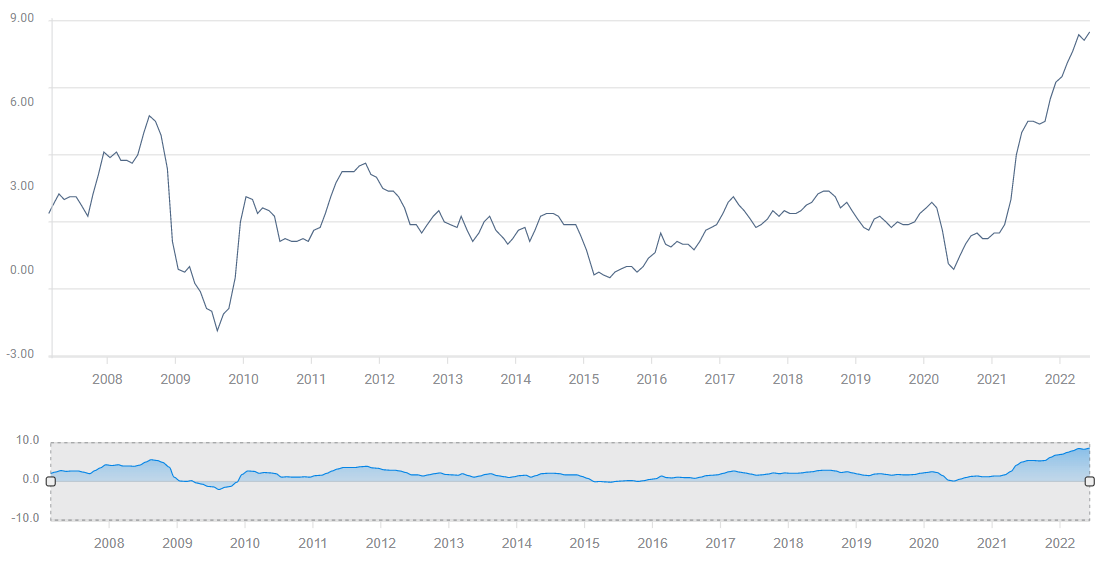
Consumer purchasing power took another hit in May as real wages, which correct for inflation, dropped 0.6% and are 3.0% lower for the year.
Basic expenses for American households, food, shelter and transportation were notably higher.
Prices for all forms of energy rose 3.9% in May and are up a remarkable 34.6% for the year. The national average for a gallon of regular gasoline jumped 10.6% from the first week of the month to the last.
Shelter costs, which include home and rental prices, climbed 0.6% in May, the largest one month gain in 18 years. Last month's 5.5% annual increase in shelter expenses was the most since February 1991.
In probably what is most difficult and most evident to the consumer, food costs jumped 1.2% in May and are 10.1% higher over the last year.
The relentless increase in prices and the concomitant contraction of purchasing power, directly threaten the consumer base of the US economy. Sooner or later, and logically sooner is fast approaching, American households will be forced to pull back on discretionary spending as food, energy and shelter costs drain family budgets. With the economy expanding at just 0.9% in the second quarter, according to the Atlanta Fed’s latest estimate, a small drop in consumption could drive GDP into contraction, ensuring a recession in the first half of the year.
Markets responded in expected fashion with the Dow shedding almost 600 points in early New York trading, the S&P 500 tumbling 1.94% and the NASDAQ falling 2.32%.
Treasury yields continued their two-week ascent. The 10-year note added 6.9% basis points to 3.111%, just below its March 4 top at 3.13% and the 2-year climbed 12.8 points to 2.945%.
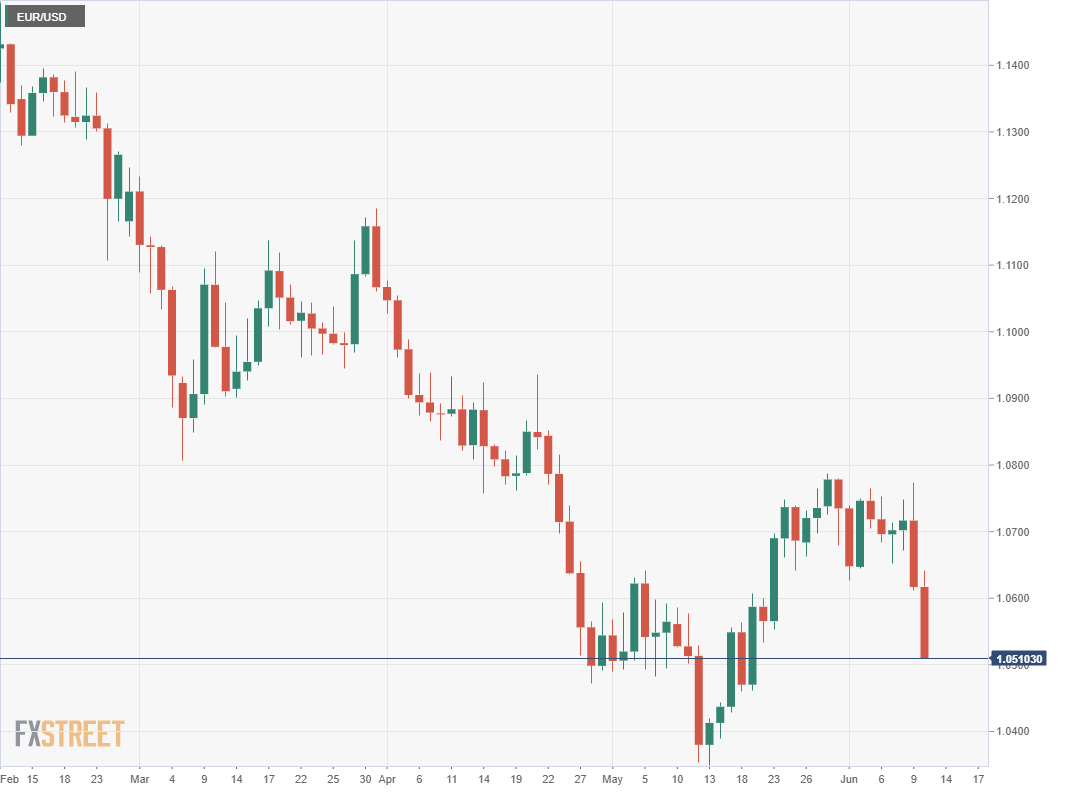
The dollar was higher in all major pairs, with the USD/JPY holding steady above 134.00 and the EUR/USD falling back below 1.0600.
Premium
You have reached your limit of 3 free articles for this month.
Start your subscription and get access to all our original articles.
Author

Joseph Trevisani
FXStreet
Joseph Trevisani began his thirty-year career in the financial markets at Credit Suisse in New York and Singapore where he worked for 12 years as an interbank currency trader and trading desk manager.