US Consumer Spending Crashes in March: What will April bring?
- Personal spending falls by the most on record in March.
- Extensive job losses from business closures punish consumption.
- Markets are carefully watching the reopening of several US states.

Consumer spending, the engine of the American economy, plunged by the largest amount on record as government ordered business closures have thrown almost 20% of the workforce onto the unemployment rolls
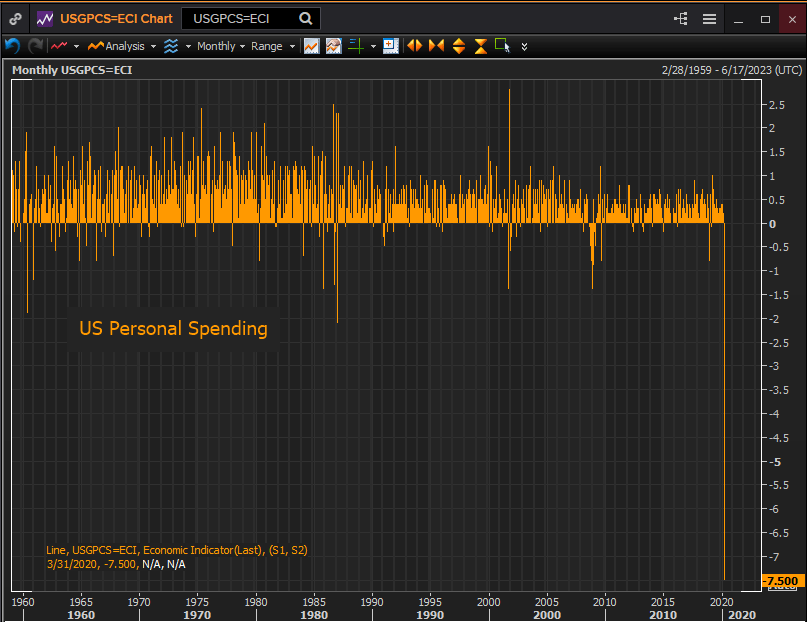
Personal spending, which accounts for about two-thirds of US economic activity, dropped 7.5% in March according to the Bureau of Economic Analysis, in a series that goes back to 1959. The median estimate from the Reuters survey of economists was -5% with a range of -0.6% to -14.9%. Adjusting for inflation consumption fell 7.3%, also the most on record.
Reuters
Dismal data
This number adds to the dismal accounting of the cost of the business shutdowns and social restrictions that have been mandated by many state governors in the effort to halt the spread of the Coronavirus. Retail sales reported by the Census Bureau plunged 8.7% in March and durable goods orders fell 14.4%, the first a record, the second a runner-up in 28 years, and industrial production plummeted 5.4%, a 75 year record in a series that started in1919.
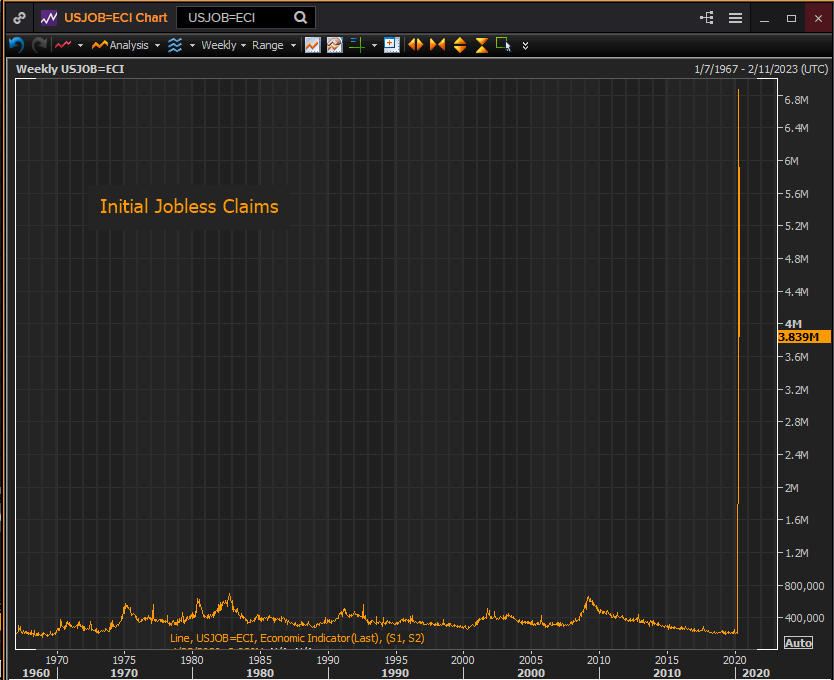
Initial jobless claims rose 3.839 million in the April 25 week, and while this is 44% drop from the peak four weeks ago, it brought the total claims in the past six weeks to 30.292 million.
Reuters
Gross domestic product which shrank 4.8% in the first quarter even though the restrictions did not begin in most states until mid-month, and had been expanding at an estimated 2.7% in January and February, is another measure of the absolute collapse in consumption. In its first estimate for the second quarter the Atlanta Fed GDPNow model posits a 12.1% decline.
Many of the 30 million people have been forced from their jobs and into dependence on unemployment insurance and savings are lower paid hourly workers in the restaurant, hotel and retail industries that have been ordered closed.
States ending restrictions
A number of states, some under public pressure and several who have had small difficulty with the virus have begun to lift their business and social restrictions. But the expected slow return to normal levels of consumption may mean that many small businesses will be unable to recover and their jobs permanently lost.
A good deal of the recovery depends on the attitudes and desires of ordinary people. Americans have long been known as the most optimistic of people, that outlook is about to receive a severe test.
Conclusion: Second quarter market blues
There are three overriding questions for the equity, currency and credit markets. How deep will the second quarter contraction be? How much of it has been priced into the markets already by the shock of the initial claims numbers? Finally, and most important will the attempted reopening of economic life in Florida, Georgia, Colorado and elsewhere succeed? If it does then other states, even New York and California will be forced to follow and the possibility of a rapid recovery improves measurably.
The current and coming spate of atrocious economic figures will matter a great deal less if the markets have confidence that recovery is possible and underway.
Author

Joseph Trevisani
FXStreet
Joseph Trevisani began his thirty-year career in the financial markets at Credit Suisse in New York and Singapore where he worked for 12 years as an interbank currency trader and trading desk manager.