US Consumer Confidence slips in April, hope ticks up
- Conference Board Confidence drops to 107.3 instead of rising to 108.00.
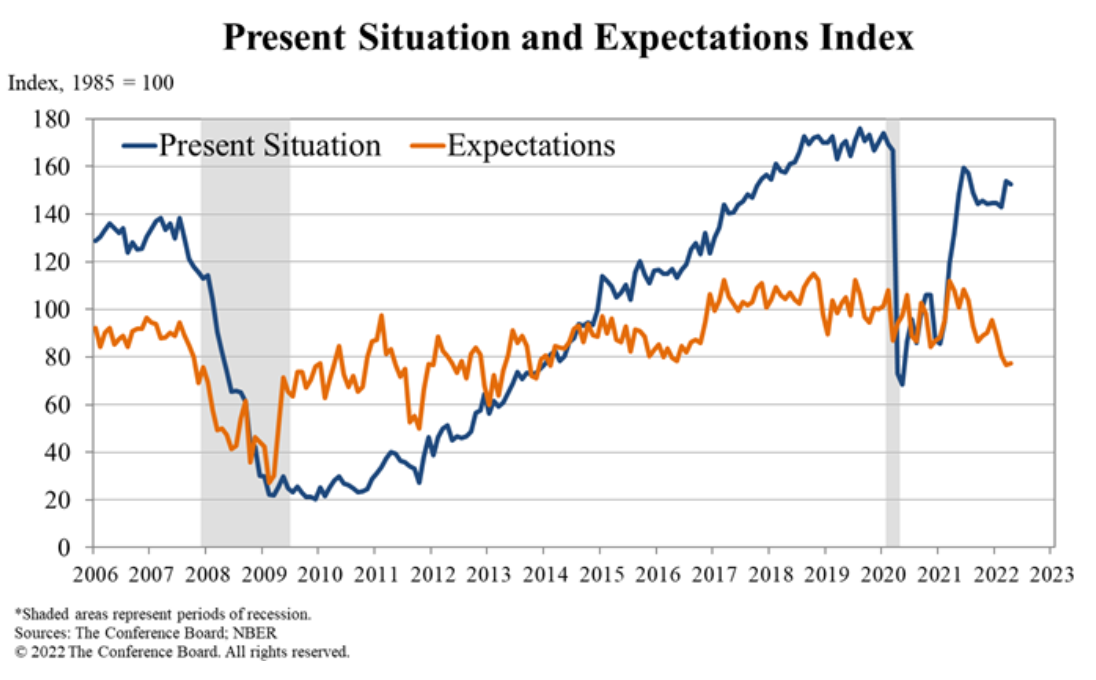
- Present Situation Index falls to 152.6 from 153.8, Expectations climb to 77.2 from 76.7.
- US Equity sell-off continues, Treasury yields, fall dollar strengthens.


Inflation is slowly undermining the confidence of US consumers as it erodes income and shows no signs of relenting. Despite a small up-tick in April, Americans’ outlook remains mired at its lowest level in eight years.
The Conference Board Consumer Confidence Index slipped to 107.3 this month from 107.6 in March. It had been forecast to rise to 108.00.
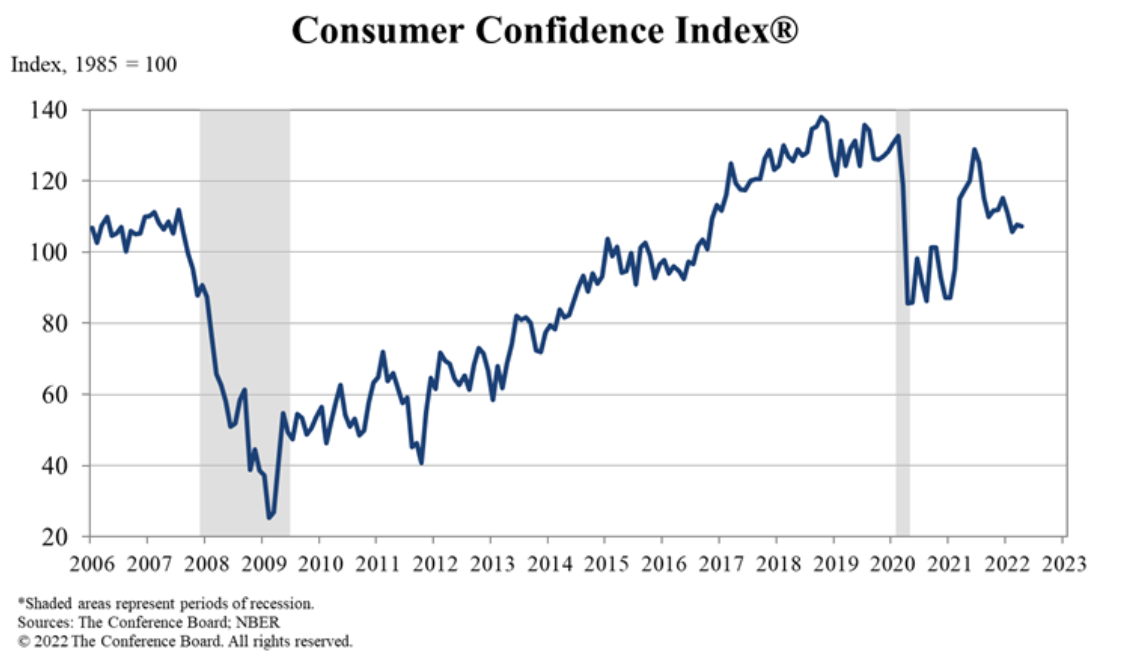
The Present Situation Index fell to 152.6 from 153.8. The Expectations Index, which measures consumers’ six-month horizon, rose slightly to 77.2 in April from 76.7.
Soaring prices are the chief ingredient in consumer dissatisfaction.
“Meanwhile, concerns about inflation retreated from an all-time high in March but remained elevated. Looking ahead, inflation and the war in Ukraine will continue to pose downside risks to confidence and may further curb consumer spending this year,” wrote Lynn Franceo, Senior Director of Economic Indicators at the Conference Board, in the note accompanying the release
The Consumer Price Index (CPI) reached a four-decade high in March at 8.5%. Incomes are falling further and further behind inflation. Household purchasing power declined 2.7% in the year to March and with inflation continuing to accelerate future shrinkage is likely to be greater. Producer prices jumped 1.4% in March and 11.2% for the year, both all-time records. With product shortages rising, China under widespread pandemic lockdowns and the Ukraine war wreaking havoc in commodity markets and pricing, nothing on the economic horizon suggests prices have reached their zenith.
Retail Sales, PCE and Real PCE
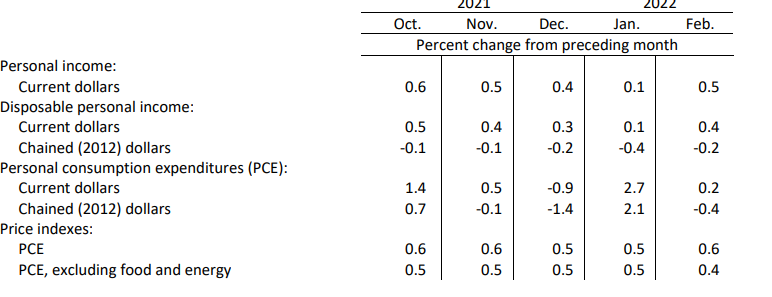
Retail Sales have been relatively strong for the past five months. Sales rose 0.5% in March and have averaged a very respectable 0.95% gain for the period. Personal Consumption Expenditures (PCE), usually called personal spending from the Bureau of Economic Analysis rose 0.2% last month and have averaged 0.78% from October through February. The March PCE data will be released this Friday and spending is forecast to rise to 0.7%.
The recent record in consumer purchases is deceptive, particularly given the inflation environment. Retail Sales and personal spending report sales volumes as a compound of selling prices and sales numbers. Neither the sales or PCE figures are corrected for inflation. If consumer prices rise 1% in a month but the number of items sold is unchanged, sales record a 1% increase.
To correct for this limitation, the Bureau of Economic Analysis (BEA) publishes an inflation-adjusted PCE series called Real PCE. The data from this series is quite different.
Over the past five months, from October to February, Real PCE increased just 0.18% monthly. That is less than one-quarter (23%) of the unadjusted result or to put it otherwise, three-quarters of the supposed consumer spending since September is illusory, it was all inflation.
Personal Spending
BEA
Markets
Markets did not respond directly to the continuing weakness in consumer attitudes shown in the 10:00 am confidence report. But the recent equity sell-off and the dollar gains are partially a result of the rising fears of recession represented by the moribund consumer.
The S&P 500 was trading at a 11.5% loss on the year in the late afternoon on Tuesday and the Dow was off 7.8% since January 1.
Treasury yields have soared this year as the Federal Reserve has resolved to confront inflation. Rising US interest rates are another ingredient in the equity turmoil as businesses are forced to meet rocketing costs in materials, labor and financing at one time. If inflation drives the US consumer into hibernation, adding to business woes, recession will be a near certainty.
Markets can only look forward with trepidation to Friday’s first quarter GDP report, forecast at 1.1%. The potential for a weaker or negative result received a small boost today.
Premium
You have reached your limit of 3 free articles for this month.
Start your subscription and get access to all our original articles.
Author
Joseph Trevisani
FXStreet
Joseph Trevisani began his thirty-year career in the financial markets at Credit Suisse in New York and Singapore where he worked for 12 years as an interbank currency trader and trading desk manager.