UK wage growth Preview: Wages set to turn positive in real terms after more than a year
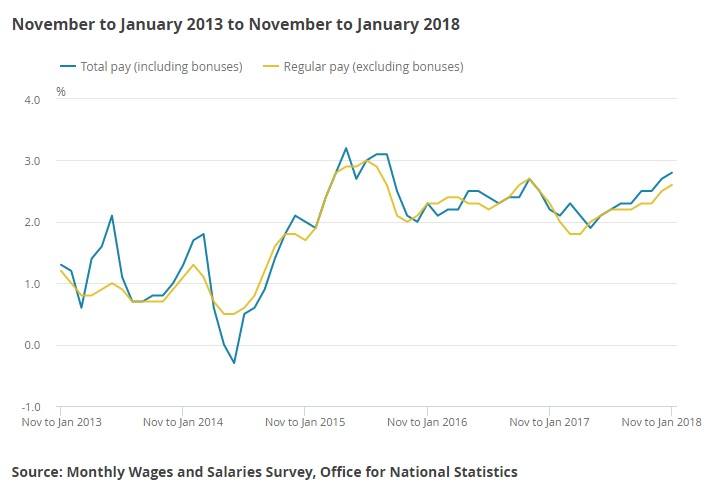
- The UK wages are seen rising 3.0% including bonuses over the three months to February, increasing faster than inflation for the first time since January 2017.
- The UK wage growth is the key element of the Bank of England’s monetary policy outlook.

It is a common market expectation now that the Bank of England is set to hike rates in May when presenting its fresh Inflation Report, a quarterly macroeconomic forecast of the Bank, followed with the usual press conference of Governor Mark Carney.
The reason for the Bank of England to act on interest rates is the combination of decelerating inflation and accelerating wage growth that should support the household demand, a key element of the UK aggregate demand of the economic growth.
While the decelerating inflation will be published on Wednesday, the very signs of accelerating wages are set to be published on Tuesday, April 17 at 9:30 GMT by the UK’s Office for National Statistics. And the figures out are expected to be pretty shocking with the average weekly earnings excluding bonuses up 2.8% over the three months to February while nominal wage growth including bonuses is seen rising 3.0% over the three months to February.
With nominal wages up 3.0%, the real, inflation-adjusted wages, should start to rise again in the sign of fundamental support for the UK consumer spending. Since January last year the inflation rate in the UK was greater than the nominal wage growth and with the UK real wages being negative, the retail sales suffered leaving UK shoppers having to use their savings to fund their current spending.
The UK wage growth is also set to confirm the prophecy of the Bank of England Monetary Policy Committee member Ian McCafferty, who said last week that the Bank should not delay hiking interest rates again due to a possibility of faster pay rises. McCafferty’s comments were aired about the month ahead of the crucial May MPC meeting that is widely expected to deliver another rate hike after last year’s November.
The wage growth and the Bank of England monetary policy outlook are also in the epicenter of current market move with Sterling that is trading at 2018 highs again and might be even pushed higher with the wage growth surprising on the upside with more than 3.0% nominal increase.
UK average nominal earnings growth rate since 2013
Author

Mario Blascak, PhD
Independent Analyst
Dr. Mário Blaščák worked in professional finance and banking for 15 years before moving to journalism. While working for Austrian and German banks, he specialized in covering markets and macroeconomics.

















