UK Jobs Preview: Claims calmed by the furlough scheme? Success can send sterling higher
- The focus in the UK's labor figures is in April's Claimant Count Change, which is expected to leap.
- The government's furlough scheme kept worked attached to their employers, and its success is tested.
- GBP/USD has room to rise if claims remain below the financial crisis peak

Are Brits still – at least officially – mostly at work? The coronavirus crisis is moving rapidly, putting an emphasis on April's Claimant Count Change rather than March's Unemployment Rate and wage data. Economists expect applications to have risen by 150,000, topping the financial crisis high of 138,600 recorded in February 2009.
However, it is essential to note that this high-frequency figure was also expected to leap beyond the previous downturn's worst in March and remained remarkably resilient. Projections stood at 172,500 and the actual result was only 12,100, lower than in February, and causing a rare deviation score of -16.19 points.
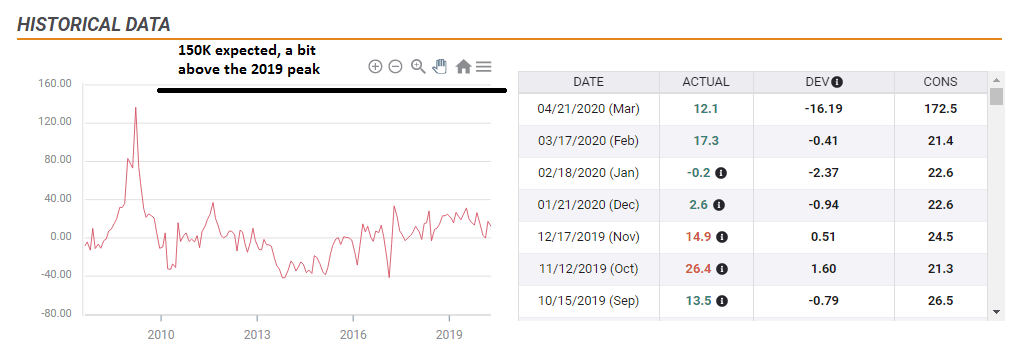
The previous data point may be partially attributed to the late lockdown that month. Prime Minister Boris Johnson called people to stay at home only on March 23. However, a better explanation for what happened then and what could happen in the upcoming release stems from the government's furlough scheme.
People who are unable to perform their work remotely and companies that are unable to pay their employees received massive help from the Treasury via the furlough scheme. Workers were able to stay at home and continue receiving up to £2,500 while maintaining the link to their employers. Moreover, businesses received quick loans to help them go.
In April, the British economy was fully in lockdown, and therefore the success or failure of the government's various schemes will be tested. Even a leap of 150K or even 200K would pale in comparison to US figures – and even when adjusting for population. It would also be impressive given the shock to the economy. However, for the pound, there would be different reactions
GBP/USD potential moves
1) Within expectations: Any jump in claims between roughly 140,000 and 200,000 would be worse than the Great Financial Crisis peak but still at manageable levels. In that case, the pound/dollar will likely shake but remain within range.
2) Better than expected: If headlines only shout "worst since the financial crisis" – but not "worse than" – it would be considered a beat, showing that the UK has its labor market under control. Given the criticism around Personal Protective Equipment (PPE), testing, and tracing, holding the economy together would boost the government's approval rating, the economy, and the pound.
3) Worse than expected: If the UK labor market takes a bigger hit, with over 200,000 claims, it would already deal a blow to sterling, and show that furlough scheme has its limits. While Britain would still be holding up in comparison to America, such figures would not be a full success story.
The jobless rate for March is set to rise from 4% to 4.4% and wages to remain just shy of 3% annually. The lagging figures are unlikely to impact GBP/USD unless they are wildly off the mark.
Conclusion
The UK Claimant Count Change figure for April will test the employment market's resilience – and the government's furlough scheme. A figure that is better than the worst of the previous crisis would be positive for the pound, while other outcomes could be worse.
Author

Yohay Elam
FXStreet
Yohay is in Forex since 2008 when he founded Forex Crunch, a blog crafted in his free time that turned into a fully-fledged currency website later sold to Finixio.