UK Jobs Preview: Another positive surprise? GBP/USD could use a shot in the arm
- Economists expect the UK Unemployment Rate to top 5%.
- Previous upside surprises are hinting at another pound-positive development.
- An acceleration in wage growth and manageable jobless claims may also support sterling.

The world is worried about the British coronavirus variant – and Brexit is causing bureaucratic issues – yet the labor market is yet to feel substantial pain. How long can this continue? The economic calendar is pointing to an increase in the UK's Unemployment Rate from 4.9% to 5.1% in November.
There are several reasons to expect a better outcome. First, Britain fully left the EU at the very end of 2020, and despite the robust rhetoric around the negotiations during the latter part of the year, most market participants and companies anticipated an agreement.
Second, companies learned to live with the virus. Restaurants, pubs, conference operators, and other sectors involving crowds undoubtedly suffered from restrictions, but office workers already got used to working from home.
Third, the government's furlough scheme has been proving successful at maintaining the labor market intact – and Chancellor of the Exchequer Rishi Sunak has been extending the program, providing certainty to businesses. That should have prevented excessive firings.
Last but not least, economists proved too pessimistic in the past four of seven releases, including the latest one.
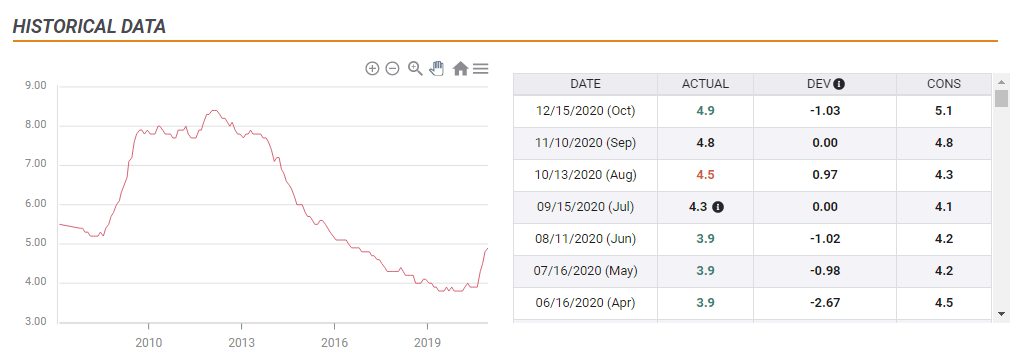
Source: FXStreet
GBP/USD impact
If Britain's Unemployment Rate holds at or below the round 5% level, it would boost the pound, regardless of other developments. An increase to 5.1% or 5.2% would likely put the focus on other figures.
Average Earnings forecast to accelerate from 2.7% to 2.9% when including bonuses, and from 2.8% to 3.1% when excluding them. If these predictions materialize – and especially if the latter figure surpasses 3% – it would send sterling higher.
Last but least, the Claimant Count Change figure is for December, therefore providing a more up-to-date view of the labor market. An increase by less than November's 64,500 could be considered a positive development. It is essential to note that the Unemployment Rate has been having the most impact on markets.
Pound/dollar has been struggling as the greenback gains ground. A dose of upbeat economic news – alongside Britain's rapid vaccination drive – would serve as a shot in the arm to sterling.
Conclusion
There is a good chance that the UK's first labor market release in 2021 exceeds expectations, boosting the pound.
GBP/USD Price Forecast 2021: Cable braces for calendar comeback amid three exits
Author

Yohay Elam
FXStreet
Yohay is in Forex since 2008 when he founded Forex Crunch, a blog crafted in his free time that turned into a fully-fledged currency website later sold to Finixio.